
Adria Future Summit 2026, held in Porto Montenegro, Tivat, is convened by Sustineri Partners in partnership with the Government of Montenegro and under the auspices of the President of Montenegro. The event brought together around 1,200 participants from four continents. Over three days, it became a meeting point for policymakers, investors, founders and institutions working across energy, technology and regional development.
The setting was relaxed, almost deceptively so. Spring weather, the marina, informal conversations between sessions. But the tone of the discussions was focused and at times quite direct. Across panels, roundtables and side meetings, one idea kept returning: the region is moving from strategy to execution.
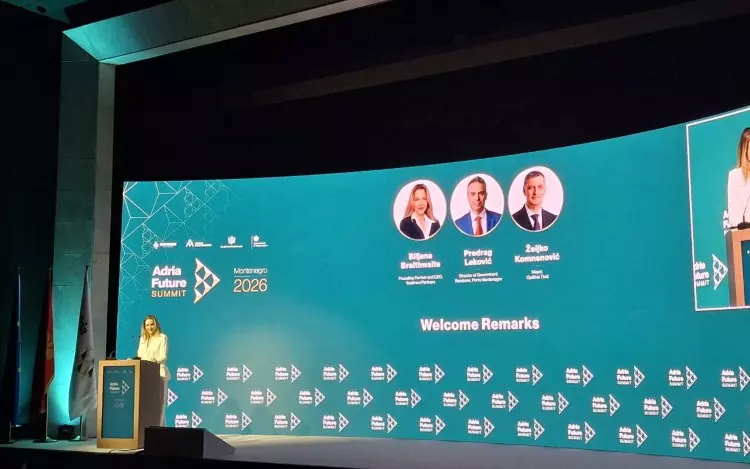
From dialogue to deal-making
The Summit opened with a strong focus on regional cooperation and EU integration, setting a broader context for everything that followed in the Western Balkans. As Amer Kapetanović, Secretary General of the Regional Cooperation Council, noted, integration should be judged by whether it makes the region “more functional, more predictable, and more prosperous.”
That emphasis on predictability quickly carried into discussions on investment. Across several panels, speakers returned to a similar point. Capital is not avoiding the region. It is avoiding uncertainty. Montenegro’s Minister of Public Works, Majda Adžović, put it clearly: investors “do not seek a perfect system, but a reliable framework” that ensures legal certainty in practice.
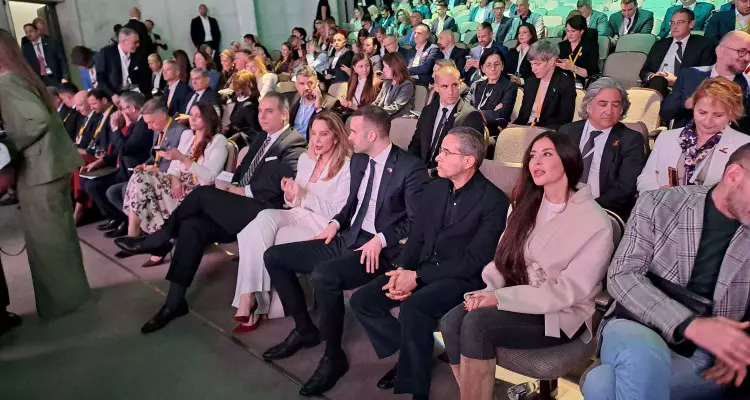
What made these discussions particularly tangible was the level of participation. This was not a conference built around general statements. Many of the people in the room were directly involved in investment decisions, project development or policy design. Conversations often moved quickly from broad positioning to specific questions. Which projects are actually bankable? How are risks shared? Who is prepared to move first?
Energy, infrastructure and the question of scale
Energy remained at the centre of the agenda, reflecting both regional priorities and wider European dynamics. At Adria Future Summit 2026, the programme deliberately brought together policymakers, investors and developers, creating a space where strategy and implementation could be discussed side by side.
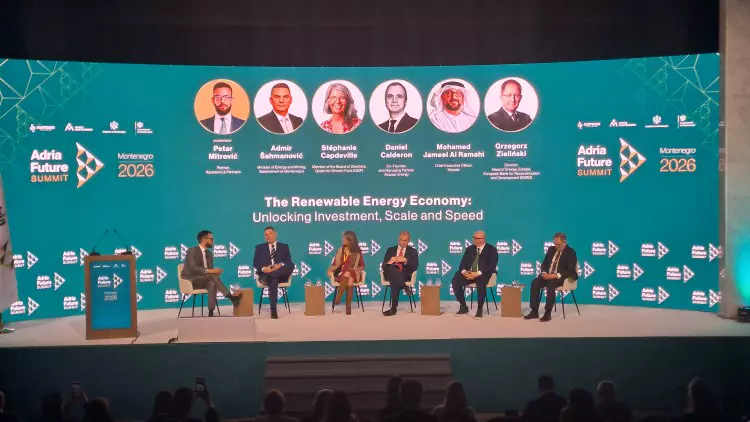
One of the most concrete outcomes was the announcement of a joint venture between Masdar and Elektroprivreda Crne Gore to develop renewable energy projects for export. The project, supported by Montenegro’s subsea interconnection with Italy, illustrated how the region can position itself within a broader European energy system and strengthen the Western Balkans energy transition.
At the same time, discussions made it clear that the main challenges are no longer conceptual. Ambition is not in short supply. What matters now is the ability to deliver at scale. Grid capacity, infrastructure readiness and coordination between stakeholders were repeatedly identified as bottlenecks.
Artur Lorkowski, Director of the Energy Community Secretariat, pointed to a structural issue that still defines the region’s vulnerability: “As long as our economies remain exposed to imports of fossil fuels, they will continue to be vulnerable to volatility and price shocks.”
This link between infrastructure, security and market stability ran through several sessions, reinforcing the idea that energy transition is no longer a technical topic alone, but a systemic one.
Technology, AI and the shift to ownership
The technology track added another layer to the conversation. The region is increasingly trying to move beyond its role as a service provider and position itself as a creator of products and innovation ecosystems.
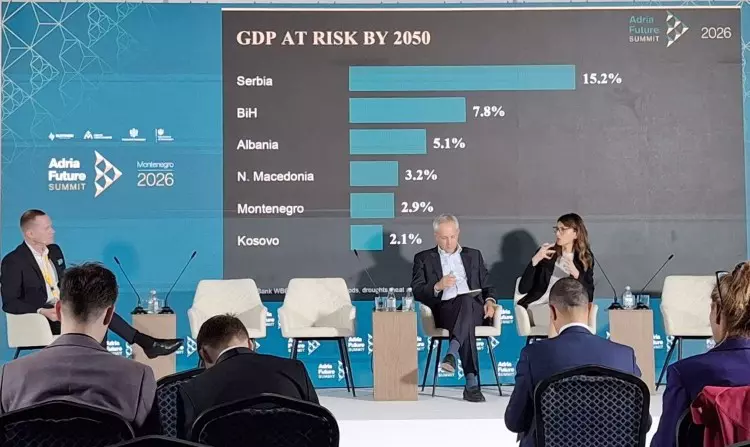
Artificial intelligence was a central theme across multiple sessions. The discussion went beyond the usual focus on potential and risk. Instead, it addressed more practical questions. How can the region capture value from AI? How can it build capacity rather than depend on external solutions?
The idea of developing technological ownership, sometimes framed as “sovereign” capability, appeared repeatedly. It reflects a broader ambition to shift from executing projects designed elsewhere to building and scaling solutions locally.
This approach was visible in initiatives such as the Adria Future Hackathon and the ScaleUp programme. Both focused on connecting startups with investors and partners, creating a pipeline of projects that can grow beyond the region rather than remain at an early stage.
At the same time, discussions on digital infrastructure and data highlighted how closely digital and green transitions are now linked. Energy systems, urban infrastructure and digital platforms are increasingly part of the same conversation.
A broader agenda in the Western Balkans
Beyond energy and technology, the Summit covered a wide range of topics that together reflect the complexity of regional development. Sessions addressed sustainable finance, ESG strategies, tourism, media, labour markets and industrial transformation under evolving regulatory frameworks such as CBAM.
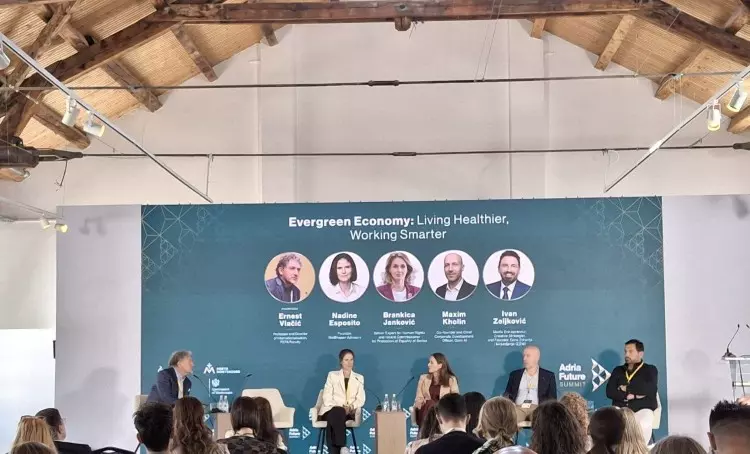
Some of the most interesting moments came from less expected topics. A discussion on whether luxury yachting can be sustainable drew attention to the tension between growth and environmental responsibility. Rather than offering simple answers, it showed how industries are beginning to rethink their models under new pressures.
Other sessions focused on the practical side of sustainability. From finance to longevity and workforce development, speakers explored how environmental and social considerations are becoming part of core business strategies, not just external reporting.
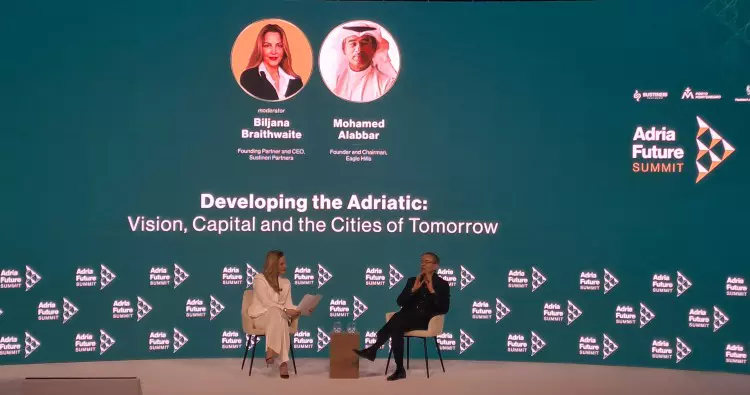
The formation of the Adria Responsible Carbon Industries Alliance brought a more concrete dimension to these discussions. By bringing together energy-intensive industries, the initiative aims to coordinate responses to decarbonisation challenges and regulatory changes, particularly those linked to the European market.
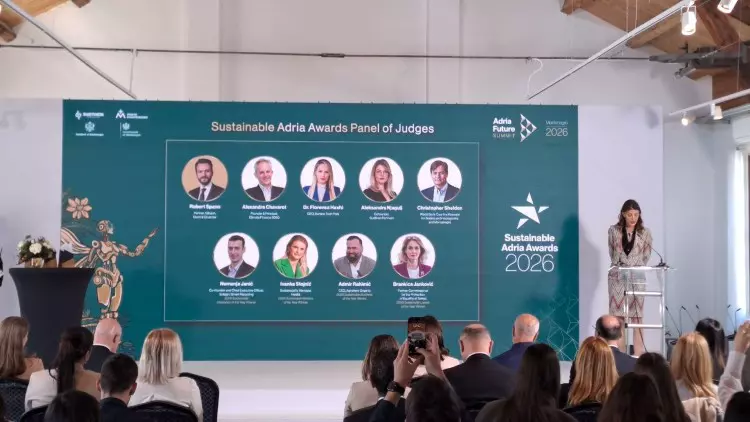
The Summit also included the Sustainable Adria Awards, recognising individuals, companies and initiatives contributing to sustainable development across the region. The awards are presented in several categories, including Leader of the Year, Business of the Year, Innovation of the Year and Initiative of the Year, highlighting practical contributions to the green and digital transition. Rather than focusing on visibility alone, the awards reflect a broader shift visible throughout the Summit. Sustainability is increasingly assessed through measurable results and long-term impact, not only through commitments or strategies.
A platform that reflects a shift
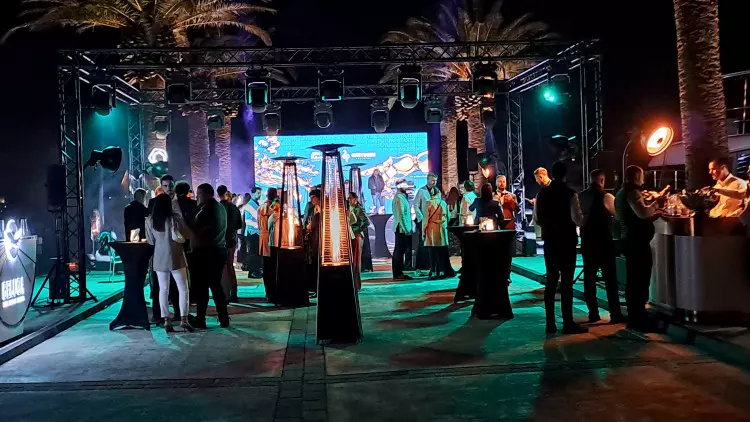
The format of the Summit played an important role in how these discussions unfolded. High-level panels were combined with innovation sessions, investment dialogues and carefully curated networking. This created a rhythm where conversations could continue beyond the stage.
In practice, this meant that many of the most valuable exchanges happened between sessions, in smaller groups or informal settings. The mix of participants made these interactions unusually direct.
Adria Future Summit 2026 suggests that the Western Balkans is entering a more demanding phase. The direction of change is largely clear. What is less certain is the capacity to deliver consistently and at scale.
The region does not lack ideas, ambition or even access to capital. What it is still building are the systems that allow these elements to come together. Predictable institutions, coordinated action and the ability to execute over time are becoming the defining factors.
This is where the difference between potential and real progress will be decided.
Read about other conferences and exhibitions here