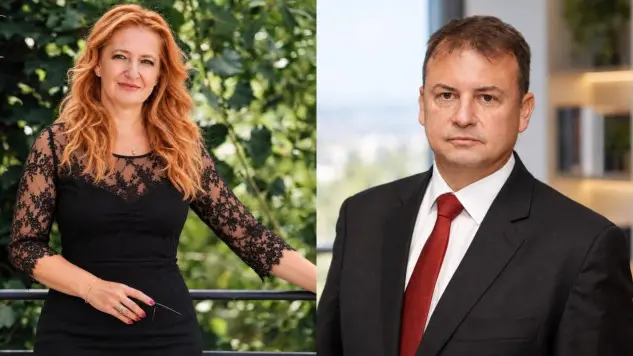

As Southeast Europe enters a more demanding phase of economic and regulatory convergence, the conversation around sustainability is becoming increasingly tied to capital allocation and investment decisions. For businesses, investors, and governments across the Adria region, the question is no longer whether to align with ESG principles, but how to translate them into financing, partnerships, and long-term competitiveness. Against this backdrop, the Adria Future Summit 2026, taking place in Porto Montenegro, brings together decision-makers from across the region and beyond. In this interview, we speak with Biljana Braithwaite, CEO and Founding Partner of Sustineri Partners, about why execution remains the region’s most scarce resource, how capital is starting to price risk and opportunity differently, and how platforms like the Summit aim to turn ideas into real transactions.
Personal perspective
What has shaped your focus on sustainability and responsible growth, and what continues to drive your work today?
My route into sustainability is less conventional than most. I spent the first two decades of my career working on the rule of law and human rights across the Western Balkans. That included judicial training on the European Convention, work on gender and judicial decision-making, and institutional reform in countries still rebuilding trust in their own institutions. What I saw, again and again, was that development decisions made without governance, transparency, or long-horizon thinking tend to produce very expensive reversals.
When I moved into ESG, it was not a pivot. It was the same problem at a different scale: how capital, regulators, and companies make decisions they will still be comfortable with in ten years. What drives me today is that, for the first time, that question has a price tag attached. Capital is repricing based on climate risk, supply chain exposure, and institutional credibility, and the Adria region cannot afford to arrive at that conversation late.
How did the idea of the Adria Future Summit emerge, and what gap was it intended to address?
The honest answer is that I had sat through too many regional convenings where the most interesting exchange happened in the corridor, after the panel, and then went nowhere. Southeast Europe does not lack ideas; it lacks the architecture that turns them into transactions.
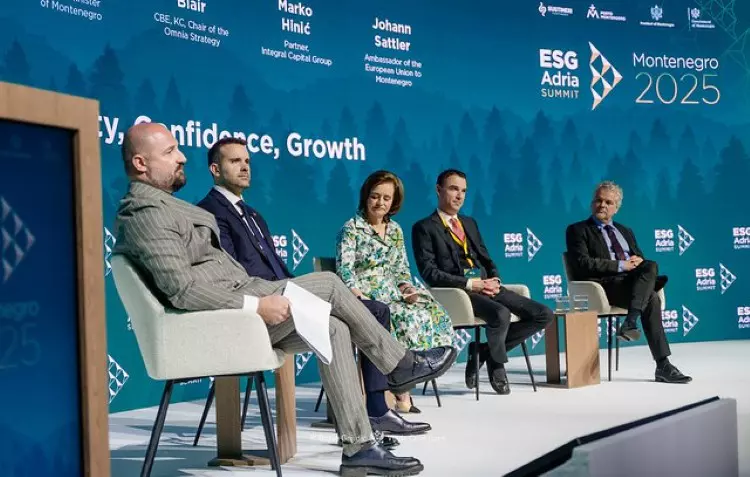
We launched the ESG Adria Summit in 2023 with a narrow brief: bring investors, policymakers, and business leaders into one room and translate ESG alignment into a concrete capital question. Three years in, the conversation has widened enough that the name needed to widen with it. Adria Future Summit is the same instinct at scale. The panel should be the beginning of a transaction, not the end of one. When the Summit closes on a Friday, something should have moved in the following week.
Adria Future Summit
What makes this platform particularly relevant for the region at this moment?
Three things are happening at once, and they rarely happen together. EU accession is forcing regulatory convergence across the Adria region. Global supply chains are being restructured around geopolitics, proximity, energy intensity, and ESG risk. And the capital cost of meeting net-zero targets is redirecting large pools of money into places that were not, five years ago, on the standard European investment map.
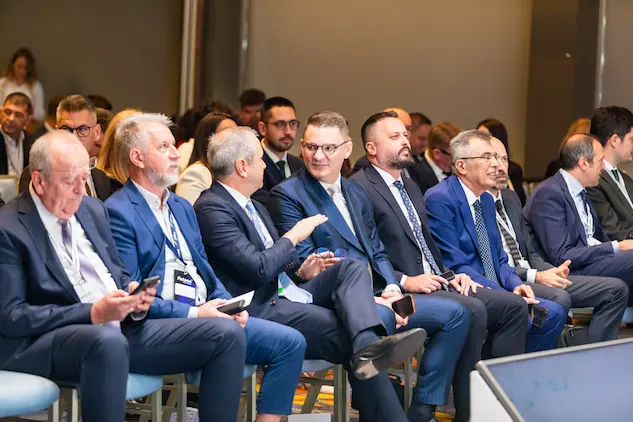
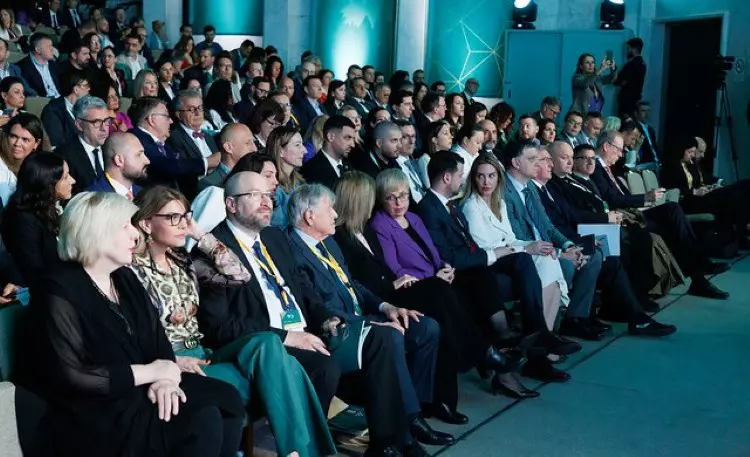
That is what makes this moment different. The institutions converging on Tivat, including EXIM Bank, Google, Wizz Air, Antler, Masdar, Monterock, Eagle Hills and Heritage Group, span institutional lenders, global technology and transport companies, early-stage venture capital, Gulf investors across clean energy and private equity, and international hospitality, real estate and investment groups. And they are coming at the principal level: chairmen, chief executives, and founders, not delegations. That combination is not a coincidence. It is a signal that the region is being evaluated on its own merits for the first time in a generation. Our job is to make sure that the evaluation is honest, informed, and followed by deployment, not just interest.
What will participants experience differently in 2026?
In 2026 the design shifts from awareness to execution, and two themes anchor the programme.
The first is energy. Running alongside the Summit, the Ministerial Energy Forum under the Berlin Process will take place, hosted by the Ministry of Energy and Mining of Montenegro and the Energy Community. Once the Forum closes, ministers and investors move directly into a joint session focused on execution: which projects are ready, which are financeable, and who moves first. Policy and deployment, in the same building, on the same day.
The second is innovation, AI, and technology, the area where the next competitive advantage for Southeast Europe is being built. A hackathon runs in parallel to bring young founders into the conversation, and dedicated sessions work through how the region positions itself as capital starts pricing digital infrastructure, AI capacity, and tech talent alongside more traditional investment criteria.
Around those anchors sits a dense programme, including the Governors’ Panel, which brings the central bank governors of Slovenia, Estonia, and Montenegro into one conversation on monetary policy and long-horizon stability; curated investor and business matchmaking; sector-specific pipelines in energy, infrastructure, real estate, and digital; and structured follow-through after the event closes. The measure is not how many people come. It is how many leave with something specific, such as a term sheet, a partnership, or a shortlisted pipeline, that they did not have on arrival.
What does “Act now for a sustainable tomorrow” mean in practical terms?
For businesses and investors, it means moving from commitments to capital allocation. Every major economy in Europe is now financing the transition, which means ESG has stopped being a reporting exercise and started being a cost-of-capital question. Companies that integrate it early secure better financing terms, qualify for EU-aligned supply chains, and become attractive to a pool of strategic investors that is growing faster than any other.
The companies that wait are not staying neutral. They are choosing a more expensive version of the same transition, with fewer buyers at the other end of it.
How does the Summit stay grounded in practical implementation?
By refusing to run panels on abstractions. Every session has to answer a real question someone in the room is trying to solve: a permitting bottleneck, a financing gap, a regulatory alignment problem, a specific project that needs a co-investor.
We bring investment-ready projects, case studies with numbers attached, and financial institutions that can structure a deal in the same week, not the same quarter. The objective is concrete. Every participant should leave with at least one thing they can act on, whether that is a partnership, an investment lead, or a co-financing opportunity. If they leave with only a stack of business cards, we have wasted their time.
Montenegro as a host
Why Porto Montenegro, Tivat, and what role can Montenegro play?
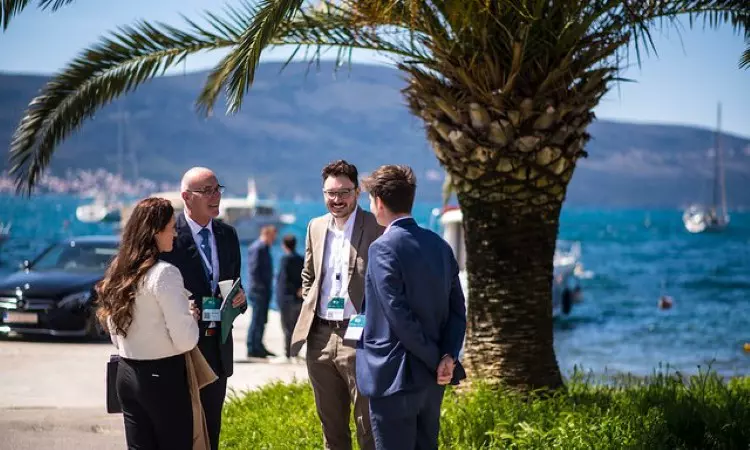
The transformation of Tivat and Porto Montenegro is one of the most legible case studies in the region for what disciplined, international-standard investment can do to a place. It turned a former naval base into a destination that competes with the best harbours in the Mediterranean, and it did so through governance as much as through capital.
Montenegro itself is a more interesting venue than people realise. This year it is presiding over regional initiatives, including the Berlin Process, and it is a leader among the Western Balkan countries on EU accession. It is small enough to move quickly on reform, and it sits on real hydro, solar, and wind potential. It has credible sustainable tourism prospects, a developing financial sector, and a location that makes it a natural hub for Southeast European convenings. Hosting the Summit here is not symbolic. It signals that the region’s most serious investment conversation has found a home in Montenegro.
Sustainable development in the region
What are the most pressing sustainability challenges and opportunities?
The most pressing challenges are the same ones that make the region interesting: energy transition, infrastructure modernisation, and regulatory alignment with the EU. None of these is solved; all of them are capital-intensive; each of them has a deadline.
That is also why the opportunity is unusual. Renewables, grid modernisation, sustainable tourism, and the circular economy are all sectors where the rules are still being written in our region, rather than being optimised at the margin, as they are in mature markets. For a patient, well-structured investor, that is a rare position to be in. It is where impact and return stop being a trade-off and start being the same thing.
How would you assess ESG adoption across the Western Balkans?
Uneven, and the unevenness is diagnostic. The companies moving fastest are the ones plugged into something external that forces discipline: a European parent, a multinational supply chain, a credit facility from an EU development bank. Where ESG is attached to a real financial or contractual incentive, the adoption curve looks nothing like the regional average.
The majority of businesses are still treating it as a reporting obligation, which is the most expensive way to do it. You absorb the compliance cost without capturing any of the strategic upside. The shift we are beginning to see, and the one the Summit is built to accelerate, is ESG as a value driver: a lever on cost of capital, valuation, market access, and deal terms.
Looking Ahead
What will define successful and sustainable growth in Southeast Europe over the next decade?
The countries and companies that win the next decade in Southeast Europe will be the ones that treat transparency, governance, and ESG alignment not as reporting obligations, but as a competitive posture. The capital is available. The projects exist. What is scarce is the institutional discipline to convert one into the other: the clarity, integrity, and accountability the region has been asked to build for three decades now.
That is what the next ten years will reward. Potential was always plentiful here. Execution has always been the real currency.
Read and watch more interviews here