Can Low-Cost Technology Fill the Gaps in Air Quality Monitoring?

air quality monitoring
Low-cost sensors are increasingly reshaping air quality monitoring by enabling denser and more affordable data collection in urban environments. The article examines their reliability, compares them with reference stations, and explores how integrated monitoring systems can support more effective public health and urban policy decisions.
Read MoreCan Low-Cost Technology Fill the Gaps in Air Quality Monitoring?

From ESG Talk to Real Transactions: Interview with Biljana Braithwaite Ahead of Adria Future Summit 2026

Biljana Braithwaite, Adria Future Summit
In this interview, Biljana Braithwaite, CEO and Founding Partner of Sustineri Partners, discusses the evolving role of ESG in shaping investment decisions across Southeast Europe. She explains why execution remains the region’s key constraint and how platforms like the Adria Future Summit aim to turn ideas into real transactions.
Read MoreFrom ESG Talk to Real Transactions: Interview with Biljana Braithwaite Ahead of Adria Future Summit 2026

Air Pollution in Skopje: Causes, Consequences and Path to Solutions

Air Pollution in Skopje
This study investigates the extent and structural factors contributing to Air Pollution in Skopje, particularly during the winter seasons of 2025 and 2026, when pollution levels exceeded critical limits. The study emphasizes the interaction between old-fashioned heating methods, transportation emissions, industries, and geographic constraints that have made Skopje one of the world’s most polluted cities. In addition, the paper explores the adverse impacts on public health and reviews current policy measures, noting their shortcomings. Finally, the study proposes a number of systematic strategies essential for improving the air quality situation in Skopje.
Read MoreAir Pollution in Skopje: Causes, Consequences and Path to Solutions

Energy Summit in Trebinje 2026: Energy Transition Moves into the Phase of Reality

Energy Summit in Trebinje 2026
Energy Summit in Trebinje 2026 highlighted a clear shift from planning to implementation in the Western Balkans energy transition. Discussions focused on grids, investment conditions, skills and the need for system-level solutions beyond individual projects.
Read MoreEnergy Summit in Trebinje 2026: Energy Transition Moves into the Phase of Reality

Local Energy Security in Central and Eastern Europe: The Urban Energy Shift

Local Energy Security
This article explores how Local Energy Security is reshaping energy systems in Central and Eastern Europe. It highlights the growing role of cities in driving renewable energy adoption, improving resilience, and navigating governance constraints. Case studies from Warsaw, Prague, and Ljubljana illustrate both progress and structural challenges.
Read MoreLocal Energy Security in Central and Eastern Europe: The Urban Energy Shift

Belgrade Green Hydrogen Conference: Between Ambition and Practical Constraints

Belgrade Green Hydrogen Conference
The Third Belgrade Green Hydrogen Conference brought together policymakers, utilities, industry, and investors to assess the role of hydrogen in the region’s energy transition. Discussions highlighted the gap between strategic ambition and market reality, with a focus on costs, infrastructure, and project bankability. Particular attention was given to regional constraints and the need for flexible solutions to support renewable energy integration.
Read MoreBelgrade Green Hydrogen Conference: Between Ambition and Practical Constraints

The End of Ultra-Cheap Solar? What Rising Module Prices Mean for Urban Solar Energy

Urban solar modules
For more than a decade, falling solar panel prices fueled the rapid expansion of urban solar energy. Now costs may begin to rise. This article explores what a potential 20–30% increase in module prices could mean for cities, municipal budgets, and future energy planning.
Read MoreThe End of Ultra-Cheap Solar? What Rising Module Prices Mean for Urban Solar Energy

Europe Sustainable Development Report 2026: Progress, Gaps and the Regional Divide

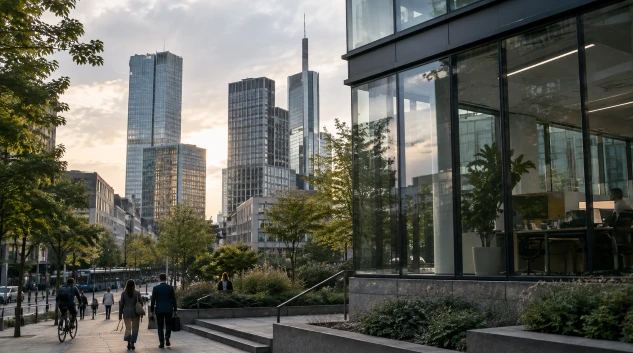
a European city
The Europe Sustainable Development Report 2026 provides a new snapshot of how European countries are progressing toward the UN Sustainable Development Goals. While Northern Europe continues to lead the SDG Index, significant regional gaps remain, particularly in Central and Eastern Europe and the Western Balkans. This brief review highlights the report’s key findings and explores what they mean for the European sustainability transition and the growing role of cities in implementing it.
Read MoreEurope Sustainable Development Report 2026: Progress, Gaps and the Regional Divide
×