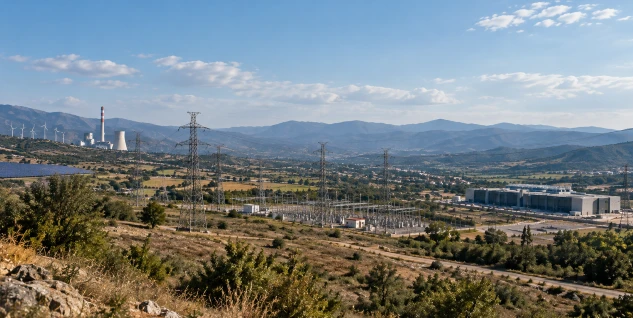

Artificial intelligence is usually discussed in terms of models, algorithms and computing power. The physical infrastructure behind it and environmental impact of AI receives less attention. Yet every AI-generated answer, image or video ultimately depends on data centers, electricity grids, cooling systems, water, land and raw materials.
A new report by the United Nations University Institute for Water, Environment and Health (UNU-INWEH), Environmental Cost of AI’s Energy Use: Carbon, Water and Land Footprints, takes this physical side of AI as its starting point. Its central argument is straightforward: measuring carbon emissions alone is no longer enough to understand the environmental cost of AI. Electricity used by AI also has a water footprint and a land footprint, and all three depend heavily on where and how that electricity is produced.
The report therefore moves the discussion beyond the familiar question of how much electricity AI consumes. Increasingly, the issue is what kind of energy system has to support it, and what happens in the places where the infrastructure is actually built.
Data centers are becoming an energy issue
The scale of the change is already considerable. UNU-INWEH estimates that data centers consumed around 448 TWh of electricity worldwide in 2025. If they were counted as a country, they would have ranked 11th globally in electricity consumption. AI workloads accounted for around 20% of that demand.
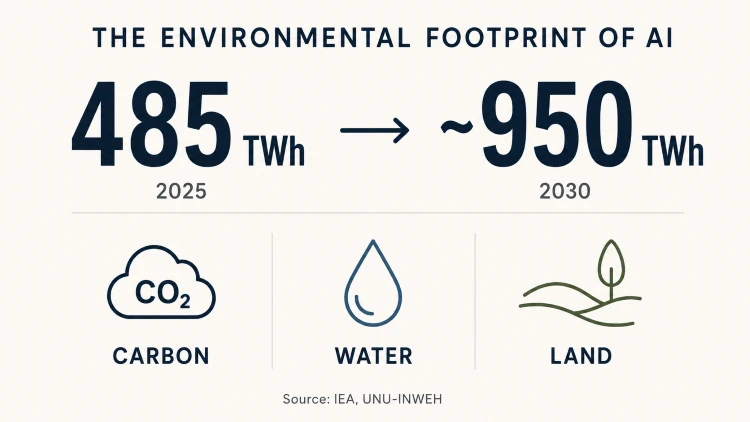
The International Energy Agency arrives at a very similar overall picture. Its 2026 update estimates global data center electricity consumption at 485 TWh in 2025 and expects it to rise to around 950 TWh by 2030. That would put data centers close to 3% of global electricity demand. According to the IEA, electricity consumption by data centers focused on AI could triple over the same period.
Three percent may not sound dramatic at global level. The problem is that data centers are not distributed evenly. They tend to cluster in locations with sufficient grid capacity, connectivity, land and access to cooling, creating much sharper pressure on particular power systems.
The United States illustrates the point. Lawrence Berkeley National Laboratory estimates that data centers could account for about 11.8% of total US electricity consumption by 2030. Depending on the scenario, the figure could range from 9.5% to 15.3%.
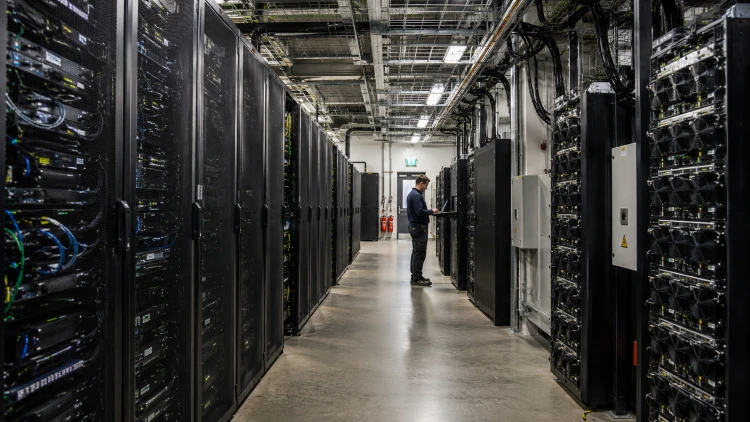
This makes the expansion of AI infrastructure more than a digital policy issue. It is increasingly becoming a question of generation capacity, grid investment and the location of new energy-intensive demand. As New Polis has previously examined, the rapid growth of AI data centres is already beginning to reshape energy investment, increasing the importance of grid capacity, flexible power systems and reliable energy infrastructure.
The environmental impact of AI goes beyond carbon
One of the more useful parts of the UNU-INWEH report is its attempt to separate three different environmental footprints: carbon, water and land. They do not necessarily improve at the same time. A change in the electricity mix may reduce emissions but increase water use or land requirements. The report gives the example of Brazil, where a hydro-dominated power system has a carbon footprint well below the global average, while the associated water and land footprints are substantially higher.
The point is important for data center planning. A facility supplied by relatively low-carbon electricity may look attractive when judged only by emissions, while creating pressure elsewhere, particularly in regions with limited water resources or competing demands for land.
Water availability is already emerging as a broader infrastructure constraint in Europe. As New Polis recently examined, the exceptionally low river levels of summer 2026 disrupted power generation and cooling at several European power plants, illustrating how competition for water can become an energy and infrastructure problem during periods of extreme heat and drought.
There is also a geographical imbalance. The communities that host data centers, electricity infrastructure and cooling facilities experience most of the direct environmental pressure. The economic benefits of AI, however, may be generated and captured somewhere else.
That question becomes even more relevant as the electricity needed by data centers grows. The IEA expects global electricity generation required to serve them to rise from about 460 TWh in 2024 to more than 1,000 TWh in 2030. Renewables are expected to provide nearly half of the additional supply over the next five years, but not all of it. Natural gas and coal will also contribute, while nuclear power is expected to play a larger role toward the end of the decade.
The environmental footprint of AI will therefore depend not only on improvements in chips and models, but also on the evolution of the electricity systems surrounding new computing capacity.
Training gets attention, but everyday use adds up
The energy required to train large AI models has produced some of the most widely quoted figures in the debate. UNU-INWEH estimates that training GPT-4 may have required between 50 and 70 GWh of electricity over roughly 100 days. The authors stress that OpenAI has not published official training energy figures, so the estimate is based on independent analyses. Using the midpoint of that range, the report estimates a water footprint of about 592 million liters.
But training is a relatively concentrated event. Once a model is released, it may be queried billions of times. UNU-INWEH estimates that inference, the process through which an already trained model produces answers and other outputs, may account for 80% to 90% of total AI energy use.
The type of output also matters. According to the report, a typical AI-generated image requires roughly 60 times more energy than a short text answer. Video generation can be much more demanding. Measurements cited by the authors range from about 0.14 Wh for a very small, low-resolution clip to more than 400 Wh for a longer high-resolution output produced by a large model.
These differences may appear minor at the level of a single user. At the scale of millions or billions of interactions, they become infrastructure demand.
This also explains why efficiency improvements alone may not be enough. If AI becomes cheaper and more efficient, people and companies may simply use more of it. The report points to this rebound effect, often described as the Jevons Paradox: lower consumption per individual task does not necessarily lead to lower overall consumption.
Regulation is beginning to catch up
Europe is already moving toward more systematic measurement of these impacts. In 2026, the European Commission advanced an EU-wide sustainability rating scheme for data centers covering energy efficiency, water efficiency, clean energy use, waste heat reuse and flexibility. The initiative forms part of a broader effort to integrate data centers more sustainably into European energy systems. The Commission has also launched work on methodologies for measuring the energy consumption and emissions of AI models and systems themselves.
This is broadly consistent with the direction proposed by UNU-INWEH. The report calls for transparency, efficiency by design, environmental justice, lifecycle responsibility, international cooperation and more sustainable patterns of AI use. It also argues that governments should include AI infrastructure in energy planning, water governance and land-use decisions rather than treating data centers as a separate digital sector.
For cities, this raises a broader question of how AI can be integrated into urban systems without creating new environmental and infrastructure pressures. Sustainable AI is increasingly about more than improving the efficiency of individual models; it also requires decisions about infrastructure, governance and the long-term value of AI applications.
None of this means that AI should be seen simply as an environmental burden. The same technologies can improve grid management, renewable energy integration, climate modelling and environmental monitoring. The question is increasingly one of balance.
AI may operate through software, but its expansion depends on very physical resources. Understanding the environmental cost of AI increasingly means looking beyond individual models to the energy, water and land requirements of the infrastructure supporting them. As computing demand grows, decisions about where data centers are built, what electricity supplies them and how much water and land they require will become part of mainstream energy and urban infrastructure planning. The environmental debate around AI is therefore becoming a debate about the infrastructure required to support the AI economy itself.