
During the peak of a recent June heatwave, a friend of mine measured the temperature just 80 centimeters above the asphalt in downtown Belgrade. The thermometer read an astonishing 58.6°C. At head height, it was 47.2°C, while the official air temperature sat at 38°C. Hot summers aren’t new, but our cities have become dangerous heat traps. What changed?
Concrete jungles, rising risks
The consequences flash instantly on our screens. According to the European Environment Agency (EEA), extreme heat now claims over 14,000 lives across Europe in a single severe season. Meanwhile, the World Health Organization (WHO) reports a staggering reality: ambient and household air pollution causes an estimated seven million premature deaths every year worldwide. While the global death toll is mapped, the total number of chronic illnesses triggered by toxic air remains dangerously unquantified.
This crisis stems from a broader global shift. Over the past three decades, rapid and often poorly planned urbanization has turned cities into crowded hubs of environmental stress. Blue skies have vanished behind heavy smog—an image now routinely captured on social media. As older, shaded neighborhoods give way to massive concrete developments, commuting has become a daily ordeal. At times, entire populations seem to live, work, and sleep trapped inside their cars with the air conditioning blasting.
We treat air conditioning as a magical fix, blaming global climate shifts while ignoring how we design our own habitats. Driven by comfort, we build bigger and pave more, forgetting that asphalt, concrete, and rooftops create “urban heat islands.” These surfaces absorb scorching heat during the day and radiate it back long after sunset.
Consequently, major Serbian cities consistently rank among Europe’s most polluted, according to European Air Quality Indexes, while remaining at the bottom in terms of urban green space. The current architectural trend of building barren open squares and replacing street trees with small potted containers only worsens the crisis.
The medical costs of this concrete expansion are significant. Data from the Institute of Public Health of Serbia shows an alarming average of 10,000 acute respiratory infections every week. Furthermore, local health registers indicate that one in ten residents now suffers from asthma, with pediatric respiratory illnesses steadily rising due to prolonged exposure to dangerous fine particles and urban allergens.
Looking ahead, the Outlook reports from the Organisation for Economic Co-operation and Development (OECD) project that by 2050, outdoor air pollution will become the world’s leading environmental cause of mortality, rapidly overtaking clean water scarcity and becoming a primary driver of lung cancer. Medical experts warn that the most vulnerable are children, pregnant women, and the elderly. Look around you: who among us does not have a loved one in at least one of these groups?
Why every tree matters
A single mature tree produces enough oxygen for an adult and provides a cooling effect equivalent to ten air conditioning units. Tree canopies block intense sunlight, lowering surrounding temperatures by up to 10°C.
Beyond filtering dangerous particulate matter from the air, urban greenery acts as a natural remedy for stress. Psychologists have proven that access to green spaces reduces anxiety and lowers the risk of stroke and heart disease. Trees bring life back to concrete deserts: birds, blossoms, and the scent of linden trees in May.
There is also a clear economic case. Air pollution costs European healthcare systems millions annually. Yet, streets with just 20% tree cover last twice as long due to reduced thermal stress, and shaded neighborhoods require far less energy for cooling, directly lowering residents’ utility bills.
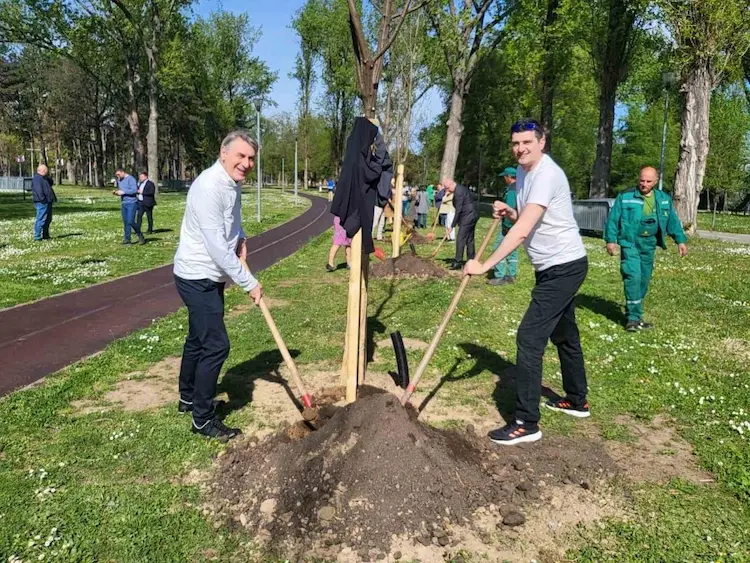
“Plant Your Shade”: turning ideas into action
Seeking a solution, activists at the Green Development Centre in Sremska Mitrovica launched Plant Your Shade. The initiative set two measurable goals: plant as many trees as possible and engage the community.
The organizers wanted to give people a sense of ownership, a tree as a legacy, a family landmark, or a personal achievement. Something a parent could point to from a car window, proudly saying, “That’s my tree!”
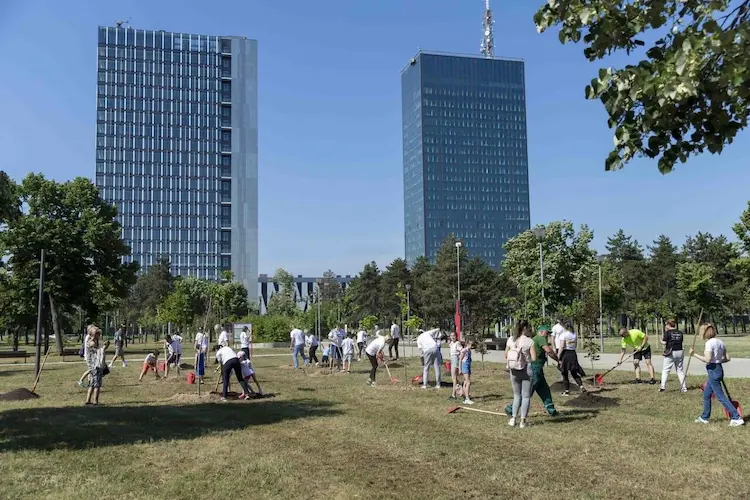
Since 2017, this vision has brought over 300,000 two-year-old saplings to 100 cities across Serbia. Building on this success, the team partnered with landscape experts to plant 3,000 mature trees in urban parks across Belgrade, Čačak, Niš, and Zrenjanin, providing immediate shade and environmental relief.
Alliances for a greener future
Plant Your Shade thrives on collaboration between public institutions, corporations, and citizens. Tree-planting events double as team-building days and educational workshops, where corporate employees bring their families to improve their local neighborhoods.
To date, more than 60 companies, 20 public institutions, and 10,000 volunteers have joined the cause. By partnering with international organizations like Let’s Do It! World, Trillion Trees, and River Cleanup, the initiative maintains world-class standards. Using a methodology provided by the Swiss organization WeForest, the project calculates exact carbon dioxide savings, issuing donors certificates that quantify their ecological impact.
This model succeeds because of absolute transparency. Local municipal experts determine exactly where and which species to plant, ensuring every tree receives long-term care and official status.
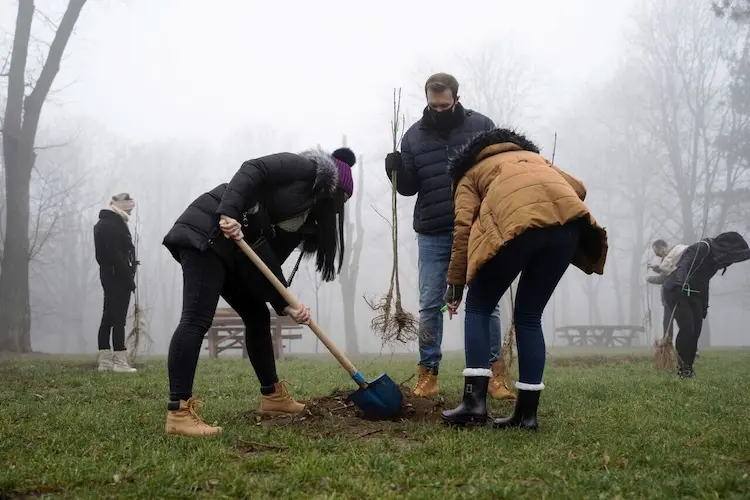
The reality is stark: Serbia needs at least twenty million more trees to combat its urban climate crisis. This is why community action and corporate partnerships matter. Planting a tree means giving your neighbors cleaner air, cooler streets, and a healthier future.
In ancient traditions, trees like the ash symbolized the connection between the earth and the sky, a source of healing and strength. Today, that connection remains just as vital. When urban life becomes overwhelming, nothing grounds us like walking through a park or leaning against a tree. And if it happens to be a tree you planted yourself, that shade feels even cooler.
Dusan Jakovljevic. Director of Environment in ECOGV WASTE SOLUTIONS and national LET’S DO IT! leader