
Today, we speak with Henk Swarttouw, President of the European Cyclists’ Federation (ECF). With a background in diplomacy and decades of personal cycling experience, he now leads one of the most influential organizations promoting cycling across Europe. In this interview, he reflects on the role of cycling in sustainable mobility, the challenges of building a pan-European cycling movement, and the future of cycling policy and infrastructure.
From Everyday Cyclist to European Advocate
What first inspired you to become involved in cycling advocacy, and what continues to motivate your commitment to this field today?
I am from Holland and was born in the early 1960s. I have cycled all my life. When I was six, my parents gave me a bicycle and sent me to school. From then on, I cycled everywhere, school, university, work, without thinking about it.
I have lived in many countries, and I always cycled to work. When I turned fifty, I became the Dutch ambassador to Finland, and I cycled there as well. The local newspaper wrote about me as the “cycling ambassador”, because people saw it as something unusual, while for me it was completely normal. A few years later, I was asked by the CEOs of the Danish and Dutch cycling organizations to run for the board of the European Cyclists’ Federation. I had to admit I did not even know it existed, but I felt I could contribute with my diplomatic and international experience. I was elected, and two years later, I became president.
After a year as president, I resigned from the Dutch Foreign Service. This is now my main occupation, although I remain a volunteer. I do not work in our Brussels office regularly, but I travel frequently. For me, as a Dutch person, cycling is as natural as walking or sitting. At the same time, I clearly see that cycling, as an active and sustainable mode of transport, has a lot to contribute to society, especially in cities, but also in rural areas.
We need to rethink how we use public space and how we move. Many shorter trips made by car could easily be made by bicycle. Cycling contributes not only to climate and the environment, but also to public health and to making cities more liveable. Streets are for people; they were not intended primarily for cars.
Cycling for Transport and Leisure: One Ecosystem
ECF describes itself as “the single European umbrella organisation for cycling for both transportation and leisure.” How do you balance advocacy and support for both everyday commuting cyclists and recreational/tourist cyclists within ECF’s strategy?
When you build a cycle path, it does not matter whether it is used by commuters or tourists; the infrastructure serves everyone. That said, there are policy differences between utilitarian cycling, often in urban contexts, and leisure cycling. There is also a strong interaction between the two. People who cycle to work are more likely to cycle for leisure or holidays, and vice versa. Someone who goes on a cycling holiday may start considering cycling for everyday trips.
At the policy level, some measures benefit both groups: for example, lower VAT on bicycle repairs or 30 km/h speed limits in cities. Others are more specific: corporate bike fleets and cycle-friendly employers relate to commuting, while projects like EuroVelo are more focused on tourism and leisure. There is overlap, interaction, and synergy between the two. We support both. The only area we do not cover is competitive cycling (racing).
Building a Pan-European Cycling Network
With more than 70 member organisations across over 40 countries, ECF brings together diverse national cycling groups. What are the biggest challenges in uniting such a diverse network under a single pan-European agenda, and how do you ensure that all voices are heard?
There are significant differences among our members. Some are in the EU, others are outside or in candidate countries. Some are large and well-established, such as in Germany, the Netherlands, Belgium, and the UK, while others are small and may not even have full-time staff, especially in Southern and Eastern Europe. We invest in capacity building for smaller organizations, but this requires funding. Members’ contributions cover only 10–15% of our budget; the rest comes from projects, partnerships, sponsors, and activities like the Velo-city conference.
Another challenge is balancing EU and non-EU perspectives. While we mainly lobby EU institutions, EU policies often influence countries beyond the EU, including Norway, Switzerland, and the candidate countries. In many cases, EU standards become global benchmarks: for example, Japan has adopted our certification standards for cycle routes.
Despite these differences, it is not too difficult to stay united. In the end, everyone wants the same thing: more and better cycling. Larger organizations are often self-sufficient, so we focus more on supporting smaller members with expertise and knowledge.
EuroVelo and the Future of Cycling Tourism
Can you tell us a bit more about EuroVelo, the European network of long-distance bicycle routes, which with over 90,000 km is the biggest in the world?
There is still a lot to do. The EuroVelo network is just over 60% developed. You can see routes on the map, but they are not always fully rideable.In the next ten years, we will focus more on quality than quantity. One of the main challenges is that planning long-distance cycling trips is still difficult. It is hard to know which sections are accessible, what type of bike is needed, or how to combine routes with public transport. Booking international train tickets with a bike is still very complicated. We need to improve connectivity, accessibility, and services. There will also be further development in certain regions, including the Western Balkans, with the development of the future Sava Cycle Route. Still, we remain dependent on national efforts to implement the routes on the ground.
A key challenge is convincing authorities to invest in cycling tourism. They want to see the returns, but data is limited. Existing research shows that cycling tourism generates significant economic value, comparable to or even exceeding sectors like cruise tourism, but it is less visible. Cycling tourism can also help distribute visitors more evenly across regions, rather than concentrating them in a few overcrowded cities such as Venice or Dubrovnik.
Our priorities are to improve integration with public transport, enhance network quality, ensure services are available, and demonstrate the value of investment. Cycling infrastructure is relatively inexpensive compared to major road projects, which is an important argument.
Data, Technology, and the Role of AI in Cycling
Can AI and digital tools help promote cycling and improve cycling policies?
We are already seeing that AI, especially agentic AI, can make it easier to plan and book long-distance cycling trips. However, its effectiveness depends on the availability of accurate data online. AI still relies on the information provided by humans. If the data is incomplete or incorrect, the results will be as well. AI can make a significant difference, but only if we ensure high-quality data is available.
Read more about cycling apps here.
Cycling in Emerging Regions: The Balkans Perspective
What is your view on the future of cycling in the Balkans region?
The Balkans are a diverse region, but overall, it is still underdeveloped in terms of cycling infrastructure, urban cycling, and EuroVelo development. At the same time, it is highly attractive for tourism, with beautiful landscapes, rich culture, and strong hospitality. There is great potential, but infrastructure needs to catch up. My personal experience in the region is limited, but more generally, there is still a lot to be done, not only in the former Yugoslav countries, but also in Greece, Bulgaria, Romania, and others.
Velo-city and the Global Cycling Agenda
Looking ahead, ECF’s annual summit, Velo‑city, is coming soon in Rimini, Italy, and ECF recently announced that the summit will debut in Japan (in Ehime Prefecture, Japan) in 2027. What does this geographic expansion of Velo-city signal about ECF’s global ambitions, and what are your hopes for the impact of hosting the summit outside Europe?
Velo-city started in 1980 and has been held outside Europe multiple times—in cities like Rio de Janeiro, Taipei, Adelaide, Vancouver, and Cape Town. Originally, it followed a regular pattern of alternating between Europe and other regions. However, this became less consistent due to political changes in host cities and the COVID-19 pandemic. The upcoming event in Japan will be the first outside Europe since 2018, but this is not unusual. Velo-city has always been a global conference, even though it has been more frequently hosted in Europe.
Separately, there is an internal discussion within ECF about whether to become a global organization. Currently, there is no global cyclists’ body. We already engage internationally—for example, as an observer at UN climate conferences (COP), where we represent cyclists globally. This raises questions about our identity as a European organization. The discussion is ongoing, with a working group exploring possible directions.
How to Kick-Start Cycling in Car-Oriented Cities
For urban planners, policymakers, or civil-society activists in countries with low cycling levels, what are the top three “low-hanging fruit” measures you would recommend to kick-start a local cycling movement (both for transport and leisure)?
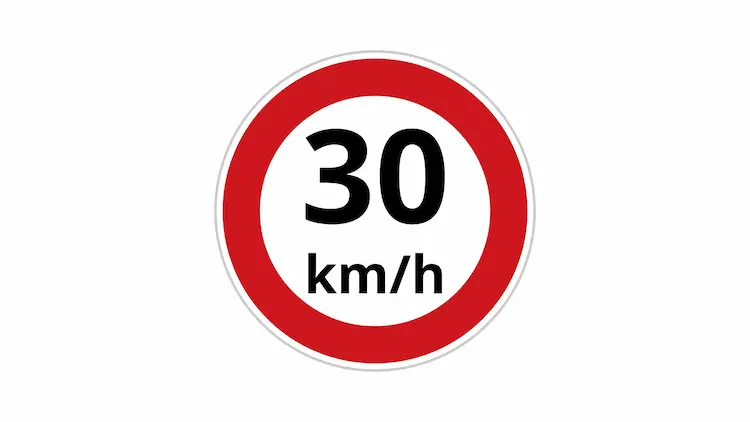
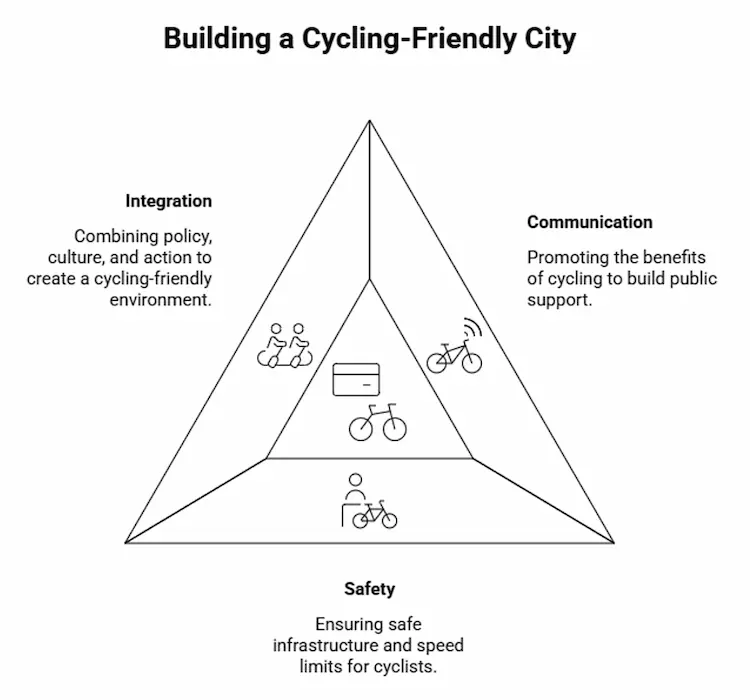
They should start by communicating the benefits of cycling—health, convenience, accessibility, and overall quality of life. Safety is essential. This can be achieved either through dedicated infrastructure or by reducing speed limits to 30 km/h where separate infrastructure is not feasible. Lower speed limits are a simple and cost-effective measure that significantly improves safety. Hyperlocal temporary pilot projects (“tactical urbanism”) can give people a foretaste of what can be achieved.
A broader cultural shift is also needed. This requires both incentives and restrictions. Cycling should be made attractive through infrastructure, bike-sharing systems, and proper parking facilities. Awareness campaigns can also help highlight benefits such as cleaner air, lower noise, and more liveable streets. At the same time, it is important to address systemic issues, for example, increasing car use around schools. Activists should organize themselves and engage with authorities. Political support at the leadership level can make a major difference, as seen in cities like Zagreb or Tirana. Funding is also available, including from EU sources and national governments, to support cycling initiatives. Collaboration and awareness-raising are key.
Read more about car-free city here.
Advice for the Next Generation of Cycling Advocates
Finally, as someone with extensive experience leading cycling advocacy at the European level, what advice would you give to a young person or activist just starting out in cycling advocacy today, especially in a city that is still car-oriented?
First, get organized and connect with like-minded people. Working alone has a limited impact. If possible, align your professional path with your activism—for example, in urban planning, transport, or research. This allows you to have a greater influence. There are also grassroots initiatives, such as Critical Mass rides or “bike kitchens”, where people can learn to repair their bicycles. Initiatives like these help build community and accessibility. Stay informed, follow developments, and engage with others in the field. There is a strong and positive community around cycling advocacy.
Most importantly, do not try to do it alone; there is a lot of energy and support within this movement.