Beyond Green Claims (Part I): The Operational Reality of Sustainable Sport Events
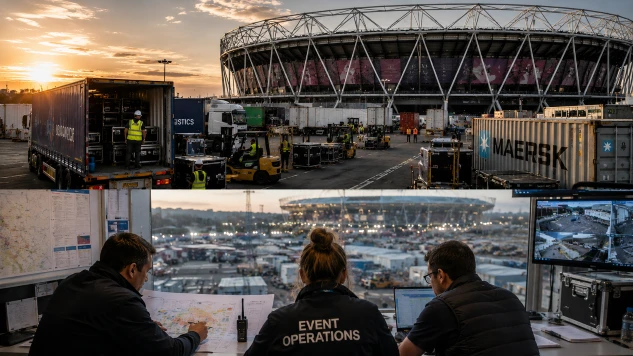
Operational preparations behind sustainable sports events, including logistics infrastructure and event operations supporting major international competitions.
Major sporting events increasingly promote ambitious sustainability goals, yet their greatest environmental impacts often remain hidden within complex operational systems. Drawing on examples from Formula E, Formula 1, the Olympic Games, and other international events, Pierluigi Zacheo explores why transport, logistics, procurement, governance, and planning decisions ultimately determine whether sustainability commitments translate into real-world results.
Read MoreBeyond Green Claims (Part I): The Operational Reality of Sustainable Sport Events



Vehicle-Road-Cloud Integration: Can Smart Infrastructure Prevent Traffic Accidents?

Smart urban intersection illustrating Vehicle-Road-Cloud Integration through connected vehicles, intelligent road infrastructure and real-time traffic management.
Can technology help prevent traffic accidents before they happen? Drawing on the concept of Vehicle-Road-Cloud Integration, this article explores how connected vehicles, smart roads and cloud-based management systems could reshape the future of road safety and intelligent mobility.
Read MoreVehicle-Road-Cloud Integration: Can Smart Infrastructure Prevent Traffic Accidents?

ITS European Congress 2026: Bridging Innovation for Smart and Seamless Mobility in Istanbul

ITS European Congress 2026
The 17th ITS European Congress in Istanbul demonstrated how intelligent transport systems are moving from pilot projects to large-scale deployment. Bringing together policymakers, telecom leaders, transport operators, and mobility innovators, the congress highlighted the growing convergence of AI, connectivity, multimodal transport, and sustainable urban infrastructure.
Read MoreITS European Congress 2026: Bridging Innovation for Smart and Seamless Mobility in Istanbul

Cycling Advocacy in Europe: How the European Cyclists’ Federation Is Shaping the Future of Urban Mobility

European Cyclists' Federation
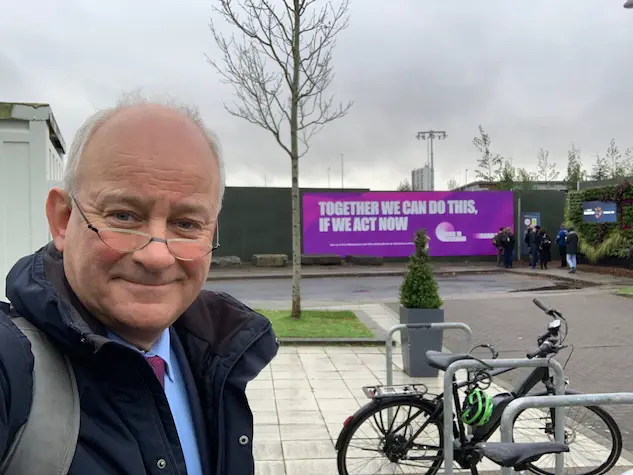
In this interview, Henk Swarttouw, President of the European Cyclists' Federation, shares insights on the future of cycling in Europe and beyond. He discusses the role of cycling in sustainable urban mobility, the challenges of building a pan-European cycling network, and practical steps to accelerate change. The conversation also highlights actionable recommendations for cities with low cycling levels.
Read MoreCycling Advocacy in Europe: How the European Cyclists’ Federation Is Shaping the Future of Urban Mobility

Intelligent Transportation Systems in 2025: China’s Year of Acceleration and Global Signals for Smart Mobility

speed roads as a part of intelligent transportation systems
The 2025 ITS landscape was dominated by AI large models, embodied robots, and drones in China, alongside global advances in LiDAR and V2X. Key themes included the push for vehicle-road-cloud integration, a booming low-altitude economy, and an industry-wide focus on practical digital transformation.
Read MoreIntelligent Transportation Systems in 2025: China’s Year of Acceleration and Global Signals for Smart Mobility

Mexico City 2026: Can Megacity Mobility Coordination Keep a World Cup City Moving?

Mexico city
Mexico City will face a rare stress test during the 2026 World Cup as matchday travel overlaps with daily commuter peaks. The article explores how megacity mobility coordination, not infrastructure expansion, will determine transport system resilience. Lessons from global events show why governance and demand management are becoming core urban mobility tools.
Read MoreMexico City 2026: Can Megacity Mobility Coordination Keep a World Cup City Moving?

AI-Powered Intelligent Transportation: How Changzhou Is Building a “Smooth City” System

Changzhou
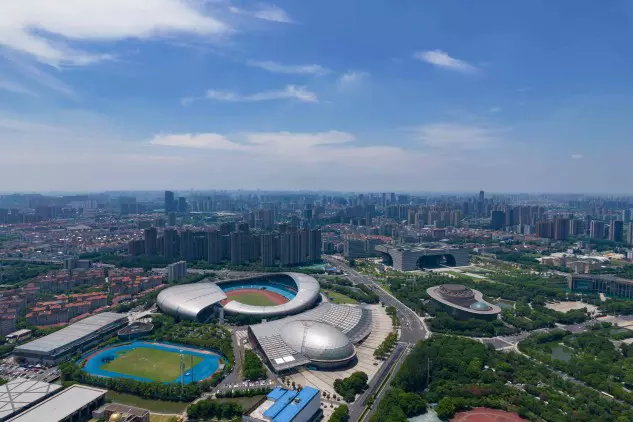
Changzhou, Jiangsu province, China leverages AI to advance its intelligent transportation system. Key initiatives include the AI-driven "Cloud Bus," which optimizes routes and reduces wait times, and smart toll stations that enable seamless, efficient vehicle passage. These efforts enhance public transport, cut costs, and improve urban mobility, supporting the city's sustainable development goals.
Read MoreAI-Powered Intelligent Transportation: How Changzhou Is Building a “Smooth City” System

SaaS Traffic Control in Xuchang: A New Model for Seamless Congestion Management

Xuchang
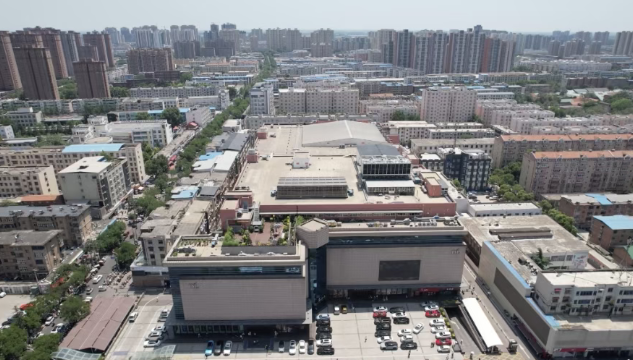
Xuchang (Henan province, China) tackled traffic congestion caused by surging tourism by implementing AI-powered SaaS traffic control system. This lightweight solution, deployed in two weeks at one-tenth the traditional cost, reduced intersection delays by 13.39% and improved rush hour speeds by 13-15%. Integrated smart parking further optimized mobility, demonstrating technology's role in building efficient cities.
Read MoreSaaS Traffic Control in Xuchang: A New Model for Seamless Congestion Management
×