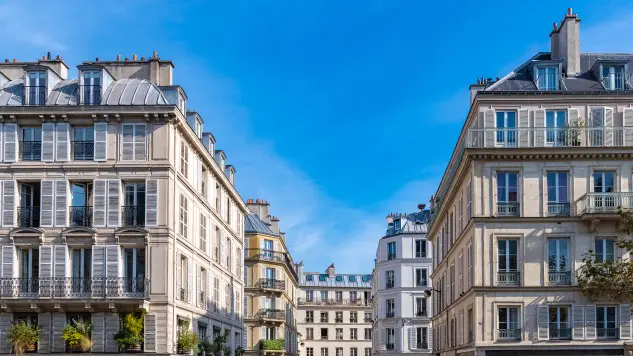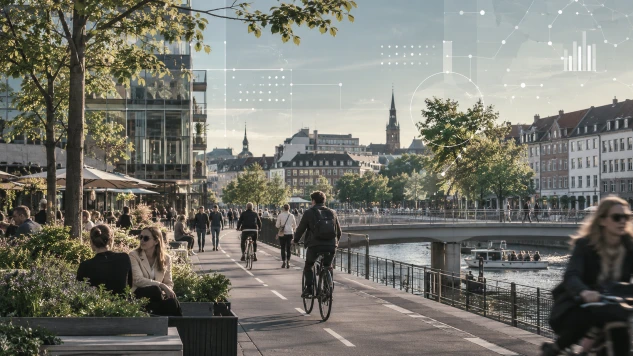

Can ageing societies remain competitive, and how will ageing cities respond to this challenge? Across OECD countries, population ageing is accelerating: the number of people aged 65+ has increased from 21 per 100 working-age individuals in 1994 to 33 today, and is projected to reach 55 by 2050. This is no longer a demographic question, it is an economic and spatial one. For example, in the European Union, demographic projections suggest that by 2050 there will be fewer than two working-age individuals per person aged 65 or older, fundamentally reshaping labour markets and fiscal systems. As populations age across Europe and beyond, states and cities are becoming the primary arenas where longevity either translates into productivity or into systemic burden, increasingly shaping the emergence of longevity cities. The real challenge is not whether societies will age, but whether they are capable of redesigning their economic and urban systems to accommodate longer, healthier, and more productive lives.
From longevity to healthivity
Recent debates and developments are pointing to a critical shift in thinking. Longevity in its essential meaning of just prolonging life is not sufficient as a guiding concept. What is needed is a transition towards what can be described as healthivity, or the integration of health, vitality, and productivity into a single economic logic. In such a framework, health is no longer a secondary outcome of development but one of its primary drivers.
Empirical research increasingly supports this view. Health has been shown to contribute significantly to overall productivity, transforming healthcare from a ‘cost centre’ into a form of capital investment. This shift has profound implications not only for public policy, but also for business strategy and long-term competitiveness. This shift is also central to the development of healthy ageing cities.
People as an underinvested asset
Ageing is not only a demographic shift but an economic one, and research shows that a 10% increase in the share of population aged 60+ can reduce labour productivity by up to 4.9% if not offset by structural changes.
At the heart of the societal transformation discussed lies a fundamental yet often overlooked insight: people are not a cost, but the most underinvested asset in modern economies. Ageing populations are frequently framed in terms of fiscal pressure and declining labour supply. However, this perspective overlooks the accumulated knowledge, experience, and stability that mature populations bring to economic systems.
In increasingly complex and innovation-driven environments, these attributes are not diminishing, they are becoming more valuable. The real limitation is not demographic change itself, but the inability of existing systems to effectively utilise this resource. Reframing people as assets rather than costs is therefore not a rhetorical shift, but a strategic necessity.
Smart cities as the operating system of longevity cities
Within this context, the concept of smart cities takes on a new meaning, particularly in the transition toward longevity cities. Rather than being defined by the deployment of digital technologies alone, smart cities should be understood as platforms that integrate longevity into the everyday functioning of urban life. Their true value lies in their ability to connect infrastructure, services, and data in ways that extend healthy and productive lifespans.
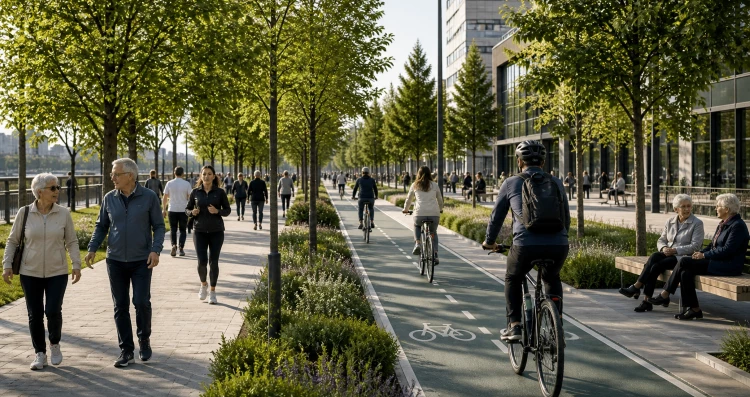
A city that supports preventive healthcare through its design, enables mobility and accessibility across all age groups, and creates conditions for continuous participation in economic and social life is fundamentally different from one that merely digitises existing inefficiencies. In that sense, smart cities become the operational layer of the evergreen economy, translating abstract concepts into lived realities.
Closing the gap between individuals and systems
One of the most striking observations is the growing gap between individual behaviour and institutional response. Individuals are already adapting. They invest in preventive health, pursue continuous learning, and actively manage their longevity. Institutions, however, remain largely reactive. Healthcare systems still focus on treatment rather than prevention, labour markets are structured around outdated life cycles, and urban planning often fails to reflect demographic realities.
The uncomfortable truth, rarely named in this industry, is that sick care is not broken. It is performing exactly as designed. Episodic, reactive, standardised treatment is a multi-trillion-dollar cash flow engine, optimised over decades for volume rather than outcome. Every stakeholder in the chain has been calibrated to the disease economy. Bridging this gap requires more than incremental reform. It demands a systemic integration of health, economy, and urban design. Smart cities offer a pathway to achieve this by embedding longevity directly into infrastructure and services, creating environments where individual efforts are supported rather than constrained.
From policy to practice
The evergreen economy emerges as a framework capable of guiding this transition. It is grounded in the idea that longevity should be understood as quality of life rather than mere duration, that health must be integrated into economic performance, and that interdisciplinary collaboration is essential for addressing complex societal challenges.
Translating these principles into practice requires coordinated action across multiple domains. Healthcare systems must shift towards prevention and personalisation, labour markets must adapt to longer and more flexible working lives, and financial systems must evolve to support these changes. At the same time, innovation ecosystems must increasingly integrate health technologies, data analytics, and new business models into urban and regional development strategies.
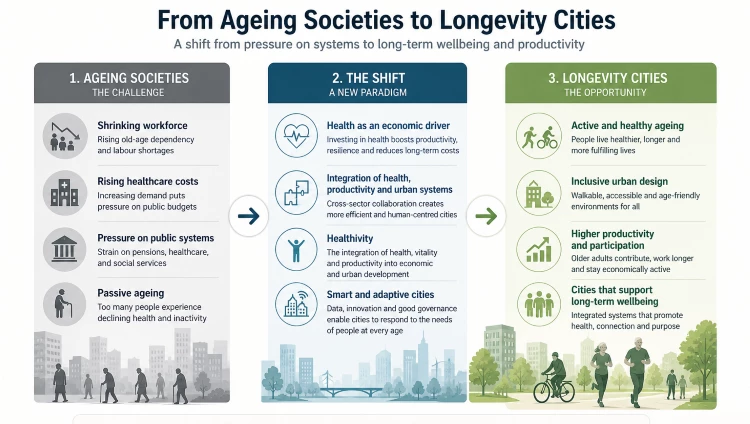
It is important to note that this shift is not purely conceptual, there are already compelling initiatives emerging around the idea of longevity-oriented environments, including the notions of longevity cities and even longevity republics. Cities such as Singapore, Copenhagen, and Tokyo are often cited as leading examples, integrating health, urban design, mobility, and digital infrastructure in ways that actively support longer and healthier lives. In parallel, smaller-scale but highly focused initiatives, such as so-called longevity hubs in regions of Switzerland and the United States, are experimenting with more integrated, system-level approaches that combine health innovation, finance, and policy design. These examples suggest that the transition towards longevity-oriented systems is already underway, although still fragmented and uneven.
A window of opportunity for emerging regions
Regions such as Adria including the Western Balkans face pronounced demographic pressures, but they also possess a unique opportunity. Unlike more mature economies, they are not constrained by deeply embedded legacy systems. This allows for the possibility of designing longevity-oriented ecosystems from the outset, aligning economic policy, urban development, and innovation strategies with the realities of an ageing population.
Such an approach does not simply mitigate demographic challenges; it transforms them into a source of competitive advantage. The ability to design systems that fully utilise human potential across the lifespan may well become one of the defining factors of future economic success.
Designing competitive longevity
Demography sets the boundaries within which economies operate, but it does not determine outcomes. Those outcomes are shaped by design, policy choices, and the ability to integrate emerging knowledge into functional systems.
The transition from viewing ageing as a cost to recognising it as a strategic resource requires a fundamental shift in perspective. It also requires new forms of coordination between health systems, economic policy, and urban development. Smart cities play a central role in this transformation, not as technological showcases, but as environments where longevity becomes productive, integrated, and economically meaningful. The question is no longer whether societies will age. The question is whether they will design that ageing to enhance, rather than constrain, their competitiveness.
About the author: Prof. Dr. Ernest Vlačić is a professor of innovation, strategic management and sustainability at FEFA Faculty in Belgrade, focusing on innovation ecosystems, competitiveness, and the development of the evergreen economy in the context of longevity and smart societies.