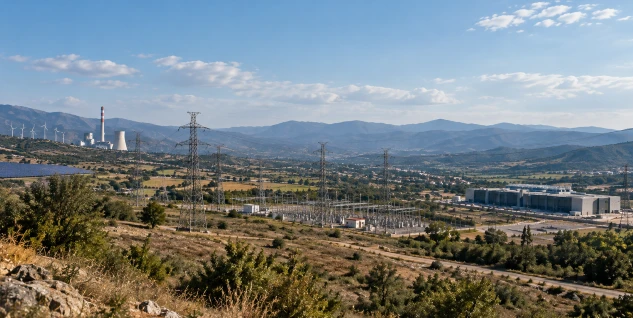

From dialogue to implementation
I went to the Three Seas Initiative Summit and Business Forum in Dubrovnik with a simple question in mind: are we finally moving from conversations about energy security, infrastructure, digitalization, and regional connectivity toward projects that are structured, financeable, and ready for implementation?
What I saw there suggests that we might be.
The Three Seas Initiative itself has evolved quite significantly over the past few years. Originally conceived as a platform focused on regional cooperation and strategic connectivity between Central and Eastern European countries, it is increasingly becoming a space where infrastructure, energy, digitalization, and investment are discussed through the lens of implementation rather than declaration.
Dubrovnik felt like an appropriate setting for that shift. Ten years after the original Dubrovnik Declaration launched the Initiative, the city once again hosted political leaders, investors, development institutions, technology companies and infrastructure stakeholders from across the region and beyond. Among the most visible political figures were Andrej Plenković and Milojko Spajić, whose appearances reinforced the increasingly strategic role of the Initiative within broader European and regional discussions on infrastructure, energy and competitiveness.
This year’s summit in Dubrovnik felt noticeably more pragmatic and commercially oriented than many regional gatherings in the past. Discussions were centered around financing structures, execution capacity, strategic technologies, and projects that can realistically move forward in the near term.
A different geopolitical dynamic
Energy security, grid modernization, LNG infrastructure, AI, digital resilience, and connectivity dominated much of the agenda, reflecting broader geopolitical and economic shifts shaping Central, Eastern, and Southeast Europe.
Another important theme running through the summit was the growing convergence between energy, digital infrastructure, and strategic connectivity. Discussions increasingly linked grid modernization, AI, data infrastructure, cybersecurity, transport corridors, and regional resilience into a single investment and competitiveness agenda.
This was particularly visible in sessions involving U.S. and international institutions, including discussions featuring representatives of the U.S. International Development Finance Corporation, technology companies and investment groups increasingly active in the region.
What emerged quite clearly is that infrastructure is no longer being viewed only as a development issue, but as a strategic asset shaping economic positioning, competitiveness, and long-term resilience across the broader region.
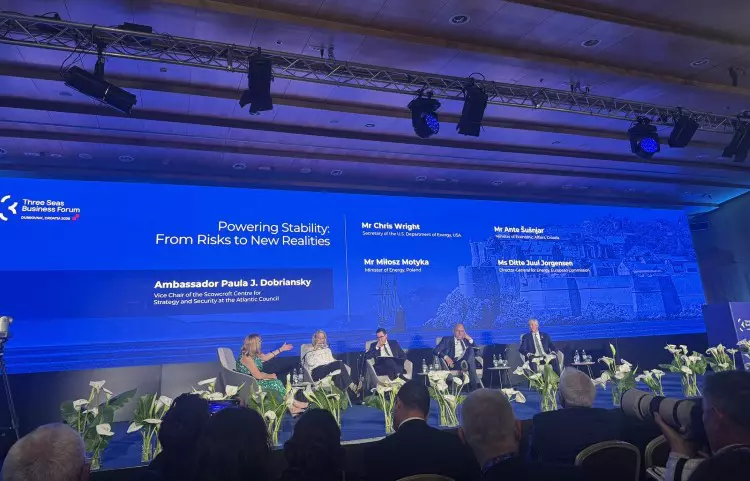
The growing operational role of U.S. institutions, investors, and technology companies also reflects a broader geopolitical shift in which infrastructure, energy, and digital systems are increasingly becoming instruments of strategic influence and economic positioning.
Whether viewed as strategic partnership or a more pragmatic form of geopolitical engagement, the direction is becoming increasingly clear: infrastructure and energy are moving closer to the center of international economic diplomacy.
The shift is subtle, but important. The focus is no longer on what the region needs in theory. It is on what can actually be financed and implemented here and now. The conversations feel more grounded, more selective, and much closer to execution than what we have been used to over the past decade.
Economic diplomacy becomes operational
This is where economic diplomacy is starting to take a more operational form. Not as another layer of dialogue or positioning, but as a mechanism to connect governments, institutions, and private capital around concrete opportunities.
Walking through the forum spaces in Dubrovnik, that dynamic was visible not only on stage, but also in smaller side meetings and informal discussions between investors, public officials and project developers. It feels less like coordination and more like deal-making, even if that language is rarely used explicitly.
Institutions like the U.S. International Development Finance Corporation (DFC) and the U.S. Trade and Development Agency (USTDA) are not looking for another layer of strategy. They are looking for projects that are structured, grounded, and ready to move, with a clear path to financing, implementation, and a defined role for partners who can actually deliver.
That changes the conversation quite significantly. The emphasis is increasingly on bankability, execution readiness, scalability, and strategic alignment between governments, financiers, and implementation partners.
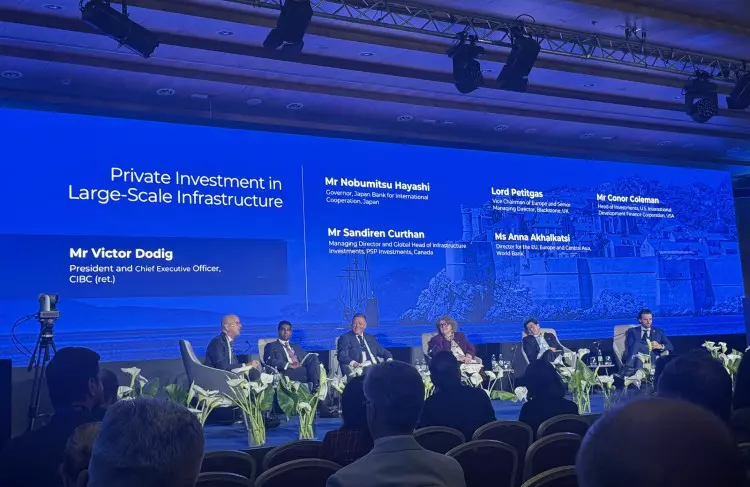
Energy and infrastructure at the center of the Three Seas Initiative Summit
Energy is naturally at the center of this shift. Grid modernization, storage, integration of renewables, cybersecurity, AI-enabled infrastructure, digital resilience, and system flexibility are no longer abstract priorities. They are operational constraints already shaping how systems function, how economies grow, and how countries position themselves strategically.
The same applies to regional infrastructure more broadly, from gas interconnections and transport corridors to digital infrastructure, data connectivity, and supply chain resilience. Projects like the Southern Gas Interconnection have been discussed for years. The rationale has rarely been the problem. What has been missing too often is alignment between political support, institutional ownership, technical preparation, financing, and implementation capacity.
That is where economic diplomacy, when it works, becomes tangible. Not in statements or frameworks, but in the ability to move a project from concept to execution.
Preparedness is becoming a strategic advantage
Another noticeable shift is the pace. There is less patience for long, open-ended preparation phases without clear next steps. The expectation is not that everything moves fast, but that it moves with intent. That changes the dynamic significantly because it rewards those who are prepared and exposes those who are not.
For countries across Southeast Europe and the broader regional space, this creates a real opening but not an automatic one. The window is opening for projects capable of aligning local realities with the expectations of international capital, institutions, and technology partners. Increasingly, the emphasis is shifting from strategy development toward implementation capacity, bankability, execution readiness, and the ability to move from concept to delivery.
Less focus on strategies, more on implementation. Less on explaining problems, more on solving them.
And perhaps that was the clearest impression left by the Three Seas Initiative Summit and Business Forum in Dubrovnik 2026. The region is no longer short on concepts, declarations or geopolitical attention. What increasingly matters is preparedness: the ability to turn political momentum into projects that can actually move.
For those of us working on projects across the region, the implication is becoming increasingly clear: the window is open but only for projects that are ready to move.