
Can technology, civic action, and local vision come together to make North Macedonia’s cities smarter, greener, and more sustainable? Urban sustainability in North Macedonia is becoming increasingly visible as the country continues to urbanize. Cities such as Skopje, Kumanovo, Bitola, Tetovo, and Ohrid face the pressing need to modernize infrastructure, reduce pollution, and improve the quality of life for citizens. From smarter mobility systems and digital public services to clean-up movements and green urban spaces, a quiet transformation is already taking shape. Yet the pace of progress raises an important question: are these initiatives enough to drive a true urban transition toward sustainability, or are they isolated efforts in need of stronger
Becoming a smart and sustainable city is not only about technology. It is a complex process that involves rethinking how cities function, how people move, consume energy, use resources, and participate in shaping their environment. This transformation requires the combined efforts of local governments, which must provide supportive policies and infrastructure; the private sector, which brings innovation and investment; and citizens, whose awareness and behavior ultimately determine the long-term success of any initiative.
North Macedonia and its cities
Located in the heart of the Balkans, North Macedonia is a small and diverse country, covering about 25,700 km² and with a population of approximately 1.8 million as of 2025. In the early 2020s, there was a clear trend of increased urbanization, with around 60% of the population living in cities, while rural areas, covering 89% of the land, experienced growing economic disparities. Economically, North Macedonia is classified as an upper-middle-income country, operating a small and open market economy.
The capital city, Skopje, serves as the primary metropolitan hub, with a population of over half a million and a concentration of governmental, commercial, and service activities. Other significant urban centers include Bitola, Kumanovo, Tetovo, and Ohrid, each with distinct economic, cultural, and geographical characteristics. Smaller towns such as Kriva Palanka stand out for their cleaner environments and a strong sense of communal responsibility toward public spaces. Residents here often demonstrate higher environmental awareness and civic innovation. In contrast, larger cities face growing challenges, from waste accumulation and air pollution to traffic congestion and uncoordinated urban expansion.
Smart mobility in Skopje: driving urban sustainability
As Skopje continues to expand and modernize, the city faces pressing challenges of traffic congestion, air pollution, and urban sprawl. Yet, in recent years, it has also become a testing ground for smart mobility solutions in North Macedonia that aim to reshape how citizens move through the city.
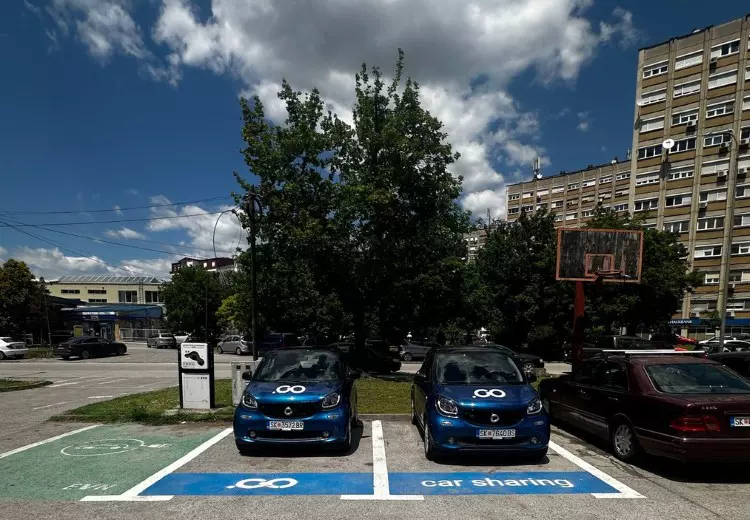
At the forefront is Avant2Go, the country’s first electric car-sharing platform. Through a simple mobile app, users can rent and return fully electric vehicles at various city points, reducing both emissions and private car dependency. Complementing this, BinBin offers a network of shared e-bikes and e-scooters, making short-distance urban travel more efficient and environmentally friendly.
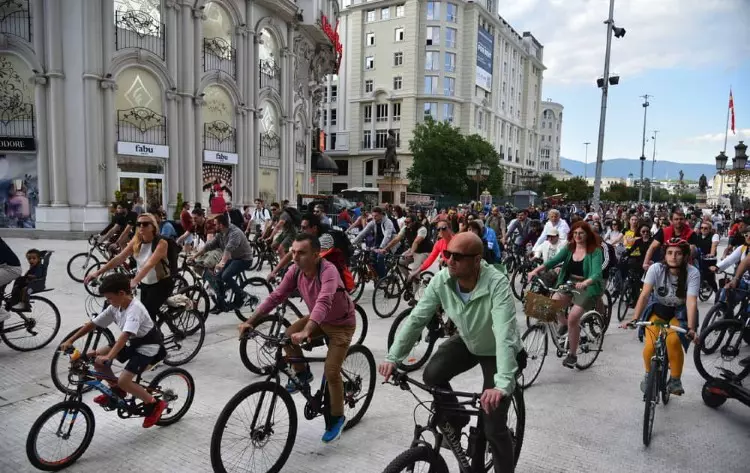
Beyond new technologies, the cycling culture in Skopje is steadily growing. The Critical Mass Skopje initiative, part of a global movement first held on May 30, 2012, under the motto “Skopje on Wheels!”, has evolved into a monthly symbol of civic engagement and environmental awareness. Every last Wednesday of the month, hundreds of cyclists take to the streets to assert their presence and demand equal rights and safer infrastructure. The city has expanded its biking infrastructure, introducing new lanes and safer routes that connect key neighborhoods and public areas. The Critical Mass initiative is spreading across other towns in the country, such as Shtip, Prilep, Bitola, Tetovo, and Gostivar.
Modern City App: Smart city living
Modern City is a step toward more connected and efficient urban living in North Macedonia. The mobile app, currently available in Skopje, Ohrid, Dojran, and Veles, offers citizens and visitors real-time tools for navigating and interacting with their cities. From locating available parking spaces and EV charging stations to discovering eco-friendly and smart city features such as smartbenches and recycling ppoints, Modern City integrates sustainability and convenience into daily urban life.
AirCare: data transparency for cleaner cities in North Macedonia
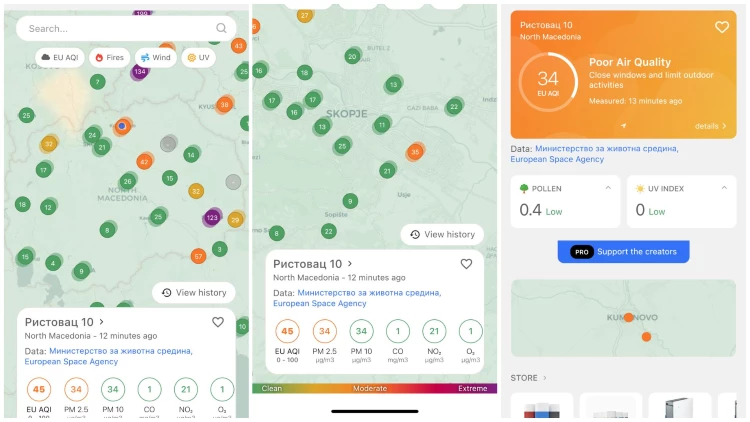
In 2014, a young software engineer from Skopje, Gorjan Jovanovski, decided to confront one of North Macedonia’s most visible yet neglected problems, the country’s alarmingly poor air quality. He discovered that the data on air pollution in the cities were publicly available but buried in inaccessible government databases. Determined to bring this information to the people most affected by it, he developed a simple website called MojVozduh (“My Air”), which quickly evolved into a mobile app, now known globally as AirCare.
By turning complex data into clear, user-friendly visuals, AirCare allowed citizens to check real-time air pollution levels in their cities, track long-term trends, and understand what those numbers meant for their health. The app aggregates information from government monitoring stations, low-cost sensors, and satellite data from agencies such as NASA and the European Space Agency.
AirCare embodies the essence of smart innovation for urban sustainability in North Macedonia, not just digitalization for its own sake, but technology that strengthens transparency, accountability, and citizen participation.
Grassroots clean-up movements and civic innovation
In Skopje, two inspiring youth-led initiatives, “Kesa na Deset” and “Gradinarot.mk”, are reshaping civic engagement and environmental awareness among young citizens. What began as individual acts of responsibility has evolved into a collective movement for cleaner, greener urban spaces.
The story of “Kesa na Deset” began when Filip, a young activist from Skopje, noticed the growing amount of litter across public spaces and the lack of response from local institutions. Determined to act, he launched a social media campaign under the slogan “Every tenth follower – one bag of waste collected.” His simple yet powerful idea quickly gained attention, turning into a grassroots movement. Today, “Kesa na Deset” organizes regular clean-up actions, particularly notable is the campaign for cleaning the riverbank of the Vardar River embankment, promoting environmental responsibility through community participation.

At the same time, “Gradinarot”, the initiative of young Andrej from Skopje, focuses on revitalizing neglected green areas across the city. He cleans and maintains overgrown public spaces that have been left unattended for years, transforming them into safe, welcoming spots for recreation and community life. Both movements exemplify how young citizens are taking urban sustainability in North Macedonia into their own hands, using social media, teamwork, and civic passion to make Skopje cleaner and more livable.
Bostanie: Skopje’s urban garden and green innovation
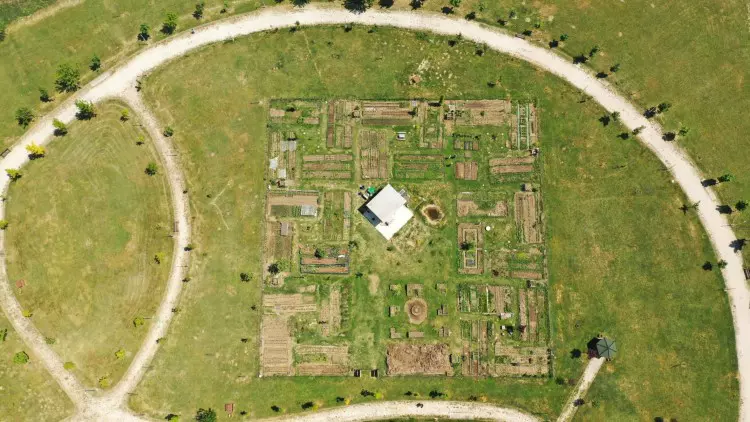
In the heart of Skopje, Bostanie is redefining what it means to live sustainably in an urban space. Located in the park of the Novo Lisiche neighbourhood in Skopje, the urban garden Bostanie was officially opened in August 2021. This outstanding project, spanning approximately 3,000 m², represents the first urban garden in the capital designed on permaculture principles and gives citizens access to small plots (around 50 m² each) as well as shared raised beds to grow vegetables, herbs, flowers, and experimental crops.
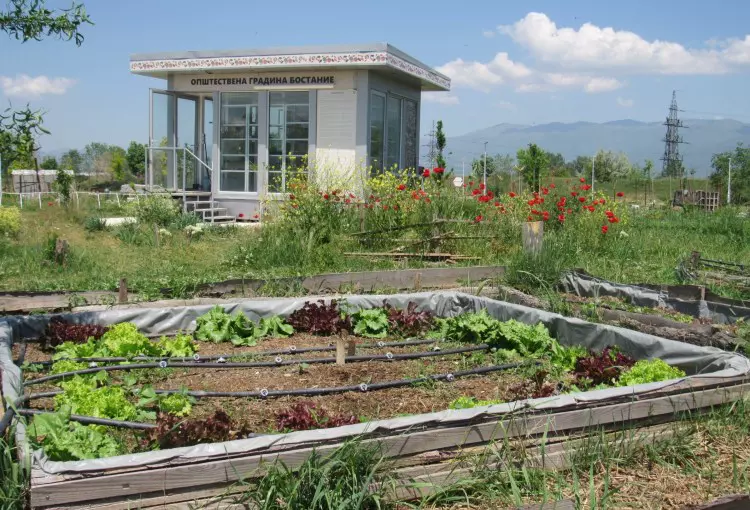
The irrigation system is automated, using a well and drip system, which helps conserve water and supports the garden’s sustainability goals. As part of Skopje’s broader green vision, the garden also supports the city’s smart and sustainable agenda, turning unused space into green infrastructure for urban sustainability in North Macedonia, improving the microclimate, and showing how citizens can take an active role in shaping a cleaner, healthier urban future.
Kumanovo: local action for a greener and smarter city
Kumanovo, as one of the largest cities in North Macedonia, is working to improve its environmental impact and set a positive example for other cities. The city has introduced waste separation bins across public areas, enabling citizens to sort plastics, paper, glass, organic, textile, and electronic waste more efficiently. This system promotes environmental awareness while encouraging residents to take active responsibility for cleaner surroundings.
Since the end of 2022, Kumanovo has introduced free public transportation as part of its efforts to promote greener urban mobility. The initiative aims to ease the financial burden on citizens and encourage the use of public transport, though its long-term impact on system sustainability and environmental outcomes remains to be seen. Still, it reflects a growing awareness of the need for more inclusive and accessible mobility within the broader context of urban sustainability in North Macedonia.
Challenges for urban sustainability in North Macedonia
Despite visible progress and growing civic enthusiasm, North Macedonia’s transition toward smart and sustainable cities remains slow and uneven. Most municipalities operate with tight local budgets and depend heavily on national funding or donor-supported projects. Sustainable infrastructure, digitalization, and clean mobility require long-term investments that local governments often cannot sustain beyond project cycles.
According to the Ministry of Finance’s 2024 local budget analysis, nearly 80% of municipal expenditures are allocated to basic operations and maintenance, leaving little room for innovation or smart infrastructure upgrades. Many initiatives are project-based, often piloted through donor funding without clear continuation plans. Municipalities rarely track outcomes or replicate successful models elsewhere. Urban infrastructure in many Macedonian cities still relies on systems built decades ago. Public transport networks, waste collection systems, and digital infrastructure are not yet optimized for smart integration. Reliable data, a cornerstone of any smart city, are often missing or inconsistently collected.
According to the European Environment Agency, Skopje and Tetovo consistently record PM₂.₅ levels exceeding EU thresholds, largely due to traffic, solid-fuel heating, and industrial emissions. Although North Macedonia has adopted numerous environmental strategies, enforcement is inconsistent, and regulatory mechanisms are often weakly implemented at the municipal level.
Conclusion: scaling urban sustainability in North Macedonia
North Macedonia’s journey toward smart and sustainable cities is still in its early stages. While the ambition is clear, the path is complex. The country faces notable challenges, ranging from limited financial and technical resources and outdated infrastructure to weak cooperation among institutions, municipalities, and citizens. Across North Macedonia, several cities are beginning to embrace a new direction that blends innovation, technology, and environmental awareness. Small but meaningful initiatives are paving the way toward smarter and more sustainable urban living. The question, therefore, is not only how North Macedonia’s cities can become smarter and greener, but how they can sustain and scale urban sustainability, turning good ideas into long-term strategies that benefit both people and the planet.
Read more about Sustainable Balkans here.