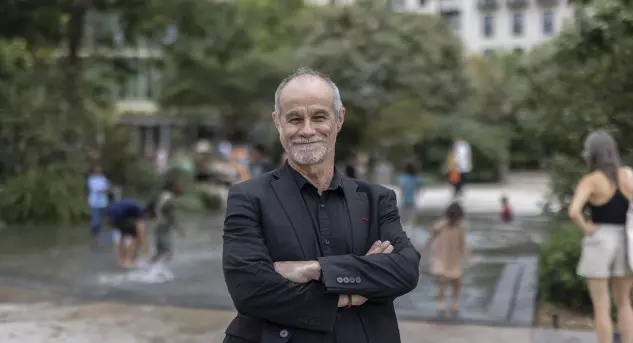
In this interview, Henk Swarttouw, President of the European Cyclists' Federation, shares insights on the future of cycling in Europe and beyond. He discusses the role of cycling in sustainable urban mobility, the challenges of building a pan-European cycling network, and practical steps to accelerate change. The conversation also highlights actionable recommendations for cities with low cycling levels.
Read MoreCycling Advocacy in Europe: How the European Cyclists’ Federation Is Shaping the Future of Urban Mobility
This article examines whether current smart city models are sufficient to address the complex challenges of climate change, biodiversity loss, and urban resilience. While cities increasingly adopt data-driven technologies to optimise infrastructure and services, these systems often overlook ecological processes and living systems that are critical to long-term sustainability.
Read MoreAre Smart Cities Smart Enough? Beyond the Dashboard
For more than a decade, falling solar panel prices fueled the rapid expansion of urban solar energy. Now costs may begin to rise. This article explores what a potential 20–30% increase in module prices could mean for cities, municipal budgets, and future energy planning.
Read MoreThe End of Ultra-Cheap Solar? What Rising Module Prices Mean for Urban Solar Energy
Urban transformation requires more than ambitious strategies, it demands communities of practitioners willing to test ideas, share failures, and act. In this interview, Gerald Babel-Sutter explains how Urban Future 2026 in Ljubljana aims to empower city leaders to turn knowledge into real change.
Read MoreUrban Future 2026 in Ljubljana: Why City Change-Makers Need Action, Not Just Ideas
The article considers how the infrastructure of the city often demonstrates gender disparities that may be present in the urban landscape. From gender-responsive facilities to transportation safety, many elements of urban space continue to serve men better than women. This article discusses the possibilities of gender-sensitive urban planning, taking into account examples from Vienna, Barcelona, and Seoul.
Read MoreGender-Responsive Urban Planning: Why Cities Must Work for Women
How are the world’s “smartest cities” actually ranked? This article examines smart city ranking methodology, from indicator selection to weighting and normalization. Understanding how the numbers are built changes how we interpret the Top 10 cities of 2025.
Read MoreSmart City Ranking Methodology: Beyond the Top 10 Cities of 2025 (II)
Who is the smartest city in the world? It depends on the ranking. This article examines how leading smart city indexes define and measure “smartness” and why their results diverge
Read MoreSmart City Rankings Methodology: Beyond the Top 10 Cities of 2025 (I)
Winter urban heat islands are often seen as a seasonal advantage, making cities slightly warmer during cold months. However, growing evidence shows they can worsen air pollution, accelerate infrastructure damage, and create hidden public health risks. This article explores real-world case studies and explains why winter UHIs are becoming a critical issue for sustainable and smart cities.
Read MoreWhen Warmth Becomes a Trap: The Hidden Costs of Winter Urban Heat Islands
The Smart Engineering for Urban Development conference in Belgrade brought together experts from Serbia and Nordic countries to discuss how Western Balkan cities can move beyond isolated smart city projects toward systemic urban transformation. The discussions highlighted that sustainable and smart urban development depends not only on technology, but on governance, planning, financing and cross-sector cooperation.
Read MoreSmart Cities Need Systems, Not Just Technology: Lessons from “Smart Engineering for Urban Development”
In this interview, Svetlana Tešić shares her expert perspective on AI in urban governance and the growing role of cities in shaping digital transformation. She discusses citizen trust, collaboration between municipalities, and the importance of human-centric approaches to technology. The conversation explores how European cities can use AI responsibly while strengthening democratic governance and public participation.
Read MoreAI in Urban Governance and the Future of Human-Centric Cities: Interview with Svetlana Tešić