
Battery energy storage systems are rapidly moving from early-stage ambition to commercial reality across Southeast Europe, and Balkan Battery Day 2026 in Athens reflected how quickly the regional market is evolving. Held on 21 May and organised by Invest In Network, the event brought together developers, utilities, investors, technology providers and financial institutions to discuss the practical challenges shaping the Balkan BESS market.
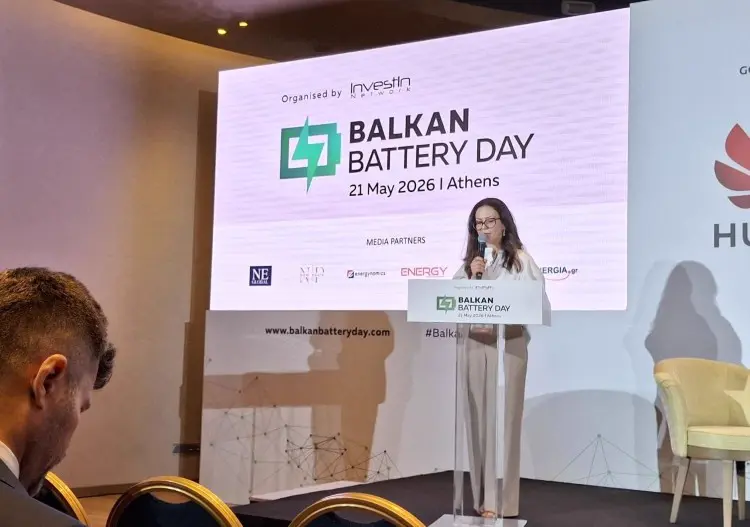
Unlike broader energy conferences, Balkan Battery Day focused mostly on implementation questions: permitting, grid access, financing structures, optimisation strategies and the role of storage in increasingly renewable-heavy power systems. The tone of discussions suggested that the sector is gradually moving away from early-stage market optimism toward more operational and financial questions linked to delivery, system integration and project bankability.
A recurring theme throughout the conference was that battery storage is no longer viewed as an optional addition to renewable energy projects, but increasingly as critical infrastructure for maintaining grid stability and supporting further renewable integration. This broader shift was visible across discussions involving Greece, Romania, Bulgaria and other Southeast European markets.
Greece, Romania and Bulgaria move into the spotlight
Discussions highlighted Greece as one of the region’s most advanced storage markets, supported by auction mechanisms, electricity market reforms and growing renewable penetration. At the same time, participants repeatedly noted that grid connection bottlenecks and permitting timelines remain major constraints despite strong market momentum.
Romania was also frequently discussed as one of the fastest-growing regional markets, supported by EU-backed funding mechanisms, market reforms and increasing investor appetite. Participants pointed to a rapidly expanding pipeline of projects, alongside growing attention to standalone storage deployment and grid balancing requirements.
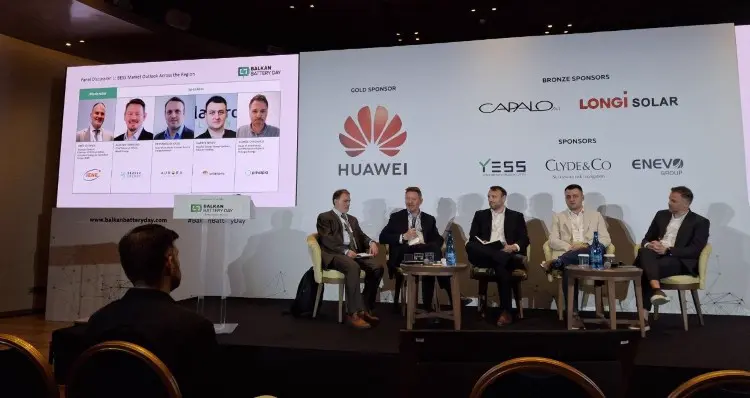
Bulgaria, meanwhile, was repeatedly mentioned as one of the region’s most active markets in terms of completed projects and deployment speed. Discussions highlighted the importance of timing and early-mover advantage in a sector where regulatory frameworks, grid access and financing conditions are still evolving quickly.
At the same time, speakers noted that markets such as Serbia, Albania and North Macedonia remain at earlier stages of development, despite growing policy interest and expanding renewable pipelines.
From technology to bankability
One of the clearest messages emerging from the conference was that the key challenges are no longer primarily technological. Instead, much of the attention focused on financing structures, regulatory predictability and the commercial viability of storage projects.
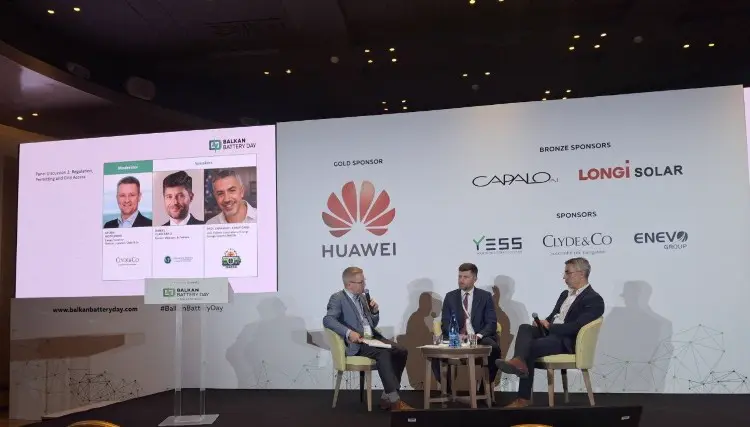
During discussions on financing and bankability, participants explored how new revenue models, including tolling agreements, floor arrangements and cross-border trading structures, are gradually making storage projects more financeable. Speakers also noted that market participants themselves are increasingly developing practical financing solutions even while regulatory frameworks continue to evolve.
The issue of predictability appeared repeatedly throughout the programme. Discussions on permitting and grid access highlighted that the main obstacle for many projects is not necessarily the duration of procedures themselves, but the lack of consistency and predictability across licensing, regulatory and grid-related processes.
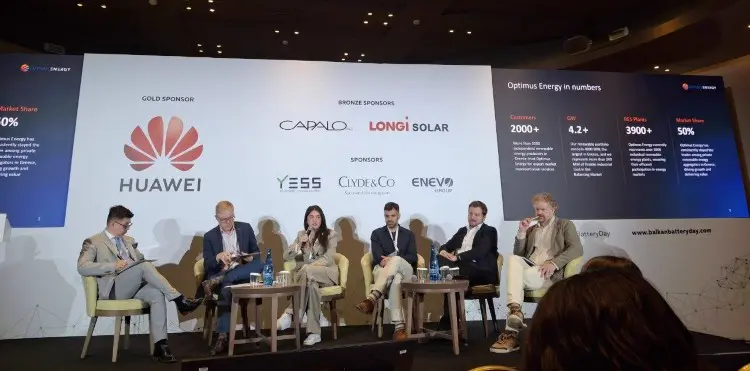
At the same time, some participants focused on the growing role of storage in supporting energy security, balancing electricity systems and enabling larger shares of renewable energy. As renewable penetration accelerates across Southeast Europe, flexibility and balancing capacity are becoming increasingly important for grid reliability and cross-border electricity flows.
Storage as a structural requirement
The final panel of the conference focused on integrating BESS with renewable energy systems and the wider regional grid. Discussions covered co-location strategies, system flexibility, coal phase-out and cross-border impacts extending toward 2030.
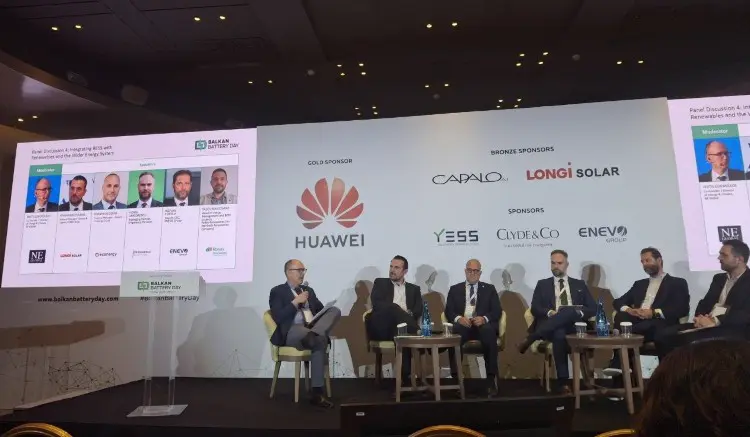
What emerged from Balkan Battery Day was a broader picture of a region entering a new phase of energy transition. Battery storage is no longer being discussed as a future technology or a niche market segment. Across Southeast Europe, it is increasingly viewed as a structural requirement for integrating renewable energy, stabilising electricity systems and supporting long-term energy security.
At the same time, the discussions in Athens showed that the next stage of market development will depend less on announcements and more on execution. Grid readiness, permitting frameworks, financing models and regional interconnection are likely to determine which projects move from ambitious pipelines to operational infrastructure in the years ahead.
Read about other conferences and exhibitions here