At Smart City Expo World Congress (SCEWC) 2026 in Barcelona, artificial intelligence and digital infrastructure shared the stage with affordable housing, social inclusion and climate adaptation. New Polis reports on the projects, discussions and challenges that defined this year’s event.
Artificial intelligence, digital twins, autonomous mobility and advanced urban management systems featured prominently at Smart City Expo World Congress 2026. Yet many of the questions discussed in Barcelona were familiar to city administrations around the world: how to provide affordable housing, improve public services, manage growing infrastructure demands and respond to climate change. The technologies are becoming more sophisticated, but the problems they are expected to address remain complex.
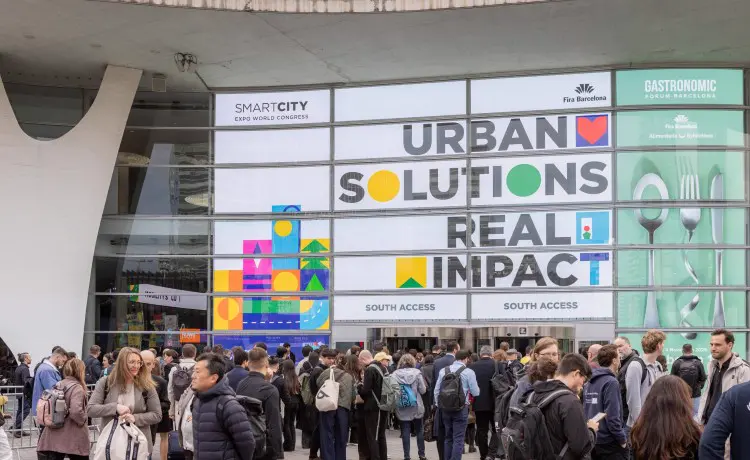
Held on 3–5 November at Fira de Barcelona’s Gran Via venue, the 15th edition of SCEWC attracted 29,721 participants from 140 countries, 1,276 exhibitors and 668 speakers, with representatives of more than 1,000 cities. Organised annually in Barcelona since 2011, the event has become a major international meeting point for city leaders, technology companies, researchers and urban development professionals.
The scale and diversity of SCEWC made it impossible to cover everything taking place across the exhibition halls and conference stages. Hundreds of presentations, discussions and projects offered different perspectives on the future of cities. Rather than attempting a comprehensive account, New Polis has selected several developments and debates that, in our view, reveal some of the broader trends shaping urban innovation and policy.
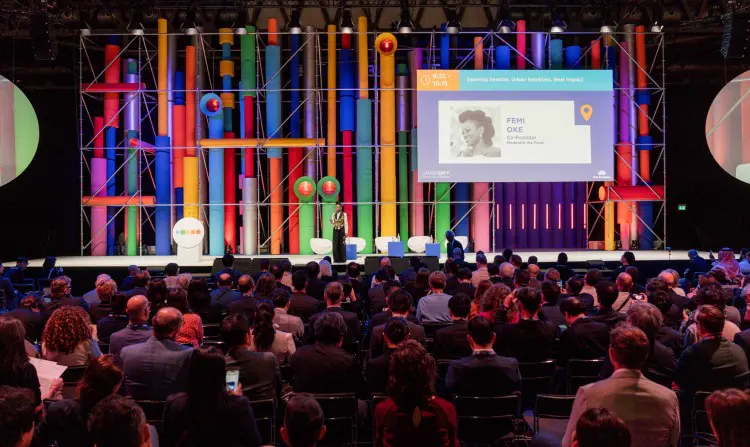
This year’s theme, Urban Solutions, Real Impact, reflected the emphasis on practical applications. For New Polis, an official media partner of SCEWC 2026, the three-day event offered an opportunity to observe how cities and technology providers are approaching shared challenges, and where the difficulties of implementation remain.
SCEWC 2026: Technology moves into everyday city management
The exhibition demonstrated how broadly the smart city market has developed. National and regional pavilions stood alongside major technology companies, infrastructure providers and smaller developers offering specialised solutions for transport, utilities, environmental monitoring and municipal services. Google, Microsoft, NVIDIA, Deutsche Telekom and other international companies were among the exhibitors.
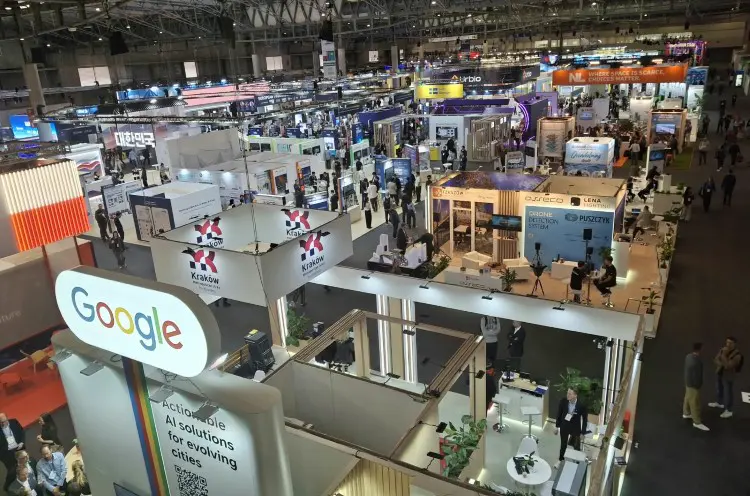
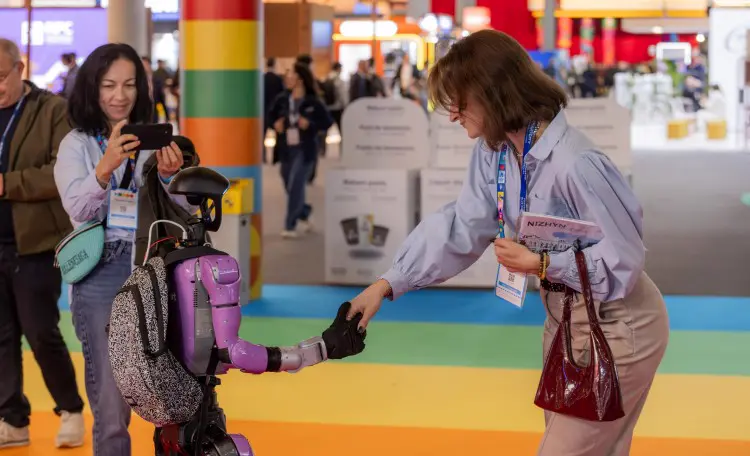
Artificial intelligence appeared across many of these areas, particularly in the processing of urban data and the development of tools for municipal decision-making. Digital twins, once associated primarily with three-dimensional models, are increasingly being used to combine information about infrastructure, environmental conditions and urban activity, helping cities evaluate alternative planning and operational scenarios.
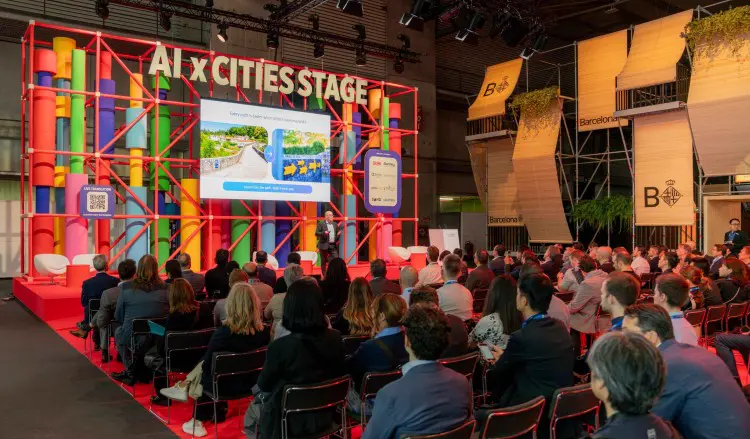
Madrid offered one example of this approach. Its Madrid Intelligence in Action initiative, recognised at the World Smart City Awards, integrates digital twins, data and AI to support air quality monitoring and the management of energy and water resources.
Mobility remained another major part of the exhibition. The parallel Tomorrow.Mobility World Congress covered electric transport, charging infrastructure, public transport systems, traffic optimisation and autonomous technologies. The growing connections between transport, energy and digital services were evident in the range of companies and organisations involved.
Climate adaptation was also prominent. Urban greenery, water management and environmental monitoring featured among the solutions presented, reflecting the growing need for cities to address heatwaves, drought and flooding alongside longer-term emissions reduction.
The variety of technologies on display also raised questions about their practical integration. Many cities operate complex systems developed by different suppliers, while municipal budgets and technical capacities vary considerably. Advanced solutions may offer significant benefits, but their implementation requires compatibility with existing infrastructure, trained personnel and a clear understanding of local priorities.
Housing, wellbeing and the people behind urban policies
Affordable housing received particular attention at Smart City Expo World Congress 2026. The congress took place alongside the new HOWS Barcelona – Housing World Summit, while the Cities Programme, organised with Barcelona City Council, included a Housing Mayors Meeting and exchanges between municipal officials.
The growing importance of housing was also reflected in the World Smart City Awards, which introduced a dedicated Housing category for the first time. The award went to Bogotá’s District Secretariat of Habitat for Mi Casa en Bogotá, a programme combining affordable housing, neighbourhood renewal and mobility. Its inclusion among the winners illustrated how housing accessibility is increasingly considered alongside transport, public services and urban infrastructure.
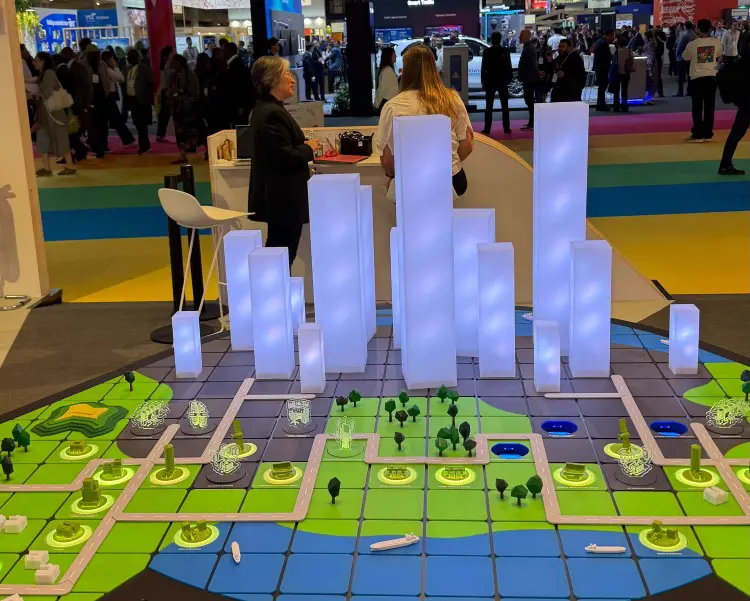
Other discussions addressed the social dimensions of urban development. The panel From Cradle to Silver: Are Cities Designing for Wellbeing at Every Stage of Life? explored how cities can better connect healthcare, social services, housing and community support to meet the needs of residents from childhood to old age. Corey Gray of Smart Cities Council raised questions about whether current urban systems adequately support families, children and older people. His reflections pointed to the everyday pressures that can be overlooked in ambitious urban development strategies. The broader question of how cities measure wellbeing has also been explored in New Polis’s analysis of the Happy City Index 2026.
One of the few sessions to address the gender dimension of urban life was Half the City: Why Women’s Leadership Is the Missing Key to Smarter Urban Futures, organised by the Alliance of European Mayors. The discussion explored how greater participation of women in urban leadership can bring different experiences and priorities into city planning and decision-making. Issues such as safety in public spaces and transport illustrated why these perspectives matter, while the broader conversation highlighted the role of women in shaping more inclusive and responsive urban policies.
The challenge of maintaining long-term urban strategies
The continuity of urban development projects across political cycles was another issue raised during professional discussions in Barcelona. In one of the professional discussions involving experiences from Tallinn, Sarajevo, Alkmaar and Almere, participants considered how municipalities can preserve long-term priorities across electoral cycles. Infrastructure investments, digital transformation programmes and climate adaptation measures frequently take longer than a single political term to implement. Changes in local leadership can therefore affect project schedules, financing arrangements and institutional commitments.
For cities in Southeast Europe, where municipal capacities and political circumstances differ considerably, the issue is particularly relevant. Clear project frameworks, professional administration and sustained cooperation between institutions can help reduce the risk that long-term initiatives are interrupted or repeatedly redesigned.

International exchanges were another important part of the programme. For example, through the Cities Programme, municipal representatives met with peers and organisations including C40, Bloomberg Philanthropies, the World Economic Forum and Metropolis. Such meetings offered opportunities to compare experiences and discuss approaches already tested elsewhere, although successful solutions still need to be adapted to local conditions.
World Smart City Awards 2026: Tokyo receives the top prize
The World Smart City Awards ceremony was one of the highlights of SCEWC 2026. This year’s competition attracted a record 533 submissions from 68 countries, with awards recognising achievements in governance, housing, mobility, energy, infrastructure and social inclusion.
Tokyo received the main City Award for C³ Powering Tokyo, a model presented by the Tokyo Metropolitan Government’s Bureau of Digital Services. Built around three principles, Citizens, Communities and Collaborations, it combines public participation, neighbourhood-level initiatives and cooperation with other cities. The approach seeks to maintain a high quality of life in a metropolis of approximately 14 million residents, with technology serving broader urban priorities. Tokyo Governor Yuriko Koike accepted the award.
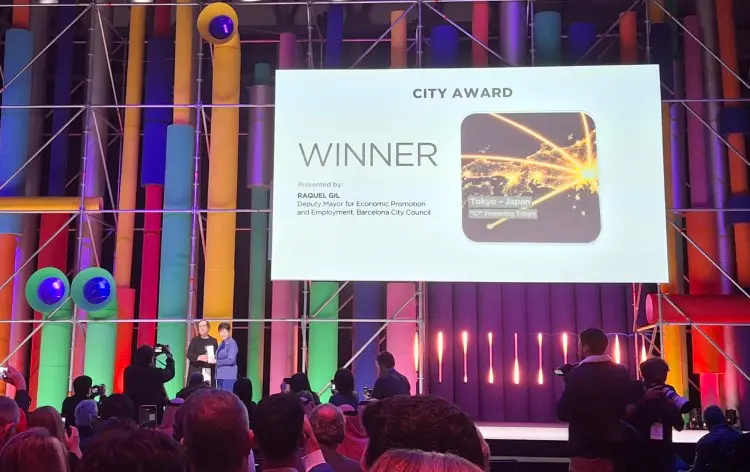
Other winners illustrated the different forms urban innovation can take. For example, ICLEI Europe was recognised for its AI Opportunity Fund, a programme providing free training to municipal officials in the responsible use of artificial intelligence. The initiative addresses an increasingly practical concern for city administrations: how to develop the skills needed to assess, introduce and govern AI-based tools.
The awards also reflected the breadth of the smart city agenda, from road safety and intelligent lighting to renewable energy systems and housing programmes. The winning projects addressed different needs and operated in very different urban environments, making direct comparisons difficult.
A sustainable exhibition, down to the materials
Sustainability was visible not only in the SCEWC conference programme but also in the design of some exhibition spaces. The Czech national pavilion, which brought together companies, institutions and regional representatives, received the Green Exhibitor Award for the third consecutive year.
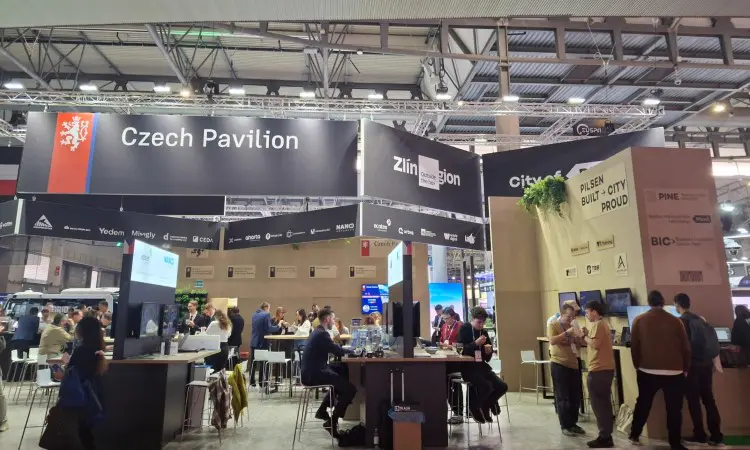
Its design incorporated refurbished furniture, reused objects and materials made from recycled packaging, demonstrating how circular economy principles can be applied to temporary exhibition structures. In an industry where stands are often dismantled after only a few days, such choices are particularly relevant.
What SCEWC 2026 leaves cities to consider
For cities with more limited financial and institutional resources, including many in the Balkans, the experience presented in Barcelona offers useful points of reference, although few solutions can be adopted without substantial adaptation. Digital platforms require reliable data and qualified staff, infrastructure projects need long-term financing, and ambitious urban strategies depend on institutions capable of maintaining them beyond political cycles.
The exhibition halls in Barcelona offered an impressive range of technologies and urban projects. What matters now is what happens when city delegations return home: which ideas can be translated into workable policies, which partnerships will lead to actual projects, and whether the results will make a noticeable difference to residents. These are less spectacular questions than the technologies on display, but they may ultimately provide a better measure of the congress’s impact.
The next Smart City Expo World Congress will take place in Barcelona on 2–4 November 2027.