
Sustainable product design is often reduced to a discussion of materials. We tend to ask whether a product is made from natural or recycled materials without considering the broader picture. However, the environmental impact of a product is shaped not only by what it is made of but also by the way it is manufactured, distributed, used, repaired, and ultimately disposed of. True sustainable product design therefore requires a lifecycle perspective rather than a material-focused one.
Understanding sustainable materials
In industrial design, materials are more than inputs used in product production. They influence manufacturing processes, product performance, resource consumption, and the overall user experience. Because of this, the material selected becomes an important part of any conversation about sustainability. However, assessing whether a product is truly sustainable requires looking beyond the material itself. Designers must evaluate the material’s entire lifecycle, including how it is sourced, how much water and energy are required to extract and process it, how far it travels through supply chains, how it performs during use, and how it can be recovered, recycled, or disposed of at the end of its life.
Broadly speaking, sustainable materials fall into two categories:
- Renewable materials come from biological sources that can regenerate naturally, such as wood, bamboo, mycelium, algae-based foams, and cork.
- Recycled materials originate from existing waste streams, including plastic bottles, aluminum, and glass. While they do not regenerate naturally, they reduce the need for virgin resource extraction by keeping valuable resources in circulation longer.
Importance of sustainable creation
According to the United Nations Environment Programme (UNEP), resource extraction could rise by 60% by 2060 compared with 2020 levels. Every year, hundreds of thousands of new consumer products are introduced globally, while humanity extracts more than 100 billion tonnes of raw materials to support current production and consumption patterns. Yet many products are replaced long before reaching the end of their functional lives, accelerating both resource depletion and waste generation.
We often forget that everything we design, produce, buy, use, and discard exists within the same closed ecological system on which human well-being depends. Although resource extraction, manufacturing, and waste disposal often occur far from where products are consumed, their environmental impacts do not disappear. Instead, they accumulate across ecosystems, contributing to climate change, biodiversity loss, resource depletion, and pollution.
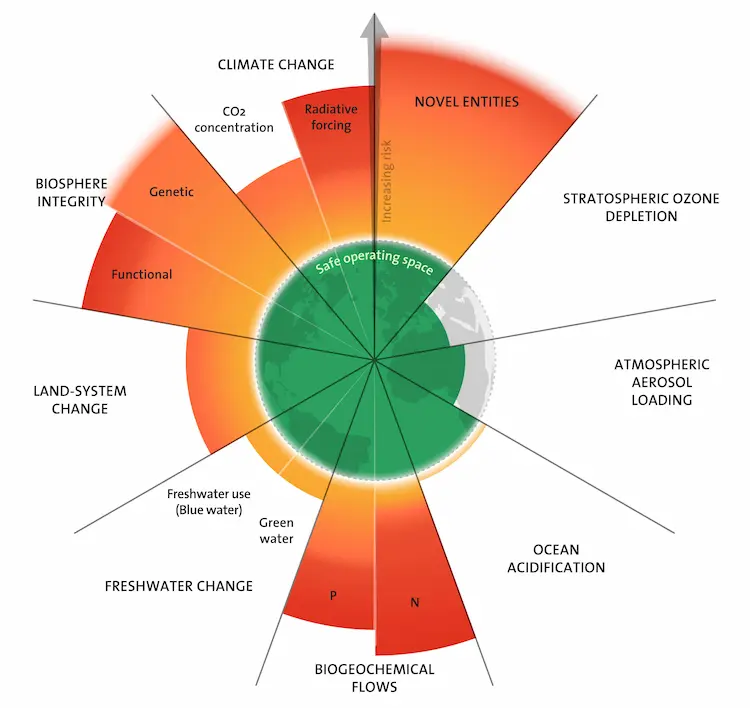
The Planetary Boundaries framework highlights the growing risks associated with human pressure on the nine critical Earth system processes that regulate the planet’s stability and resilience. Today, humanity has already exceeded seven of these nine planetary boundaries. Sustainable product design is therefore not simply a design trend or an aesthetic preference. It is a practical framework for creating products that operate within the ecological limits of a finite planet while balancing environmental, economic, and functional performance.
Sustainable product design in practice
Sustainable product design is becoming increasingly achievable as companies integrate renewable and recycled materials into both their products and business models. Examples include Ecovative‘s mycelium packaging, which replaces petroleum-based foam with fully compostable packaging grown in just a few days; bamboo bicycles developed by BooCycles and Ghana Bamboo Bikes, which substitute fast-growing bamboo for metal; and Bloom’s algae-based foams, which transform harmful algae from waterways into high-performance materials.
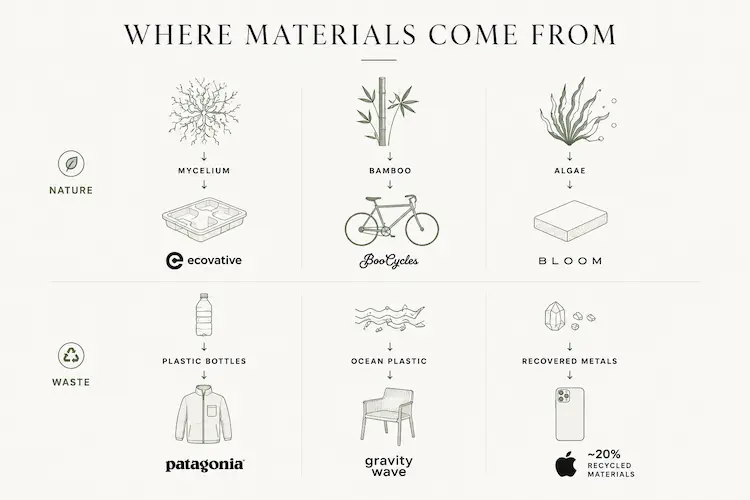
Recycled resources are also becoming increasingly common. Examples range from Patagonia‘s fleece made from recycled plastic bottles and Gravity Wave‘s furniture produced from ocean plastic to advanced electronics such as Apple’s devices, which, since 2021, have incorporated approximately 20% recycled materials, including gold, tungsten, rare earth elements, and cobalt. These examples demonstrate that recycled materials can support not only everyday consumer products but also sophisticated, high-performance technologies.
Read more about how to turn waste into value here.
Limitations of sustainable materials
It is important to understand that sustainable materials are not a universal solution. Many renewable and recycled materials still cannot match the durability, heat resistance, or structural performance of certain plastics and metals. In applications involving high mechanical loads, extreme temperatures, or strict safety requirements, high-performance non-renewable materials often remain the most appropriate choice.
For example, bio-based plastics like PLA (polylactic acid) soften at relatively low temperatures (around 55–60°C), which limits their use in automotive interiors, electronics, or hot-fill packaging applications compared to PET or ABS plastics. In contrast, aluminum and steel remain widely used in structural and high-stress applications due to their high strength-to-weight ratios and well-established performance in extreme conditions.
Scalability also remains a significant challenge. Many renewable materials rely on agricultural feedstocks such as corn, sugarcane, bamboo, or flax. Although these resources can be replenished, their cultivation still requires land, water, fertilizers, and energy. As demand grows, expanding production may compete with food systems, drive land-use change, or encourage large-scale monoculture farming, potentially reducing biodiversity. For this reason, organizations such as the Ellen MacArthur Foundation and UNEP emphasize that bio-based materials should not automatically be considered sustainable.
Furthermore, the environmental performance of a material depends not only on its composition but also on its supply chain. Life cycle assessment (LCA) studies consistently show that transportation and processing can contribute significantly to total greenhouse gas emissions. The International Maritime Organization estimates that global shipping accounts for approximately 3% of global CO₂ emissions, meaning that long-distance transportation can substantially increase the environmental footprint of materials. This is particularly important when products are marketed as “sustainable” despite relying on globally distributed supply chains.
The role of the designer
These limitations show that no material is inherently sustainable. Every choice involves trade-offs between performance, cost, scalability, and environmental impact. For this reason, sustainable product design is not about replacing one material with another. It is about making informed design decisions that balance these competing priorities for each specific application. Even when high-performance materials are necessary, designers can still reduce environmental impacts by using fewer materials, increasing durability, enabling repair, designing for disassembly, and extending product lifespans.
Ultimately, the designer’s role is to create products that balance performance, user needs, business value, and environmental responsibility. That is where sustainable product design begins.
Methodologies for sustainable product design
Sustainability is rarely the result of a single design decision. Instead, it emerges through a series of interconnected choices made throughout the entire product development process. To achieve these objectives, designers can apply multiple complementary methodologies from the earliest stages of product development.
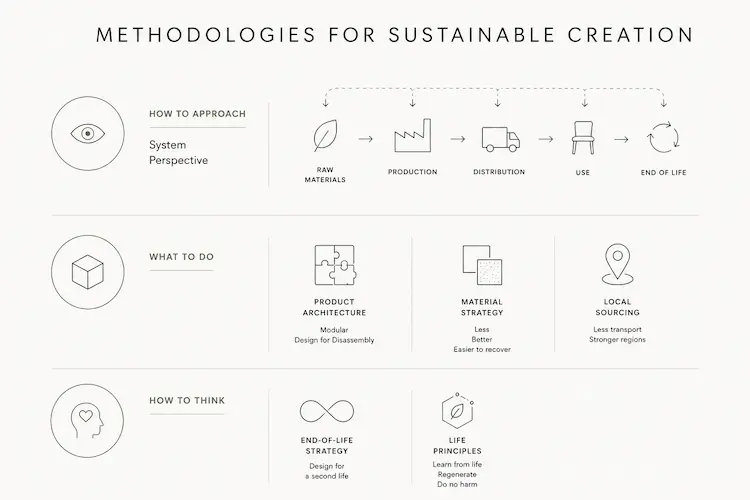
How to approach sustainable product design
One of the most important steps is adopting a systems perspective when defining the project brief. Instead of focusing solely on the product itself, designers should map the product’s entire lifecycle, from raw material extraction to manufacturing, distribution, use, repair, and end-of-life management.
This holistic perspective helps identify where the greatest environmental impacts occur and where design interventions can create the greatest value. Once these opportunities have been identified, sustainability objectives can be translated into clear design requirements across multiple product levels.
What to do
Product Architecture:One effective strategy is redesigning product architecture. Modular design allows users to replace individual components instead of discarding an entire product when one part fails. Likewise, design for disassembly enables products to be easily separated into individual materials, making repair, refurbishment, remanufacturing, and recycling significantly more efficient.
Material strategy: Designers can further reduce environmental impacts by minimizing unnecessary material use, simplifying material combinations, and selecting materials that can be more easily recovered and recycled at the end of a product’s life.
Local Sourcing: Whenever feasible, sourcing materials locally can reduce transportation-related emissions while strengthening regional supply chains. Furniture manufacturers using locally certified timber instead of imported hardwoods can substantially reduce transportation emissions while supporting local forestry economies.
How to think
End-of-life strategy: Products should be designed with future reuse in mind, allowing them to be repaired, upgraded, refurbished, or repurposed rather than discarded after their first use.
Life principles: Another valuable methodology is applying the Biomimicry DesignLens. Life’s Principles describe strategies that natural systems have developed over billions of years to survive within finite resources. Applying these principles enables designers to develop innovative products while evaluating their solutions against regenerative benchmarks rather than conventional industrial standards.
Fairphone: A model for sustainable electronics
The smartphone industry presents one of the greatest challenges for sustainable product design due to complex supply chains, demanding performance requirements, and limited repairability. Fairphone demonstrates that a different approach is possible.
Rather than focusing solely on materials, Fairphone redesigned the product itself. Its modular architecture allows users to replace key components, including the battery, display, and camera, extending the device’s lifespan instead of replacing the entire phone. The company also prioritizes fair and recycled materials while working directly with suppliers to improve labor conditions.
These decisions come with trade-offs. Fairphone devices are more expensive, less streamlined, and evolve more slowly than many flagship smartphones. However, they generate less e-waste, encourage repair instead of replacement, and build long-term customer loyalty.
Fairphone shows that sustainable product design is not about creating a perfect product; it is about making deliberate choices that balance performance, durability, ethics, and environmental impact.
Case study IKEA
While Fairphone demonstrates how product design can extend a product’s life, IKEA shows how business models can do the same. Recognizing that much of its furniture remains functional long after its first owner no longer needs it, IKEA introduced the Buy Back & Resell Service. Customers return eligible furniture in exchange for store credit, allowing products to be refurbished and resold through IKEA’s As-Is sections. The system works because IKEA furniture is already designed for easy assembly, disassembly, and standardization. These design characteristics make reuse and refurbishment commercially viable at scale.
Although the program involves trade-offs, including strict eligibility criteria and compensation through store credit, it creates value for both customers and the company while keeping products in circulation for longer.
What can companies do?
Companies do not need to redesign everything at once. The first step is deciding what kind of growth they want to pursue and what trade-offs they are willing to accept between performance, cost, and environmental impact. From there, sustainability can be integrated into product development through life cycle assessment, designing for durability, repairability, material efficiency, take-back programs, and the use of recycled materials where appropriate.
Rather than replacing existing systems overnight, companies can gradually introduce circular practices through repair, refurbishment, resale, and product take-back services, while applying sustainable product design principles to future products.
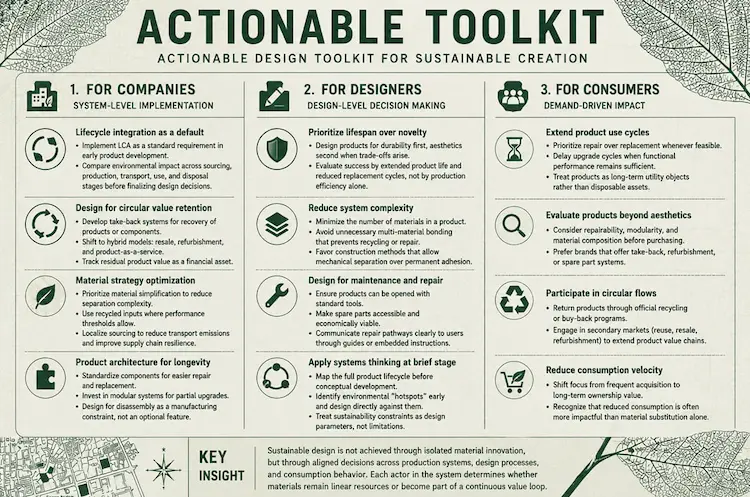
Sustainable product design is not about finding the perfect material. It is about making better decisions throughout a product’s lifecycle. Every design decision, from material selection and product architecture to repairability and business model, shapes a product’s environmental impact.
Designers, businesses, and consumers all influence these outcomes through the choices they make. The question is no longer whether sustainable product design is possible, but how willing we are to design products that create long-term value while respecting planetary boundaries.