
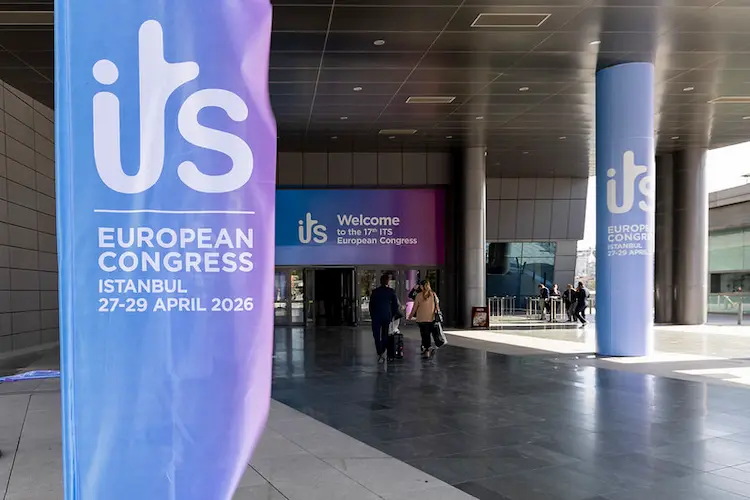
For three days in April, Istanbul became the center of Europe’s intelligent mobility conversation. The ITS European Congress 2026, held from April 27–29 under the theme “Bridging Innovation: Integrated, safe and seamless mobility,” gathered transport authorities, urban planners, telecom leaders, researchers, automotive companies, and technology providers to discuss how cities can move from fragmented mobility systems toward fully integrated and resilient urban transport ecosystems.
Hosted in a city that physically connects Europe and Asia, the congress reflected the growing understanding that mobility today is no longer simply about transport. It is increasingly connected to digital infrastructure, climate resilience, public health, logistics, accessibility, and economic competitiveness. Throughout the event, one message repeatedly surfaced: the future of mobility depends not on isolated innovations, but on coordination between infrastructure, telecommunications, policy, and urban governance.
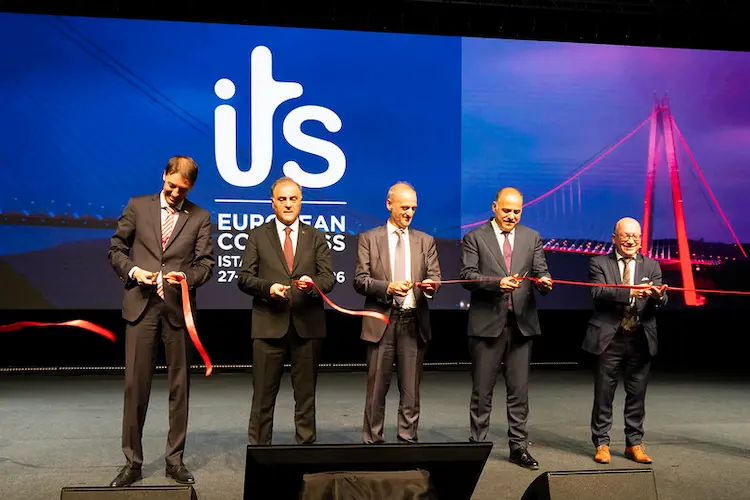
ITS European Congress 2026 Opens with a Call for Seamless Mobility
The opening ceremony and high-level plenary immediately established the tone of the congress. Discussions centered around one major question: how can cities create mobility systems that are truly seamless, integrated, and human-centered?
The opening sessions brought together major European and Turkish mobility figures, including Angelos Amditis, Joost Vantomme, Jurgis Vilčinskas, Turkish Minister of Transport and Infrastructure Abdulkadir Uraloğlu, European Commissioner Apostolos Tzitzikostas, Istanbul Deputy Mayor Nuri Aslan, and urban mobility leaders including Pelin Alpkökin and Sarah-Jayne Williams.
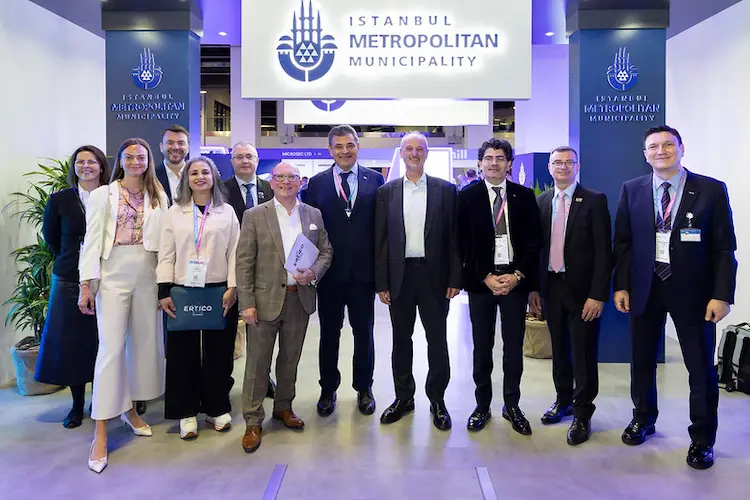
Istanbul as a Real-World Laboratory for Multimodal Mobility
Few cities embody the complexity of urban mobility as clearly as Istanbul. Spanning two continents and serving more than 16 million residents, the city combines ferries, metros, buses, highways, tunnels, trams, and emerging micromobility systems within one enormous metropolitan network.
According to discussions during the congress, Istanbul’s scale and geography make it an ideal testing ground for multimodal mobility management. Rather than discussing “smart cities” in abstract terms, many sessions focused on operational realities: how to coordinate transportation modes in real-time, manage disruptions, improve resilience, and reduce congestion across dense urban systems.
A key example was the presentation and discussions on Istanbul’s integrated mobility system, as well as scaling citywide deployments. Public transport operators have demonstrated how simulation tools and data-driven traffic management are increasingly used to predict peak congestion scenarios, optimize traffic flows, and enhance network resilience.
5G, 6G, and the Digital Infrastructure of Future Cities
Connectivity emerged as one of the most strategic topics of the congress. Several high-level discussions focused on the growing convergence between transportation and telecommunications infrastructure. The congress highlighted how next-generation connectivity (including 5G and future 6G systems) will become foundational for connected and automated mobility.
One of the major announcements made during the event was the signing of a cooperation agreement between ERTICO – ITS Europe and the 6G Smart Networks and Services Industry Association. The partnership aims to strengthen collaboration between Europe’s mobility and telecom sectors as cities prepare for increasingly connected transport ecosystems.
The Turkish Ministry of Transport and Infrastructure also showcased its 5G ITS corridor initiative during the congress. Officials emphasized that modern transport systems are no longer defined only by roads and bridges, but by low-latency communication networks capable of supporting real-time vehicle-to-everything communication.
These discussions extended far beyond autonomous vehicles. Congress participants explored how connected infrastructure could improve emergency response, predictive maintenance, traffic coordination, logistics management, road safety, and climate resilience.
Connected Roads and the Harmonisation Challenge
One of the most important institutional developments presented in Istanbul was the initiative launched by European road authorities to harmonize connected vehicle data. While highly technical on the surface, the issue has major implications for safety and interoperability across Europe. Without shared standards, connected mobility systems risk becoming fragmented between countries, regions, and infrastructure providers. Harmonization is essential if connected vehicles are to communicate reliably across borders.
This challenge was particularly relevant in discussions about cooperative automated mobility and connected road infrastructure. Congress speakers repeatedly emphasized that Europe must avoid isolated national systems and instead build interoperable mobility networks capable of supporting seamless cross-border transportation.
Demonstrations at ITS European Congress 2026 Show Mobility Moving Beyond Pilots
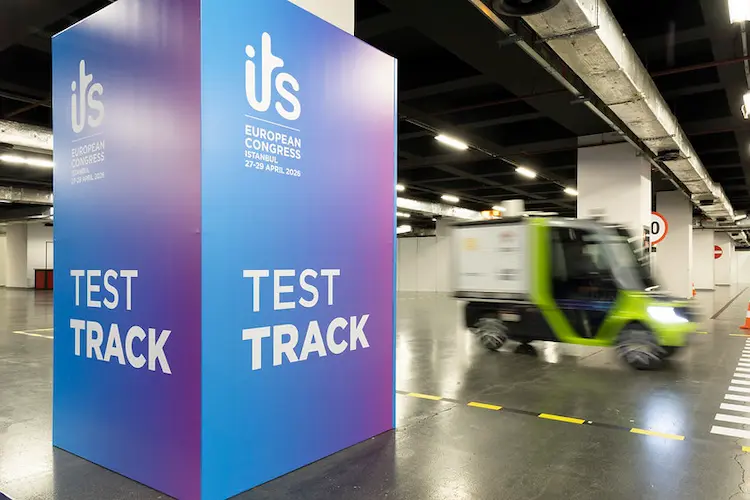
One of the strongest aspects of the congress was its focus on live demonstrations and deployable technologies rather than purely conceptual presentations. Organizers repeatedly emphasized that the sector is moving “from pilot to scale.”
Among the most discussed demonstrations was the ZEV-UP teleoperated electric vehicle project involving Ford Otosan and European partners. The ZEV-UP vehicle drew considerable attention because it addressed multiple urban problems at once. There is congestion, emissions, parking shortages, and affordability. Congress participants also discussed how remote driving technologies could serve as an intermediate step between conventional driving and full autonomy.
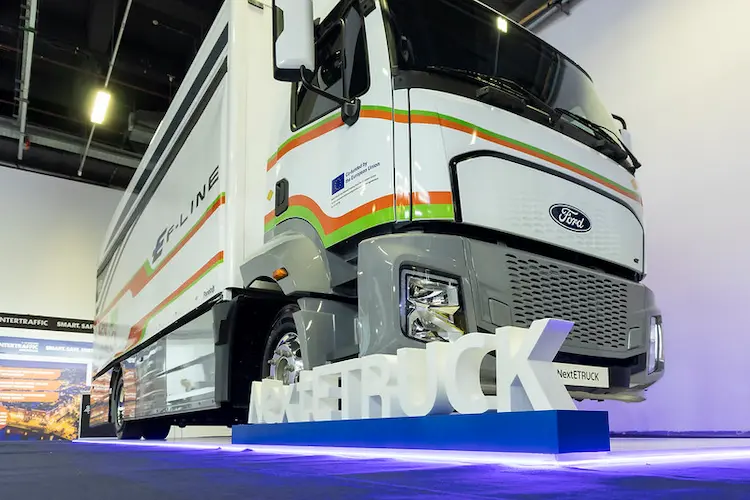
Another major demonstration area focused on freight electrification. Ford Trucks presented the NextETRUCK project, which aims to accelerate the deployment of zero-emission heavy-duty transport solutions suitable for urban logistics, waste management, and regional freight operations.
Micromobility companies, including Hop, showcased connected e-scooter systems integrated with urban management platforms designed to improve parking discipline, safety, and operational efficiency. Together, these demonstrations illustrated a broader trend visible throughout the congress: mobility innovation is increasingly focused on integration and operational functionality rather than futuristic spectacle.
Nordic–Baltic Cooperation and International Collaboration
International cooperation was another defining theme of the congress, particularly through the Nordic–Baltic Mobility Delegation (Nordic+), which brought together organizations and companies from Finland, Sweden, and Estonia to demonstrate how regional collaboration can accelerate the deployment of smart transport systems across Europe.
Rather than focusing only on policy dialogue, the delegation showcased practical initiatives already being implemented in the field of connected and resilient mobility. Finnish company Sitowise presented solutions in infrastructure planning, digital asset management, and resilient transport systems, emphasizing how data-driven infrastructure management can improve long-term sustainability and operational reliability. Sweden’s Triplesign highlighted smart traffic information systems and future-ready digital road communication platforms designed to support connected mobility environments. Meanwhile, Estonia’s Spinn demonstrated agile software-driven mobility solutions, reflecting the growing importance of flexible digital ecosystems in urban transportation.
Together, these initiatives illustrated a broader shift visible throughout the congress: mobility innovation is increasingly based on cross-border cooperation, interoperable digital systems, and scalable operational models rather than isolated local experiments.

Smart Logistics and Sustainable Urban Freight
The Congress devoted major attention to the transformation of logistics systems under climate pressure. Urban freight networks face increasing demands from e-commerce growth, emissions regulations, congestion, and supply chain volatility. As a result, many congress sessions focused on how digitalization and electrification can help create more resilient logistics ecosystems.
Discussions explored zero-emission freight corridors, smart ports, urban micro-hubs, electric trucks, and data-driven logistics management. Congress speakers emphasized that sustainable logistics requires not only electric vehicles but also smart coordination systems capable of optimizing routes, reducing idle time, and improving asset utilization.
Despite its highly technical agenda, the ITS European Congress 2026 repeatedly returned to the human dimension of mobility. Accessibility, inclusivity, affordability, and public trust were central themes across multiple sessions. The congress demonstrated that Europe’s mobility sector is moving beyond experimentation toward large-scale implementation. Roads are becoming digital infrastructure, transport systems are becoming data ecosystems, and cities are beginning to build integrated mobility networks designed for a more connected and sustainable future.