
Rising energy costs and increasing geopolitical uncertainty are reshaping how cities approach energy systems. Across Europe, urban energy projects in Europe are gaining renewed attention as electricity prices for households increased by more than 25% on average, with even sharper spikes observed in several member states following the escalation of the war in Ukraine. At the same time, broader tensions in global energy markets, including those involving Iran, have further exposed the vulnerability of fossil fuel–dependent systems.
In this context, urban energy transition in Europe is no longer driven solely by climate targets. It is increasingly shaped by more immediate concerns: affordability, security of supply and the ability of cities to manage energy demand under unstable external conditions. Local renewable generation, energy efficiency and decentralised energy systems are therefore becoming not only environmental priorities, but also economic and strategic ones.
Against this backdrop, the experience of cities that have already implemented integrated energy projects becomes particularly valuable. Previous analysis in New Polis has explored the case of Güssing, where a small town achieved a high degree of energy independence through local resources and decentralised systems.
Comparative overview of key EU net-zero district projects
This article builds on that perspective by examining four EU-funded initiatives: RESPONSE, ATELIER (project page), ARV and oPEN Lab, which represent different approaches to urban energy projects in Europe at the district level.
Rather than presenting them as success stories, the article compares their objectives, implementation models and early results in order to understand what they actually deliver and how relevant these approaches are for cities operating under different economic and institutional conditions.
Table 1. Comparative Overview of Key EU Urban Energy Projects
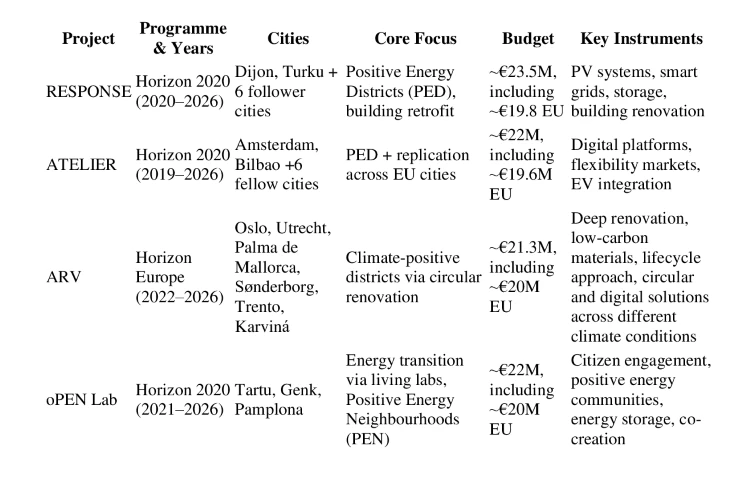
Sources:
Project data based on official materials and project pages: RESPONSE — https://h2020response.eu/; ATELIER — https://smartcity-atelier.eu/; ARV — https://greendeal-arv.eu/; oPEN Lab — https://openlab-project.eu/; ORDIS — https://cordis.europa.eu/
Different projects, different logics
Despite being grouped under the umbrella of Positive Energy Districts and climate-neutral cities, the four projects follow distinct implementation strategies.
RESPONSE is primarily technology-driven. The approach relies on deep intervention in a relatively limited number of buildings, allowing for a high degree of system optimisation at district level. It focuses on the implementation of Positive Energy Districts, combined with a structured replication model involving multiple follower cities.
ATELIER also combines energy-positive districts with a structured replication model involving multiple fellow cities. However, it operates at a broader systemic level, integrating buildings, smart mobility and storage systems, as well as testing new market mechanisms such as local flexibility markets. This creates a more complex but also more scalable model for energy transition in European cities.
ARV shifts the focus toward lifecycle emissions and the creation of climate-positive circular communities. It is centred on energy-efficient renovation, circular construction practices and digital solutions in the built environment, addressing both operational and embodied carbon.
Finally, oPEN Lab places governance at the centre of the transition. The project develops energy communities and participatory planning processes, involving local residents in decision-making and testing the role of citizen engagement in Positive Energy Neighbourhoods.
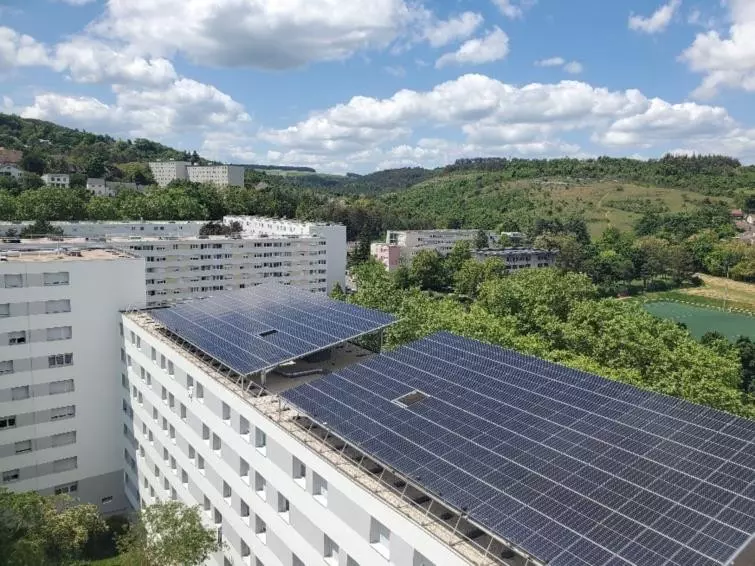
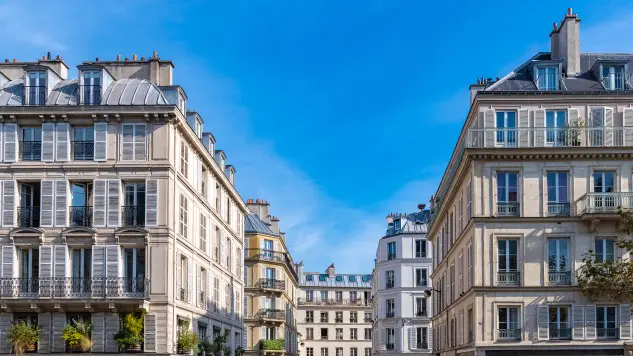
Dijon. Source: Official website of Response project
What do urban energy projects in Europe deliver in practice?
In practical terms, these projects demonstrate that integrated urban energy systems are technically feasible and can deliver measurable results at district level.
In Turku and Dijon, RESPONSE pilots show that combining renovation with local renewable generation can significantly reduce energy demand while increasing on-site production. Renovation measures are combined with photovoltaic systems, energy storage and district-level energy management solutions, allowing buildings to move toward positive energy balance at district scale.
This focus on tightly integrated district systems contrasts with the approach taken in ATELIER. In Amsterdam, ATELIER demonstrates how multiple systems can be integrated across a broader urban context. The Buiksloterham district combines solar generation, battery storage and smart energy management across several buildings, while also testing flexibility mechanisms that reduce peak demand and improve grid stability.
At the same time, local conditions significantly influence how these models are implemented. In Bilbao, where dense urban fabric limits large-scale solar deployment, the focus shifts toward deep renovation of existing buildings and optimisation of energy use. This highlights how the same project framework can lead to different technical solutions depending on urban context.
A different dimension of impact is explored in ARV. ARV focuses on demonstration communities including Oslo, Utrecht and Palma de Mallorca. Rather than concentrating primarily on energy systems, the project demonstrates how combining deep renovation with circular construction practices and digital tools can reduce both operational energy use and embodied carbon across the building lifecycle.
Finally, not all outcomes are primarily technological. In Tartu, oPEN Lab demonstrates a different type of result. By developing energy communities and participatory planning processes, the project tests how citizen engagement can influence energy use and acceptance of new systems.
Across all projects, one common feature is the integration of multiple elements — renovation, renewable energy, storage and digital management — rather than reliance on a single technology. At the same time, the balance between these elements varies significantly, reflecting different priorities in technology, governance and urban context.
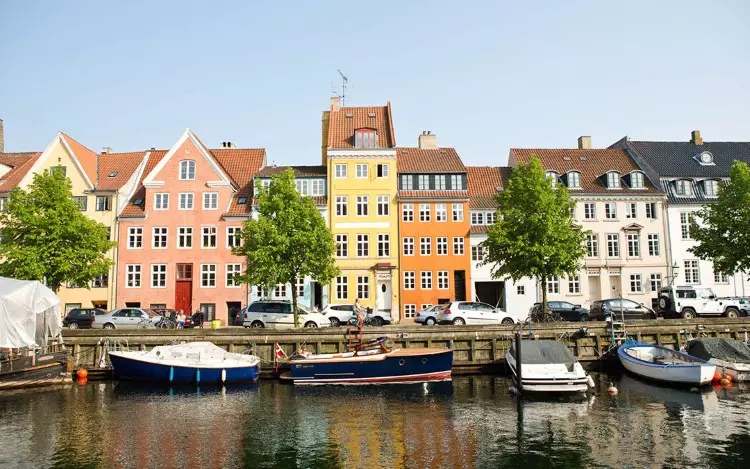
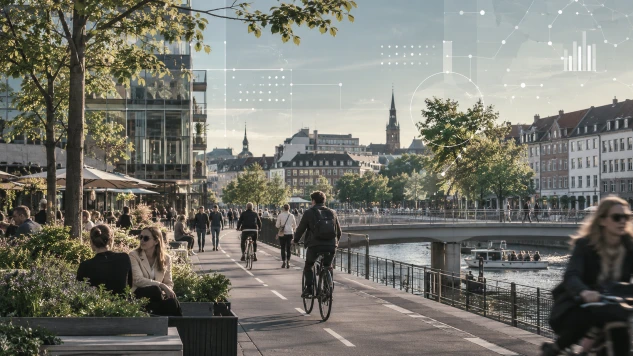
Copenhagen. Source: Official website of Atelier project
Comparing outcomes and approaches
A closer comparison of RESPONSE, ATELIER, ARV and oPEN Lab shows that, despite operating within a common EU policy framework, these projects follow distinct implementation logics and produce different types of outcomes within the broader landscape of urban energy projects in Europe.
The most technically integrated model is represented by RESPONSE. In Dijon and Turku, pilot districts combine deep renovation, on-site photovoltaic generation and local energy management into systems designed to move toward a positive annual energy balance. The project focuses on a limited number of buildings, allowing for a high level of optimisation and control over energy flows at district level.
This relatively focused, system-integration approach contrasts with the broader scope of ATELIER. ATELIER operates at a more systemic level, combining energy-positive districts with a structured replication model involving multiple fellow cities. The project goes beyond building-level solutions. In Amsterdam, it introduces local flexibility markets, where energy demand and supply are dynamically balanced across buildings, storage systems and electric mobility. This adds a market dimension that is largely absent in RESPONSE and reflects a shift toward more scalable urban energy systems.
A different perspective emerges when looking at ARV. The ARV project focuses on demonstration communities including Oslo, Utrecht and Palma de Mallorca. Here, interventions combine deep renovation with low-carbon materials and circular construction practices, aiming to reduce not only operational energy use but also embodied carbon. This expands the definition of “net-zero” beyond energy systems to include the full lifecycle impact of buildings.
Finally, the oPEN Lab project highlights a different dimension of the transition. oPEN Lab prioritises governance and social innovation. In Tartu, the project develops energy communities and participatory planning processes, testing how citizen engagement can influence both energy use and the acceptance of new systems. While the scale of technological deployment is more limited, this approach addresses a dimension that is often underdeveloped in more technology-driven projects.
These differences translate into distinct strengths. RESPONSE demonstrates the feasibility of tightly integrated district energy systems under controlled conditions. ATELIER shows how such systems can be embedded into broader urban and market frameworks. ARV expands the model by addressing materials and lifecycle emissions, while oPEN Lab explores the social conditions necessary for long-term implementation.
At the same time, the projects also highlight different constraints. Highly integrated systems, as in RESPONSE, require significant coordination and investment. ATELIER’s replication model depends on the institutional capacity of fellow cities to adapt complex solutions. ARV’s lifecycle approach requires advanced data and coordination across the construction value chain, while oPEN Lab’s participatory model is more difficult to scale in contexts with limited civic engagement structures.
Taken together, these initiatives suggest that urban energy transition is not defined by a single model, but by the interaction of four dimensions: technology, markets, materials and governance.
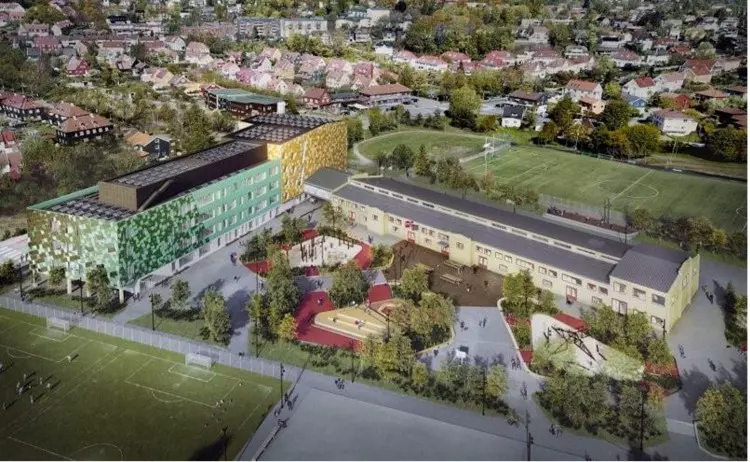
Oslo. Source: Official website of AVR project
What research and evaluations indicate
Analytical studies and EU project evaluations, including reports from the European Commission on Positive Energy Districts and findings from the IEA EBC Programme, suggest that initiatives such as RESPONSE, ATELIER, ARV and oPEN Lab can, in many cases, be understood as innovation platforms within the broader ecosystem of urban energy projects in Europe, rather than fully scalable urban solutions at their current stage.
Across Horizon 2020 projects, including RESPONSE and ATELIER, available results indicate that pilot interventions can deliver significant reductions in energy use at building level, particularly in cases of deep renovation (see, for example, the European Commission Smart Cities Marketplace overview of Positive Energy Districts). At the same time, these results are typically limited to specific districts or neighbourhoods, often involving a relatively small number of buildings, rather than entire cities.
One of the recurring challenges identified in EU reports and academic literature is the lack of comparability. Projects rely on different baselines, metrics and evaluation frameworks, which makes it difficult to directly assess overall impact. As a result, performance is often reported in terms of installed capacity, number of renovated buildings or pilot implementations, rather than long-term system transformation.
Studies on Positive Energy Districts also point to the importance of project-specific conditions. Many demonstrations are implemented with dedicated funding, structured governance arrangements and strong institutional support, which are not always present in standard urban development contexts (see insights from IEA EBC Programme publications). This, in turn, limits direct comparability with city-wide implementation.
Another important factor is institutional capacity. Evidence from project evaluations, including project deliverables available via CORDIS, suggests that implementation tends to be more effective in cities with strong administrative structures, access to co-financing and established partnerships with private sector actors. Where these conditions are less developed, progress is often slower and more fragmented.
Citizen engagement is also assessed unevenly. Projects such as oPEN Lab show that participatory approaches can support the development of energy communities and strengthen local involvement in decision-making. At the same time, research highlights that scaling these models beyond pilot areas remains a complex task, particularly in cities with lower levels of institutional trust or limited experience with participatory governance.
Overall, evaluations suggest that these projects are effective in demonstrating technical feasibility and integrated approaches. However, their longer-term impact depends on how successfully their models can be embedded into broader urban policy and investment frameworks.
This conclusion is consistent with broader assessments of the EU Cities Mission, which emphasise the gap between pilot projects and large-scale urban transformation.

Pamplona. Source: Freepick
Transferability to the Western Balkans
The question of transferability becomes more complex when looking at the Western Balkans, where urban energy systems differ significantly from those in Western and Northern Europe.
In many cities across the region a large share of households rely on individual heating systems, often based on wood, coal or other solid fuels. This is particularly evident in suburban and peri-urban areas, where decentralised and often inefficient heating remains the dominant model (see Energy Community Secretariat reports).
The structure of the building stock further complicates the application of district-level solutions. A substantial proportion of housing consists of single-family homes or low-rise buildings, many of which have limited insulation and relatively low energy performance. Unlike the dense urban districts targeted by projects such as ATELIER or RESPONSE, these areas are less suited to integrated Positive Energy District models. This structural difference also helps explain why replication models tested in EU-funded projects often require significant adaptation when applied outside their original contexts.
This has direct implications for financing and governance. Large-scale renovation programmes require engagement with a large number of individual homeowners rather than a smaller set of institutional property owners. At the same time, access to financing remains constrained, and subsidy schemes are often insufficient to support deep renovation at scale.
District heating systems, where they exist, add another layer of complexity. While they offer potential for decarbonisation, many systems in the region are still based on fossil fuels and require substantial modernisation before they can be integrated into low-carbon urban energy strategies.
However, these differences do not make EU models irrelevant. Instead, they highlight the need for adaptation. Rather than replicating Positive Energy Districts in their original form, cities in the Western Balkans are more likely to benefit from modular and incremental approaches: targeted renovation programmes, small-scale solar deployment and gradual improvements in energy management systems.
In this context, the most transferable element of EU projects is not their technical configuration, but their integrated approach, combining technology, governance and financing into coherent strategies. This is precisely the dimension where projects such as RESPONSE, ATELIER, ARV and oPEN Lab offer the most relevant lessons for cities in the region.
From pilot projects to urban strategy
Taken together, RESPONSE, ATELIER, ARV and oPEN Lab illustrate both the potential and the limits of current EU approaches to urban energy transition.
They demonstrate that integrated, district-level solutions can deliver measurable improvements in energy performance and provide valuable insights into how different technologies and governance models interact. At the same time, as shown in the examples above, these outcomes remain closely tied to specific local conditions and project frameworks.
For cities outside the main EU innovation hubs, including those in the Western Balkans, the key question is not whether these models can be replicated, but how their underlying principles can be adapted to different urban realities.
In this sense, the main contribution of these projects lies not in the direct transfer of solutions, but in the knowledge they generate. They provide a testing ground for understanding how urban energy systems can evolve — and where the main barriers to that evolution remain.
As European urban policy continues to develop under initiatives such as the European Commission Cities Mission, the challenge will be to move from well-funded pilot districts to scalable, city-wide strategies that can operate under more constrained economic and institutional conditions.
The success of this transition will depend less on individual technologies, and more on the ability of cities to align technical solutions with governance, financing and social acceptance, a combination that ultimately determines whether pilot projects evolve into long-term urban strategies.