
When the Danube reached record low levels in late July 2026, the consequences extended far beyond the river itself. As the summer’s European heatwaves intensified, nuclear power generation was reduced, fuel deliveries slowed, ferry services were suspended and cruise vessels struggled to complete their routes. On the Rhine, cargo traffic continued at sharply reduced capacity, increasing transport costs across one of Europe’s largest industrial corridors. What first appeared to be a hydrological event quickly spread through electricity systems, supply chains and urban economies, revealing an often overlooked dimension of urban resilience.
New Polis has explored how increasingly frequent heatwaves are reshaping cities, from public health and urban planning to the growing importance of climate adaptation. The events of the summer of 2026 have exposed another, often overlooked aspect of urban resilience. Europe’s rivers, often associated with recreation, tourism and waterfront regeneration, remain part of the critical infrastructure on which energy systems, transport networks and local economies continue to depend.
The situation formed part of a much broader climatic pattern. The European Drought Observatory reported widespread drought watch, warning and alert conditions across parts of central, western and southern Europe during June and July 2026, accompanied by prolonged heatwaves and unusually low river levels in several major river basins.
River infrastructure and the power grid
At the end of July, the Danube in Budapest fell below the previous record low recorded in 2018. According to Hungary’s national water authorities, the river level reached approximately 24 centimetres on 29 July. What initially appeared to be another consequence of an exceptionally dry summer soon became a national energy issue.
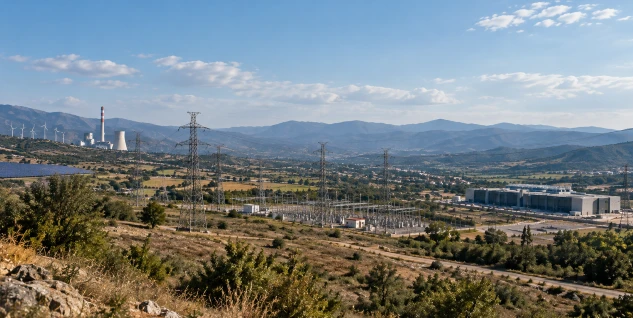
Hungary relocated floating pumping stations closer to the Paks nuclear power plant to secure access to cooling water. The station normally produces nearly half of the country’s electricity, but its output was progressively reduced as the Danube continued to fall. By 2 August, Paks was operating at approximately 10% of its two-gigawatt capacity. A complete temporary shutdown was expected, although one 240-megawatt turbine was still operating on 3 August, according to Reuters.
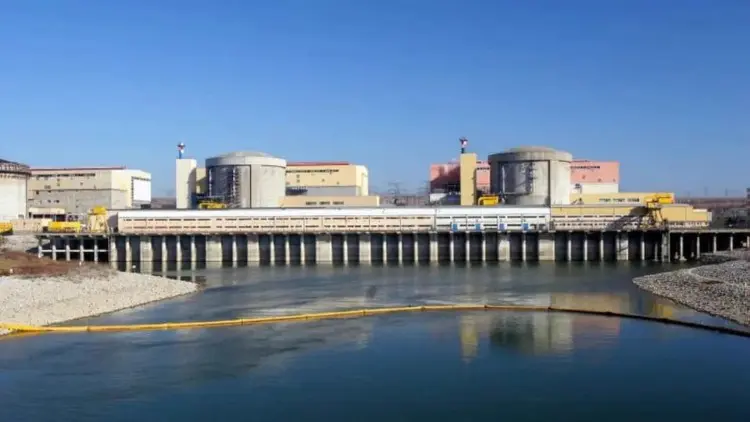
Romania faced a similar challenge. The two 706-megawatt reactors at the Cernavodă nuclear power plant normally provide around one-fifth of the country’s electricity. As Danube flows continued to decline, both reactors were successively taken offline. Reuters reported that river discharge at Romania’s entry point had dropped to 1,650 cubic metres per second, compared with an average July flow of 4,750 cubic metres per second. The country consequently became more dependent on electricity imports at precisely the time when demand for cooling was rising across homes, hospitals, offices and commercial buildings.
These events illustrate an increasingly important aspect of urban resilience. During periods of extreme heat, electricity demand rises while low river levels may simultaneously reduce the output of power plants that depend on river water for cooling. The same climatic event therefore places pressure on both sides of the energy equation: demand increases while available supply becomes more constrained.
When river infrastructure disrupts urban logistics
The consequences of low river levels extended well beyond the energy sector. Navigation on the Danube also became increasingly difficult. Cruise vessels were unable to complete some itineraries, ferry crossings were suspended and, in Romania, passengers had to be evacuated after a Swiss-flagged cruise ship travelling towards Bulgaria ran aground. Bloomberg also reported that vessels with deeper draughts could no longer navigate some sections of the river in Slovakia and were forced to remain in port or at anchor.
The effects were felt far beyond the shipping industry. River cruises support hotels, restaurants, tour operators and many small businesses, while ferries remain part of regional mobility in several Danube cities. When navigation is interrupted, the consequences quickly spread through local economies and supply chains.
Serbia demonstrated another dimension of this dependence on river infrastructure. Low water disrupted fuel deliveries by barge, prompting the government to allow retailers to draw on emergency fuel reserves. According to Bloomberg, vessels could carry only around 25% of their normal cargo to avoid running aground. Reuters likewise reported that Serbia received only about one quarter of its planned fuel imports during July, while barges and tankers were operating at roughly 30-40% of their normal loading capacity. Fuel had to be transported by road and rail instead, increasing logistics costs and placing additional pressure on existing transport networks.
The falling Danube also reduced production at Djerdap 1, Serbia’s largest hydropower plant, to roughly one-third of its normal daily output. Cooling at the Kostolac coal-fired power plants was also affected.
The physical transformation of the river made the crisis impossible to ignore. Around Novi Sad, boats were left stranded in shallow marinas as sandbanks emerged. Near the Croatian bank of the Danube, the retreating water exposed the remains of a cargo ship that had sunk in 1937, while Second World War wrecks resurfaced farther downstream in eastern Serbia.
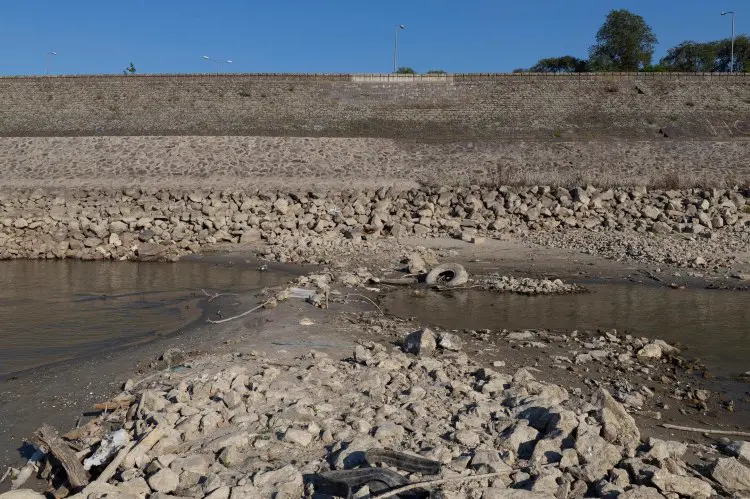
These striking images reflected a broader reality. River infrastructure often becomes visible only when it stops functioning as expected. Fuel, construction materials, agricultural products and industrial supplies continue to move by river across much of Europe. When navigation is restricted, more cargo shifts to roads and railways, increasing costs, reducing flexibility and placing additional pressure on transport systems that are already under strain during periods of extreme heat.
The Rhine: a different kind of vulnerability
While the Danube illustrated how low river levels can disrupt energy systems and regional logistics almost immediately, the Rhine revealed a different form of vulnerability. Europe’s busiest inland waterway did not stop functioning. Instead, it became progressively less efficient, creating economic pressure that spread through industrial supply chains.
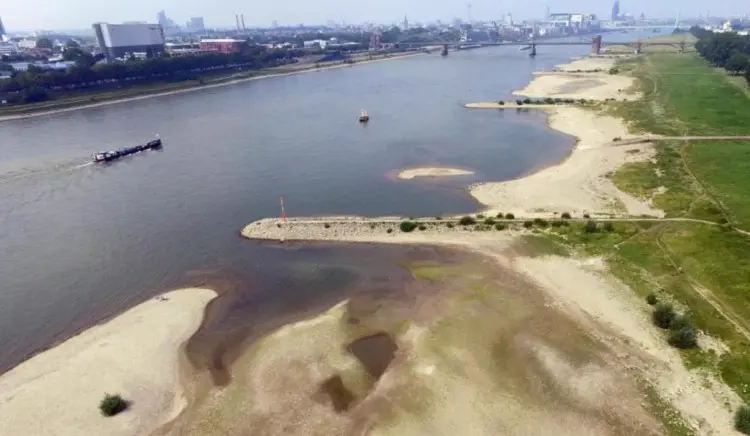
The Rhine links the ports of Rotterdam and Antwerp with manufacturing regions in Germany, France and Switzerland, making it one of Europe’s most important pieces of river infrastructure. By late July, water levels at Kaub, one of the river’s critical navigation points, had fallen close to historic lows. Navigation remained possible, but vessels could no longer operate at full capacity.
According to Reuters, some barges were carrying only about 20% of their normal loads. Tankers capable of transporting around 1,200 tonnes through Duisburg were limited to approximately 460 tonnes at Kaub. Freight rates between Rotterdam and Karlsruhe rose from around €45 per tonne in late June to €60-70 by mid-July as companies paid surcharges to compensate for reduced cargo volumes.
Unlike stranded cruise ships or suspended ferry services, these disruptions attracted relatively little public attention. Yet they gradually increased transport costs, complicated supply chains and reduced the efficiency of one of Europe’s largest industrial corridors. Reuters also reported rising freight costs for shipments of petroleum products, chemicals, ores and agricultural goods as vessels carried progressively smaller loads.
The broader importance of inland waterways is reflected in European freight statistics. According to Eurostat, Germany and the Netherlands together accounted for 70.5% of all EU inland waterway freight transport in 2024. Although the figure covers the entire inland waterway network rather than the Rhine alone, it illustrates how strongly European logistics remains concentrated in economies connected to the Rhine basin.
From emergency response to climate resilience
The events of 2026 also showed that governments are beginning to view prolonged low river levels less as isolated emergencies and more as a recurring challenge requiring long-term planning.
In July 2026, Germany launched the National Low Water Information System (NIWIS). The platform combines daily information on river levels, groundwater, soil moisture and precipitation, providing authorities, municipalities, businesses and the public with a consistent picture of water availability. Germany’s Federal Environment Ministry explicitly linked the initiative to increasingly frequent low-water periods, growing pressure on water resources and the need for earlier preparation.
Monitoring cannot increase river flow, but it can help utilities, transport operators and cities prepare before critical thresholds are reached. More importantly, it reflects a broader shift from emergency response towards climate resilience, where anticipating disruptions becomes as important as responding to them.
This approach may become increasingly relevant as European cities adapt to more frequent heatwaves. Urban resilience is often discussed in terms of cooling strategies, green infrastructure, public health and heat action plans. The summer of 2026 suggests that another component deserves greater attention: the condition of the river systems that quietly support electricity generation, freight transport and local economies.
Rivers as critical urban infrastructure
The summer of 2026 did not change the role of Europe’s rivers. It exposed how dependent modern societies remain on them.
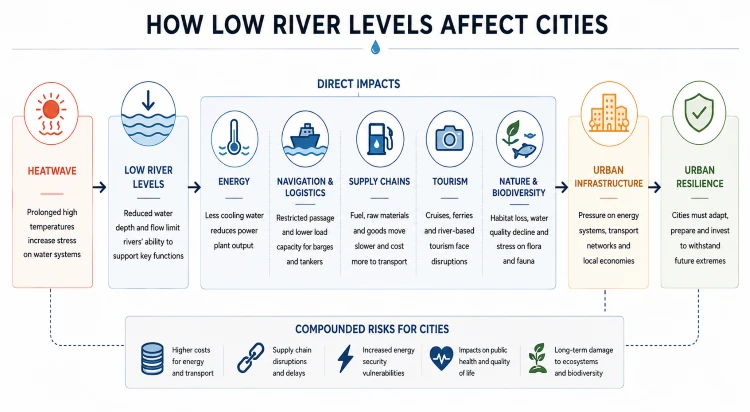
For centuries, rivers shaped the location and development of cities. Today they continue to cool power plants, move fuel and industrial goods, support tourism and connect regional economies. Most of the time these functions operate quietly in the background, making river infrastructure almost invisible.
Extreme heat changes that perception. A river becomes impossible to ignore when a power plant can no longer obtain sufficient cooling water, fuel barges carry only a fraction of their normal cargo or freight costs begin to ripple through regional supply chains.
Preparing cities for climate change will therefore require looking beyond buildings, streets and public spaces. Strengthening urban resilience increasingly means recognising rivers as part of Europe’s critical infrastructure and ensuring that cities are prepared for periods when these systems can no longer perform all of their functions at the same time.