
Today, there is a growing reason to raise serious questions about women’s experiences in the city within the broader discussion of smart and sustainable urban development. Despite decades of debate about the idea of the “city for all,” many urban environments still remain less accessible, comfortable, and safe for women. Urban infrastructure has historically been designed around male bodies, routines, and patterns of mobility. From sanitation facilities to transport safety and childcare infrastructure, many cities function more efficiently for men than for women. For this reason, gender-responsive urban planning is increasingly recognized as a crucial component of sustainable urban development.
You have probably experienced it. The theatre lights come on during intermission, and a long queue forms outside the women’s restroom, while men move quickly in and out of theirs. Or you find yourself alone on a late-night bus and notice how the experience feels fundamentally different depending on whether you are male or female.
Researchers show that women and men interact with urban infrastructure differently due to differences in mobility patterns, safety risks, and care responsibilities. As a result, gender-responsive planning is increasingly seen as an important dimension of sustainable urban development.
Toilet parity in cities: unequal waiting times in “equal” infrastructure
Public sanitation provides one of the clearest examples of gender inequality embedded in urban design. Many buildings allocate equal floor space to men’s and women’s restrooms, assuming this constitutes fairness. In practice, however, women often require more time per visit due to physiological differences, menstrual care, clothing, and caregiving responsibilities such as accompanying children. This results in consistently longer waiting times for women in public venues such as theatres, stadiums, airports, and transport hubs.
Urban planning scholars describe this phenomenon as “toilet parity” . It is the idea that equality requires a larger number of women’s stalls rather than identical floor space. The issue has recently become visible even in political institutions. Female lawmakers in Japan have called for more women’s restrooms in parliamentary buildings after repeated complaints about long queues.Even when public toilets are available, they are not always perceived as acceptable or comfortable places to use. UK’s research shows that women tend to have stronger reservations about using public restrooms, often due to concerns about cleanliness, safety, and privacy.
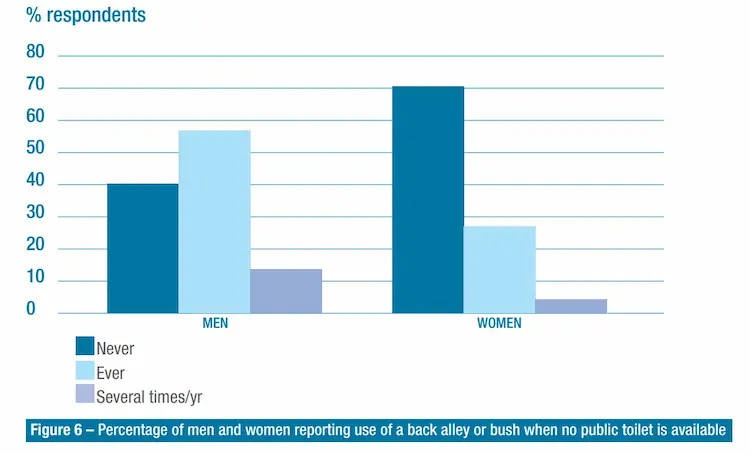
Women are also far less likely than men to use urban space to relieve themselves outside of designated restroom facilities.
Scholars note that sanitation infrastructure is rarely treated as a planning priority, despite its direct impact on accessibility and participation in public life.
Family-friendly urban infrastructure: how cities can support caregiving
Urban infrastructure also intersects with demographic trends and labour participation. Across many developed economies facing ageing populations and declining birth rates, governments increasingly recognize that cities must support caregiving.
Women tend to perform a disproportionate share of unpaid care work, including childcare and household responsibilities. Studies show that women often make multi-purpose trips, combining work, school drop-offs, shopping, and caregiving tasks.
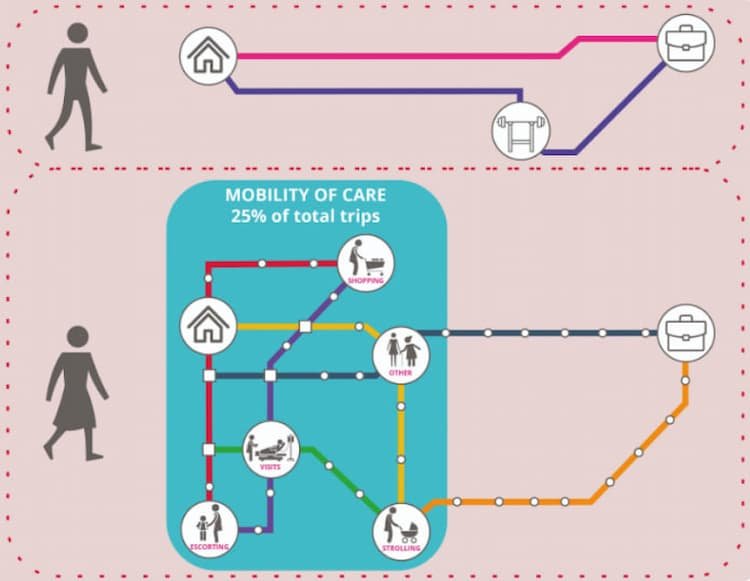
This means that urban infrastructure must accommodate complex daily mobility patterns rather than simply commuting between home and office. Women need urban infrastructure that includes dedicated spaces ensuring they are not excluded from urban mobility, the labour market, or public life simply because they are raising children, breastfeeding, or performing other forms of care work that are often overlooked by urban planners.
Public space can support families through:
- breastfeeding rooms in public institutions
- diaper-changing stations accessible to both parents
- stroller-friendly sidewalks and transit
- childcare services integrated into public buildings
For example, public institutions in Sweden introduced breastfeeding rooms in parliament to support lawmakers and staff who are parents. Such policies signal that caregiving responsibilities should not exclude women from full participation in political or professional life.
Read more about urban accessibility here.
Women’s safety in cities: closing the gender mobility gap
Safety concerns remain one of the most important factors shaping women’s urban mobility. Surveys across Europe show that women are significantly more likely than men to avoid certain streets, transport routes, or public spaces at night. This phenomenon has been described as the “mobility gap”, where fear of harassment or violence reduces women’s access to the city.
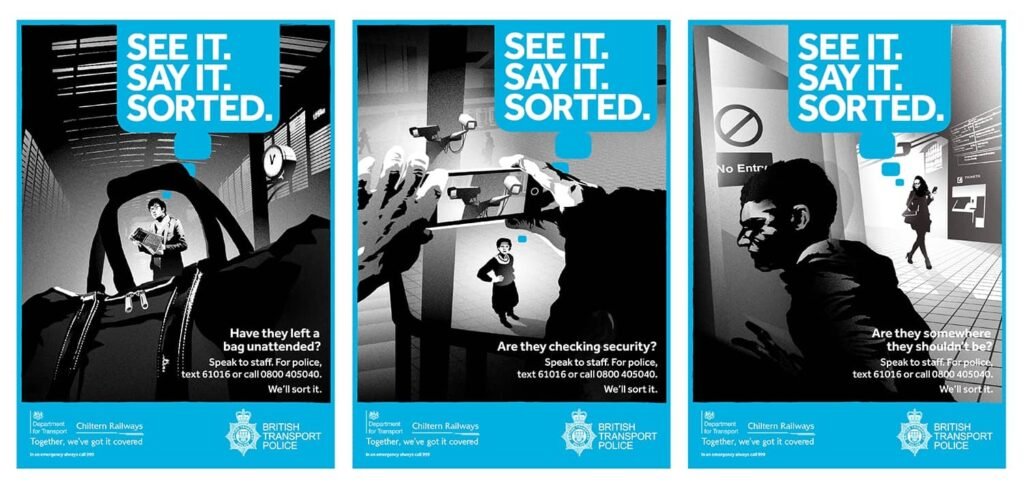
Technological solutions are increasingly used to address the problem. One example is the “See it. Say it. Sorted.” campaign used across the British railway network. The initiative encourages passengers to report suspicious behaviour through dedicated communication channels with transport police. Police reports increased by 365% over the three years of the campaign.
Combined with CCTV systems and improved lighting, these measures aim to increase both real and perceived safety in public transport environments.
Read more about gender inclusive urban mobility here.
Safety islands in urban space: micro-infrastructure for safer cities
In addition to surveillance systems, cities are experimenting with spatial interventions designed to increase safety directly within the urban environment. These include “safety islands” or designated safe points located throughout public space. Typical features include:
- bright lighting
- emergency call buttons
- visible cameras
- proximity to staffed facilities such as shops or transport stations
Such infrastructure creates a distributed network of secure locations where people can wait safely or seek help. University campuses have long used emergency call towers based on similar principles, and cities are increasingly adapting these solutions for public transport stops and pedestrian corridors.
Read more about smart tools for safer streets here.
Gender-responsive urban planning in practice: Vienna, Barcelona and Seoul
Vienna: a pioneer of gender-responsive planning
One of the most frequently cited examples of gender-sensitive urban planning is Vienna. Since the early 1990s, the city has integrated gender analysis into planning decisions. The initiative began with research examining how women experience public space differently and led to the establishment of a municipal Women’s Office dedicated to gender mainstreaming in planning.
As a result, Vienna introduced several design changes:
- wider sidewalks to accommodate strollers
- improved street lighting
- redesigned parks to encourage girls’ participation in public spaces
- housing projects designed around everyday caregiving needs
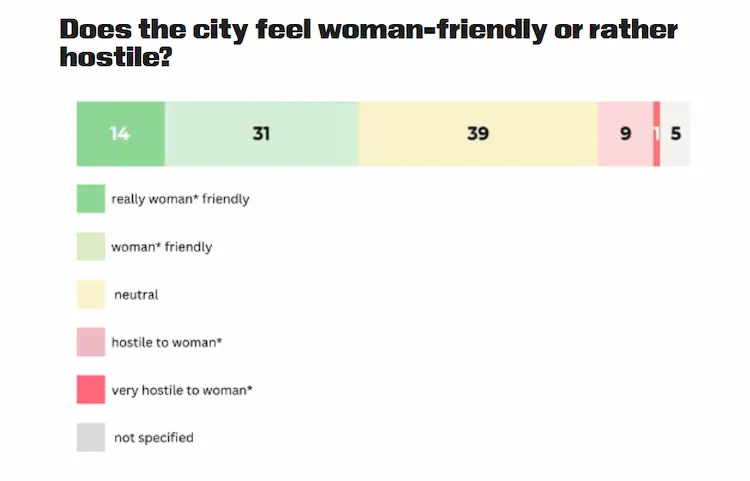
For example, the Frauen-Werk-Stadt housing project incorporated community facilities, childcare services, and safe public spaces into residential design.
Barcelona and the “superblock” model
Another widely discussed example comes from Barcelona, which has experimented with “superblocks”. Superblocks are neighbourhood clusters that restrict through traffic.
The redesign has improved:
- walkability
- access to public space
- safety for children and caregivers
By reducing car dominance and expanding pedestrian zones, the model supports everyday mobility patterns associated with caregiving activities, which are disproportionately performed by women.
Seoul: gender-sensitive mobility policy
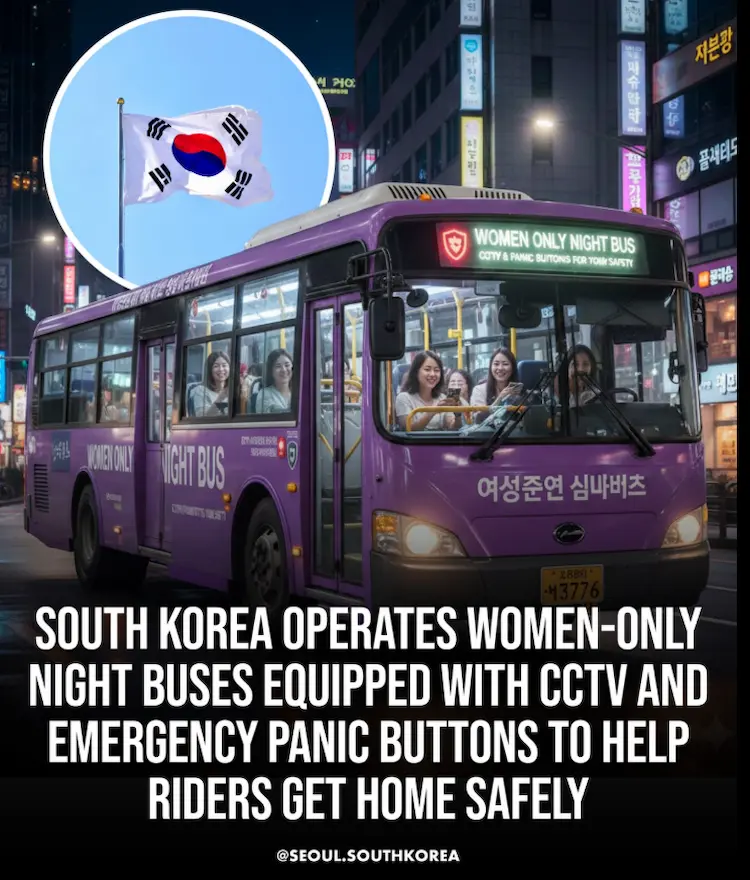
The city of Seoul has introduced several gender-oriented safety measures in urban transport, including:
- late-night bus services for women
- improved lighting on pedestrian routes
- emergency call systems in public transport
These policies were developed after studies showed that safety concerns significantly limited women’s nighttime mobility.
Urban infrastructure is often described as neutral. Yet long restroom queues, unsafe night transport, and the absence of caregiving facilities suggest otherwise. Gender-responsive urban planning challenges these assumptions by recognizing differences in mobility patterns, safety concerns, and caregiving responsibilities.
As cities confront demographic change, climate adaptation, and evolving mobility systems, inclusive design may become not only a matter of equality but also a key component of sustainable urban development.
FAQ
What is gender-responsive urban planning?
Gender-responsive urban planning considers differences in mobility patterns, safety risks, and caregiving responsibilities to design cities that work equally well for all residents.
Which cities are leaders in gender-sensitive urban design?
Cities such as Vienna, Barcelona, and Seoul have introduced policies and infrastructure aimed at improving safety, accessibility, and mobility for women.
Why do women wait longer for public restrooms in cities?
Women typically require more time per visit due to physiological factors, clothing, menstrual care, and caregiving responsibilities. Equal floor space often results in unequal waiting times.