
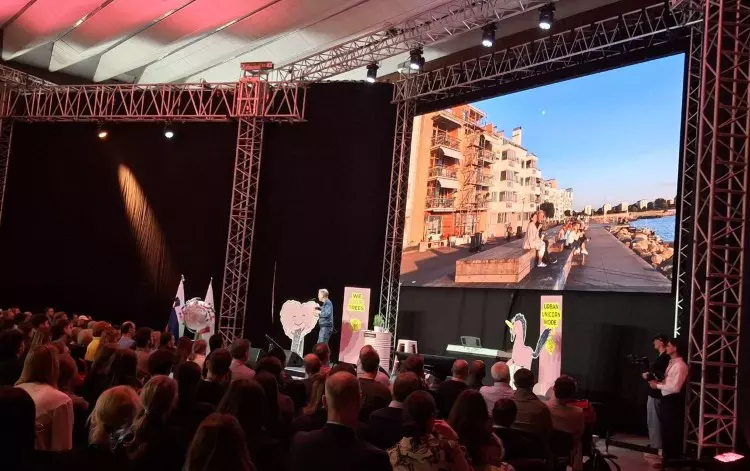
Urban Future 2026, held on March 24–27 in Ljubljana, once again confirmed its position as one of Europe’s most practice-oriented events on sustainable urban development. Bringing together more than 2,000 participants from cities, companies, research institutions and international organisations, the conference focused less on vision and more on how urban change actually happens in real conditions.
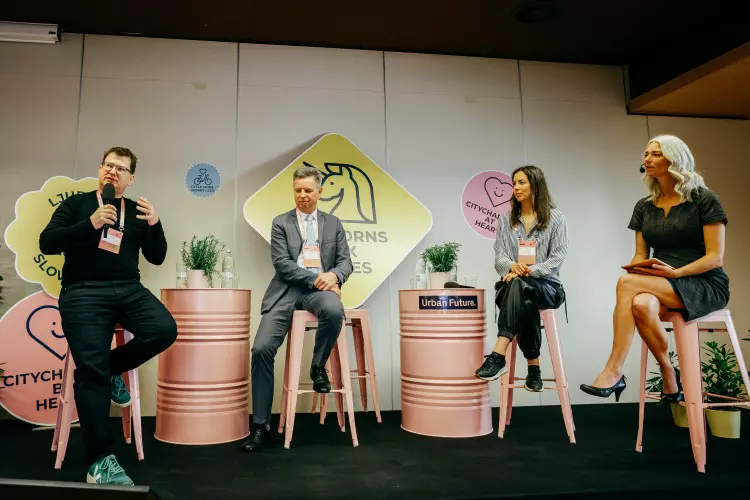
The programme was structured around several thematic tracks, including city centres, tactical urbanism, circularity, governance innovation, communication and future-proof cities. Together, they reflected a broader shift in the urban agenda.
Key themes in practice
Cities today are noе only asking what needs to be done, but how to implement solutions in complex political, economic and social environments. This practical orientation was visible across sessions. Discussions on city centres addressed changing retail patterns, housing pressures and new roles for central urban areas. The tactical urbanism track explored how temporary interventions can evolve into long-term planning tools, while governance-focused sessions examined how institutions adapt to growing expectations and increasingly complex urban systems.
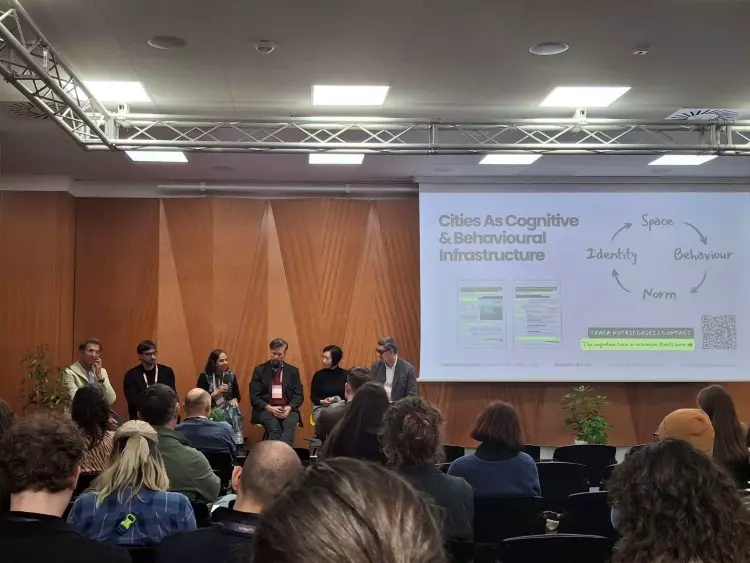
At the same time, several thematic strands stood out for the way they connected emerging trends with practical implementation.
One of them was artificial intelligence. Rather than treating AI as a distant or purely technological issue, sessions explored how it is already reshaping city administration, planning and service delivery. The discussion moved between risks and opportunities, but remained grounded in practical questions: how to use AI to improve efficiency and decision-making, and how to integrate it into existing urban systems without losing transparency or control.
Circularity was another key focus. Sessions on circular construction and materials showed how approaches such as timber building, material reuse and low-impact design are gradually moving beyond pilot projects. Speakers highlighted that the main challenges are no longer technical, but related to scaling, regulation and market conditions, as cities try to integrate circular principles into mainstream development.
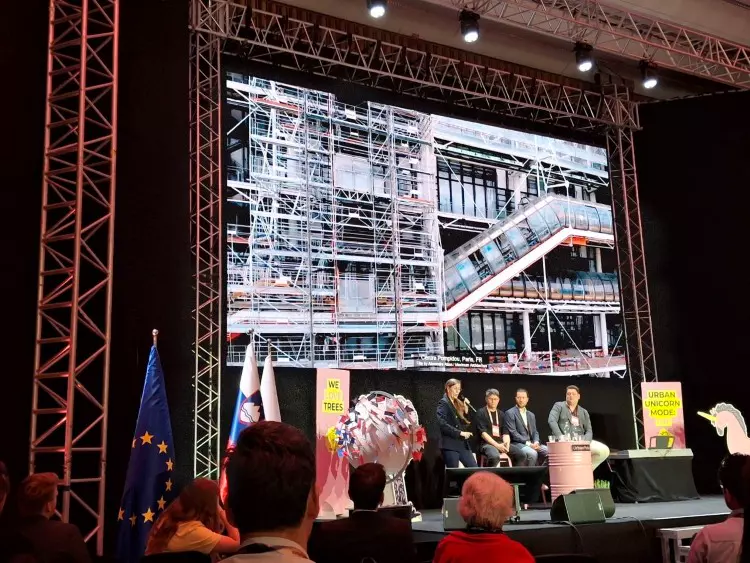
Energy and heating systems, often less visible in urban discussions, were also addressed through concrete examples. In sessions on energy retrofits and local energy systems, including cases such as Essex, the focus shifted to citizen engagement and implementation. A recurring point was that technical solutions are available, but projects depend on trust, communication and the ability to make participation accessible and understandable for residents.
Formats that enable real exchange
Beyond individual topics, the format of the conference played a significant role. Alongside panel discussions, the programme included workshops, interactive sessions and smaller group formats designed to encourage exchange rather than one-way communication.
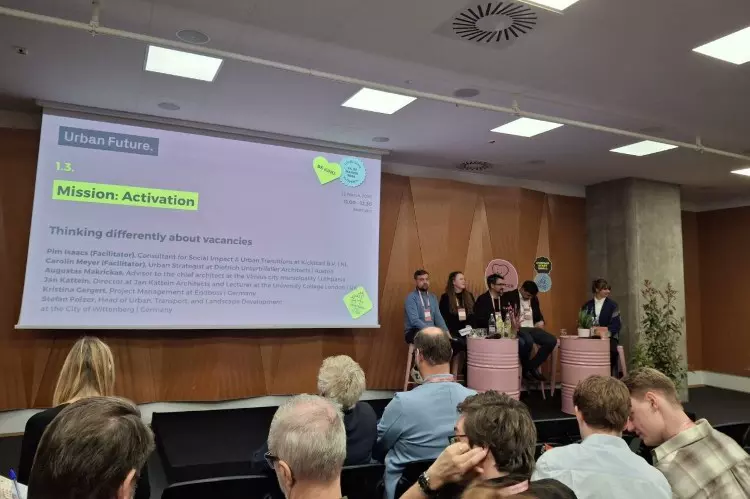
The “Cities Deep Talks” were among the most distinctive elements, offering small-group discussions focused on specific urban projects, including both successes and setbacks. This openness to learning from failure was further reflected in sessions such as the “Cities Fuckup Show,” where speakers shared projects that did not go as planned, turning mistakes into a resource for collective learning.
Urban Future Week extended beyond conference halls. Field trips across Ljubljana provided insight into local projects, while networking events created informal opportunities for exchange. The organisation of the event allowed participants to move easily between structured sessions and spontaneous discussions, maintaining continuity throughout the programme.
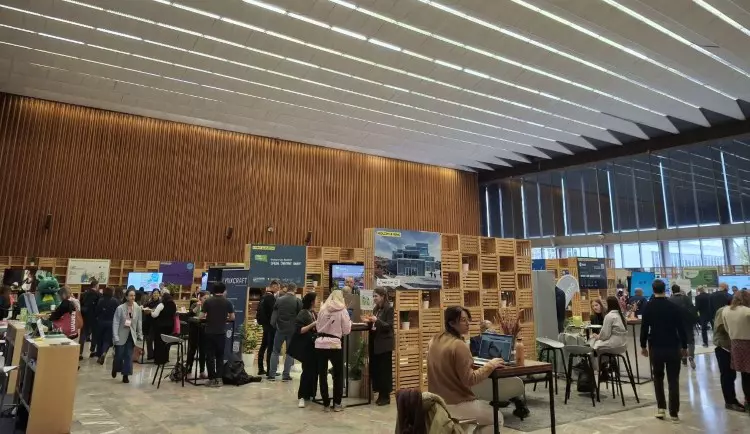
Towards the end of the conference, a compact UF26 Lounge Expo brought together selected cities and organisations working on urban development. The space featured representatives from Slovenian cities, as well as Vienna and Berlin, alongside companies and initiatives involved in implementing urban projects or supporting cities in this process.
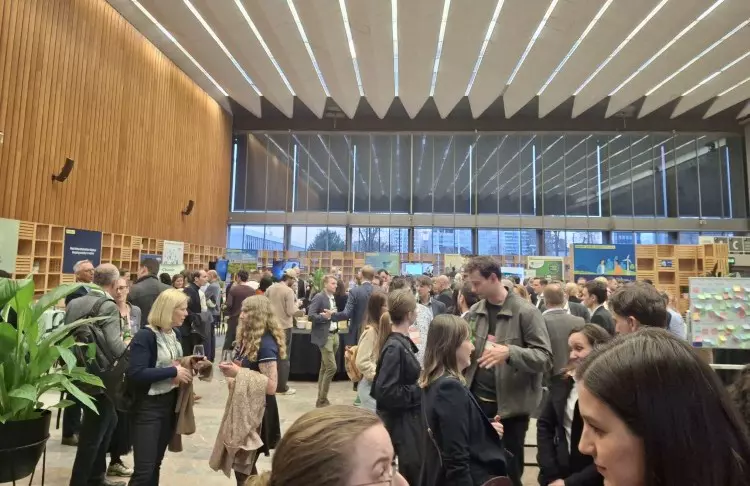
Taken together, Urban Future 2026 reflected a broader shift in how urban transformation is approached. The focus is moving away from individual solutions toward the conditions that make them work: governance, collaboration, financing and behaviour.
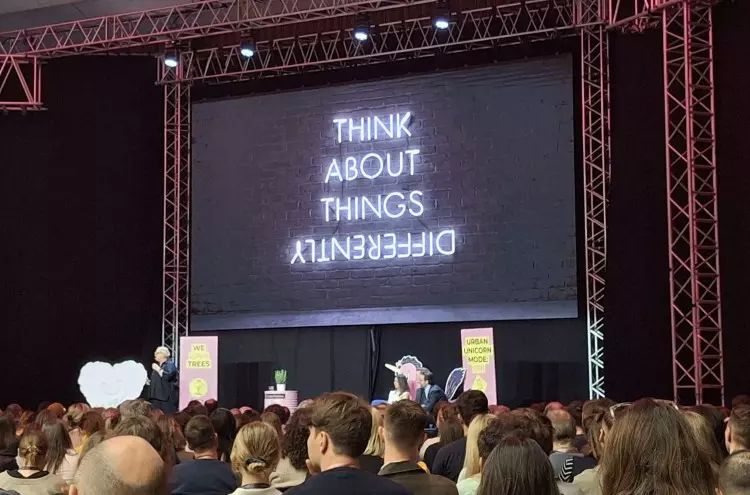
If there was one conclusion emerging from Ljubljana, it is that cities do not lack ideas. The challenge lies in implementation: in adapting solutions to local contexts, coordinating stakeholders and sustaining change over time.
Read more about conferences and exhibitions here