
Urban mobility faces critical challenges as cities expand and populations grow. Traditional systems, reliant on single-occupant vehicles that make up over 80 per cent of trips, contribute to pollution, congestion, environmental degradation, and inadequate infrastructure. Public transportation agencies have long focused on group and mass transit options, but these approaches are increasingly ineffective in meeting modern needs for flexible, personalised travel. Instead, innovative solutions like personal rapid transit systems are emerging to address these issues directly, offering on-demand, efficient alternatives that prioritise individual journeys and shaping the future of urban mobility.
U.S. modes of transportation to work (2020), number of workers (million)
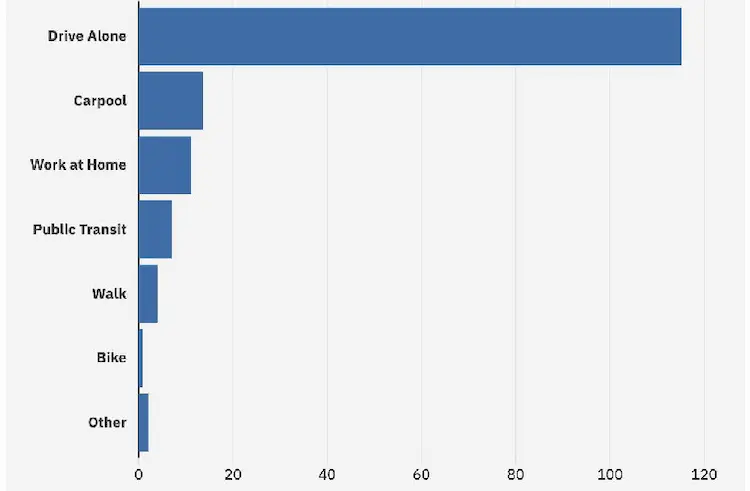
Source: Center for Sustainable Systems, University of Michigan. 2024. “Personal Transportation Factsheet.” Pub. No. CSS01-07.
Future of urban mobility and sustainable urban transportation
One key trend is the rise of autonomous personal transit systems. By 2030, experts predict that self-driving vehicles will be sufficiently reliable, affordable, and common to displace many conventional trips, reducing human error and optimising traffic flow. Companies like Waymo and Zoox are pioneering robotaxis for shared rides, while others specialise in compact, on-demand autonomous pods tailored for urban efficiency. These vehicles can transport individuals or small groups nonstop from point A to point B, using AI for smart routing and energy management. This evolution not only lowers emissions but also reclaims road space for community features like parks or cycle paths.
In parallel, vertical mobility is advancing through elevated rails, drone taxis, and aerial cables. These approaches avoid surface-level disruptions, enabling quick rollout at reduced costs compared to subways or motorways. For example, lightweight overhead systems can be constructed in months rather than years, helping cities respond agilely to evolving demands. Initiatives in this space include magnetic levitation tracks and gondola-inspired networks, expanding options beyond ground transport.
Urban innovation extends beyond hardware to integrated ecosystems. Smart software platforms are essential, synchronising vehicles, infrastructure, and users in real time. Envision apps that forecast demand, harness solar charging, and guarantee round-the-clock service. This comprehensive method builds community strength, generating employment in local assembly and upkeep while allowing councils to customise solutions to local issues. Cities such as Dubai and São Paulo are at the forefront, testing blends of autonomy and smart city mobility solutions to ease traffic pressures.
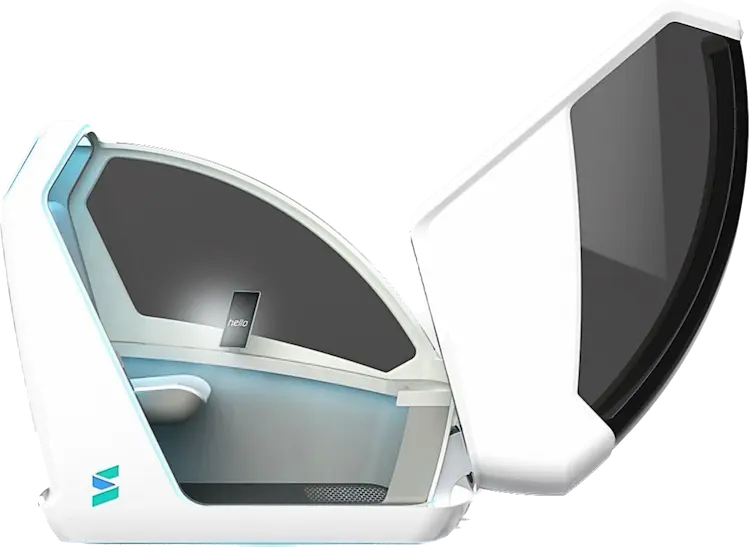
Case study: SNAAP Transportation
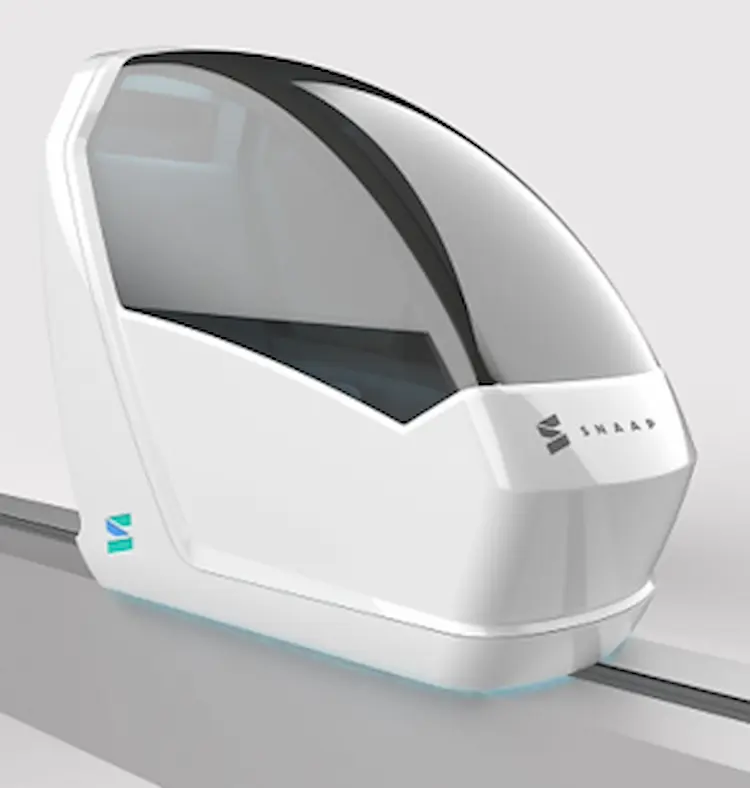
Amid these developments, different companies are tackling distinct facets of sustainable urban transportation. One example is SNAAP Transportation, which focuses on addressing the widespread reliance on single-occupant vehicles. The company has developed lightweight, battery-powered pods running on elevated “ribbonways.” These pods provide personalised, nonstop journeys without requiring large-scale new road construction.
What makes the concept interesting from a mobility perspective is not just its autonomous technology, but also its emphasis on decentralisation and speed of deployment. Ribbonways can be installed relatively quickly and at lower costs than traditional rail or subway infrastructure. By targeting specific high-demand areas—such as university campuses, healthcare facilities, and entertainment hubs—SNAAP’s model demonstrates how personal rapid transit systems can complement existing networks and reduce congestion.
Other players, like Glydways with its high-capacity pod networks, and 2getthere (part of ZF) deploying autonomous shuttles in controlled environments, contribute complementary solutions. Together, these efforts demonstrate how specialised systems can mitigate underused vehicles, integrate with existing setups, and enhance overall urban flow.
In this sense, SNAAP fits into broader global trends identified by McKinsey, such as the rise of electric mobility, ride-hailing, and even aerial transport. While other companies like Glydways or SkyTran are exploring similar ideas with pod networks and maglev-based travel, SNAAP’s approach highlights how small-scale, flexible infrastructure can help cities experiment with new models of sustainable urban transportation.
Meeting future demands
Tomorrow’s future of urban mobility must be flexible, scalable, seamless, resilient, and human-centred to handle growing urban pressures. By integrating autonomous pods with smart software and minimal infrastructure, solutions like PRT can reduce emissions, ease traffic, and enhance accessibility without overburdening existing systems.
Recommendations for future cities
A future city aiming for an efficient, sustainable urban transportation system should be built on:
- Legislation: Enact policies that incentivise low-emission vehicles and mandate smart infrastructure development.
- Technologies: Deploy personal rapid transit systems, vertical mobility networks, and AI-driven traffic management systems.
- Solutions: Foster public-private partnerships, support local manufacturing hubs, and ensure equitable access through subsidised services.
These steps will guide urban planners and investors in accelerating the transition, ensuring that smart city mobility solutions are efficient, inclusive, and harmonious with our environment.As we stand on the brink of this mobility revolution, the question is not if, but how quickly cities will embrace these changes. Forward-looking urban planners and investors have a pivotal role in accelerating the transition, ensuring that the future of urban mobility is efficient, inclusive, and harmonious with our environment.
About the authors:
Andrew J. Cray, co-founder and CEO of SNAAP Transportation, global strategist
Fanni Melles, PhD, future of cities researcher, architect, project manager