
How much do libraries actually contribute to sustainable development? As libraries and sustainable development become increasingly connected through the United Nations 2030 Agenda, their role extends far beyond providing access to books. Today they are spaces where communities learn, look for work, check facts, and connect with one another. That is exactly what makes them one of the quieter, yet hard to replace, players in the effort to reach the goals the world has set for itself by 2030.
What are the Sustainable Development Goals?
In 2015, all member states of the United Nations agreed on what is known as the 2030 Agenda: a set of 17 Sustainable Development Goals (SDGs) that touch on almost every part of modern life, from fighting poverty and hunger, through education and health, to climate change and protecting nature. What sets these goals apart from earlier international agreements is how deeply they are connected to each other. Progress in one area almost always affects the others, which means no single sector of society can do it alone. Everyone has a part to play.
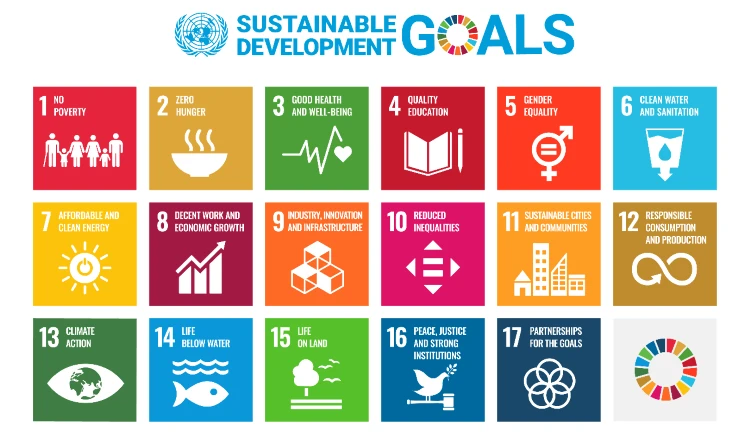
Figure 1. The 17 Sustainable Development Goals. Source: United Nations (n.d.).
Where do libraries contribute the most?
A study by OCLC titled Libraries Model Sustainability (Global Survey Results, 2020/2021), based on responses from 1,722 library staff in 99 countries, identifies five areas where libraries see their contribution to the 2030 Agenda as the strongest.
Several libraries around the world show what this contribution looks like in practice. Helsinki’s Oodi Central Library, opened in 2018, runs hundreds of programmes and events every year, from workshops in its Maker Space, where visitors create objects using 3D printers, to digital skills courses, film screenings in its own cinema, and children’s programmes such as storytelling and music sessions. Between August 2019 and October 2020 alone, more than 1,330 such events took place, all aimed at reducing social disparities and ensuring equal access to learning and information for all citizens.
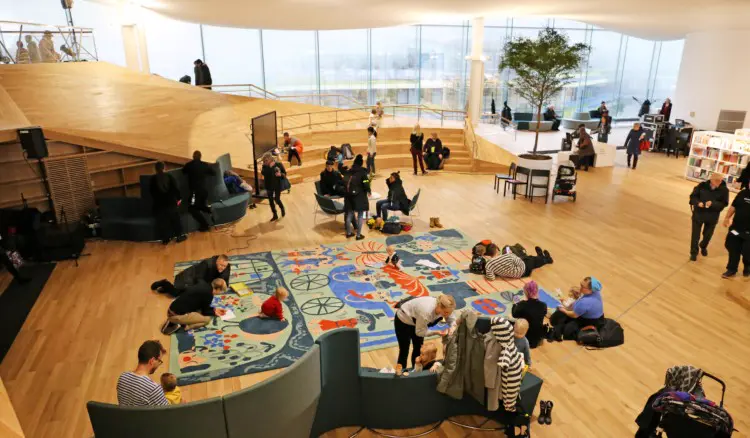
Figure 2. The children’s area provides space for kids and parents to play. Photo: Risto Rimppi/Oodi. Source: Takkunen, M. (2023). Oodi Library acts as Helsinki’s urban living room. ThisisFINLAND
In Aarhus, Denmark, the library Dokk1, opened in 2015, has grown into a major cultural and social hub that draws 1.4 million visitors a year. Alongside the library itself, the same building houses citizen services, a local radio station, and a light rail stop, the result of strong networking and community partnership dating back to the library’s planning stage. In London, the Idea Store network in the borough of Tower Hamlets goes a step further: its five centres together offer more than 900 adult courses a year, ranging from English and maths to digital skills and job-readiness training, drawing in large numbers of people who had never used a library before. Together, these examples already touch on several of the five SDGs that OCLC identified, beginning with education itself.
Quality education (SDG 4)
Education is the area where librarians most clearly see their own role. This is one of the clearest examples of how libraries and sustainable development reinforce one another through lifelong learning and equal access to education. The OCLC study found that Quality Education ranked highest of all five goals across every region and library type surveyed, with an average ranking score of 4.5 out of 5. The vast majority of academic library respondents said they regularly offer training, courses, or instruction as part of their services. Libraries also run literacy workshops for adults, programs for young children, and various forms of informal learning that do not fit neatly into the school system but still help build more capable communities. Access is free and open to everyone.
Reduced inequalities (SDG 10)
Libraries are among the few institutions that open their doors equally to everyone, regardless of income, background, or level of education. The OCLC study pays special attention to this in the context of libraries in developing countries, where a library is often the only place in a community where people can access knowledge for free. In that sense, a library is not just a cultural institution. It is a real, working tool for reducing social gaps.
Peace, justice and strong institutions (SDG 16)
At a time when misinformation has become one of the most serious global problems, libraries stand out as spaces where critical thinking is encouraged and facts are checked. A librarian today is not just a keeper of books but a guide through an overwhelming flood of information. The OCLC study shows that media and information literacy programs are becoming a bigger and bigger part of what libraries offer. This connects directly to SDG target 16.10, which calls for public access to information as a foundation of accountable and inclusive institutions.
Decent work and economic growth (SDG 8)
Libraries have long been more than places for reading. Writing a CV, preparing for a job interview, or finding out what positions are available have all become regular parts of what libraries offer. The OCLC study singles out support for small business owners and entrepreneurs as a growing area. During the COVID-19 pandemic this role became especially visible: many libraries turned into first stops for people who had lost their jobs and needed to learn how to search for work online or get ready for a video call interview.
Partnerships for the goals (SDG 17)
No library can solve the problem of unequal access to knowledge on its own. The OCLC study included partnerships as one of the five key SDGs for libraries, though respondents ranked it lowest among the five in terms of perceived current impact. This does not mean it is unimportant. Rather, it signals that building structured connections with schools, local governments, non-profit organizations, and technology companies is still an area with significant room to grow. Libraries that actively seek out these partnerships tend to expand their reach and services far more than those that work in isolation.
Digital inclusion and AI: technology as an ally
Going digital is both an opportunity and a challenge for libraries. According to IFLA data cited by the United Nations, more than 320,000 public libraries and over a million academic, school, and specialist libraries around the world together form the largest free-access knowledge network on the planet. In the digital age, that network is growing: e-books, online catalogs, webinars, and online courses allow libraries to reach people who cannot physically get to a shelf of books.
However, IFLA warns that technology alone is not enough. Without the right infrastructure, without trained librarians, and without users who know how to make the most of it, even the most advanced platform will not bring real change. The OCLC study confirms this from the librarians’ own perspective: regardless of how digital a library becomes, personal contact and professional knowledge remain at the heart of the service. Digital inclusion is not just about handing out a Wi-Fi password. It is about building the skills and confidence to find, evaluate, and use information.
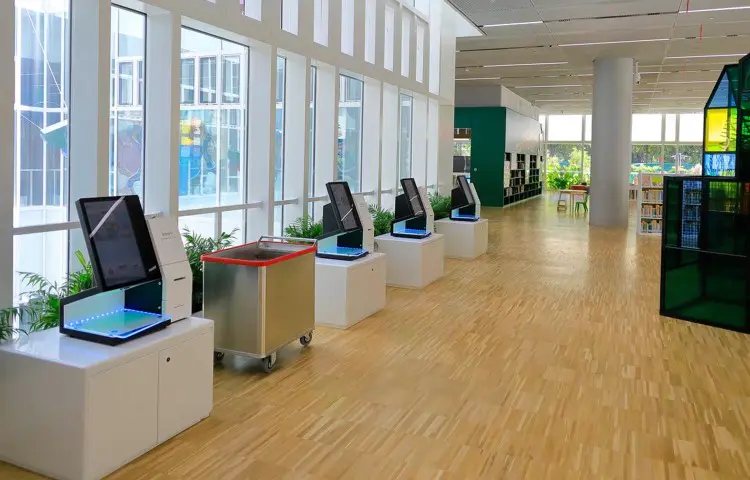
Figure 3. Shanghai public library.
Artificial intelligence adds a new layer to this challenge. As AI-generated content, chatbots, and algorithmic recommendations become part of everyday searching, libraries are increasingly the place where people learn to question what they read and verify what is true. Some libraries are already experimenting with AI themselves. Oodi in Helsinki, for example, introduced an AI-powered app that recommends books based on users’ interests, while making clear from the outset that no personal data would be collected. IFLA has called on libraries to take an active role in building AI literacy, helping citizens understand not just how to use these new tools, but how to question them. In this sense, libraries are not just adapting to artificial intelligence. They are helping make sure its arrival does not leave the people who most need guidance further behind.
Libraries as a model for the future
The title of the OCLC study, Libraries Model Sustainability, is not an accident or a marketing phrase. Libraries and sustainable development are closely connected because libraries have long embodied the core principles of the 2030 Agenda. They share resources instead of hoarding them, build community instead of dividing it, and treat knowledge as something that belongs to everyone. They have been doing this for decades, and mostly without much noise.
The years ahead will bring faster changes to the job market than ever before. Artificial intelligence will keep reshaping how people search for information, work, and learn, often faster than institutions and policies can keep up. Misinformation will keep putting public conversation under pressure, and digital divides will continue to leave some people further behind than others. At the same time, as more of daily life moves online, it has rarely mattered more for people to also meet in person, in shared physical spaces where they can talk, learn, and simply be around one another, the kind of spaces Oodi and Dokk1 already are for thousands of people every day. In that world, a library is not a relic of the past. It is one of the few institutions built specifically for this moment: open to everyone, answerable to no algorithm, and staffed by people whose job is to help others tell what is reliable from what is not. As technology keeps changing faster than most people can keep up with, that kind of steady, human presence is not a nostalgic extra. It is exactly what the 2030 Agenda needs, and it is already happening, quietly and steadily, in libraries every single day.