
Imagine stepping out of your home in Skopje on a chilly winter morning, only to realize that the city is shrouded in thick, grayish smog. Visibility is poor, the air carries a harsh scent, and the citizens are quick to cover their faces before venturing out. For thousands of inhabitants in the capital, such instances are not occasional occurrences but everyday realities. What makes the capital city of North Macedonia, which has made countless promises regarding a “green transition,” continue to suffer from its dirty air every winter? This was one of the major concerns raised by citizens during the winter of 2025-2026. As the world strives to make a green transition through the transformation of the global energy landscape, Skopje once again emerges as one of the most polluted cities in the world. The levels of PM10 in Lisice and Gazi Baba are again close to the alarming level of 150 µg/m³ for the entire month of January.
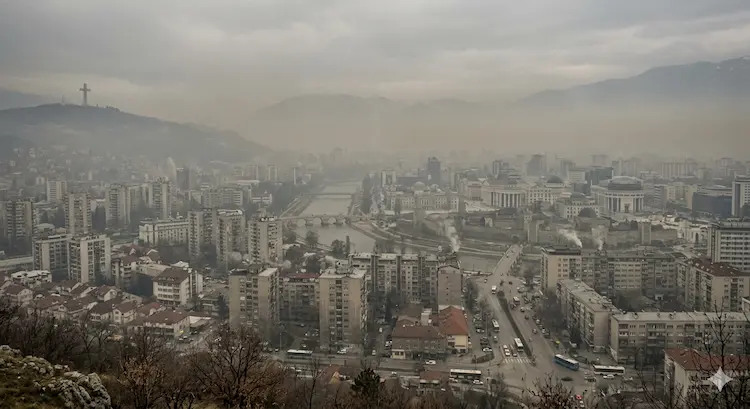
Although the issue gains more attention at the international level, the city keeps recording alarming figures of PM2.5 and PM10 particles far exceeding the threshold values proposed by the World Health Organization. The problem has generated increasing public concerns and received institutional responses, though with poor results. But air pollution does not occur due to adverse weather phenomena or a geographic curse. Rather, it is a product of several decades of intensive use of environmentally harmful fuels for heating, aging automobiles, and rampant urbanization that has practically smothered natural ventilation in the area. Its immediate effects can be found everywhere, from overcrowded pediatric offices to elevated risks of heart diseases in the elderly population.
Is there no way out of our current “gray” life, or do innovations like gasification and advanced transportation systems offer us hope for breathing clear air again? This article offers a structured analysis of the reasons behind the problem, its effects, and the road ahead.
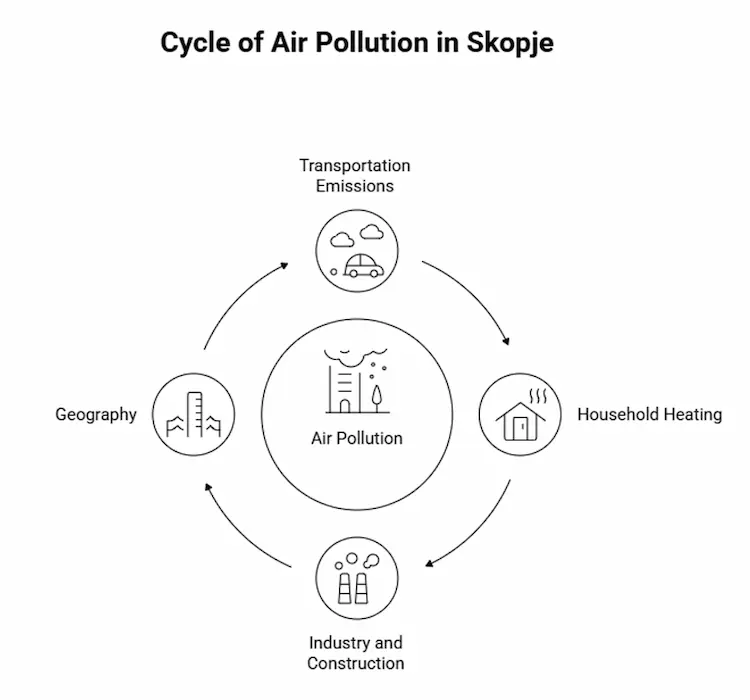
Air pollution in Skopje: key causes and structural drivers
Transportation as the main culprit
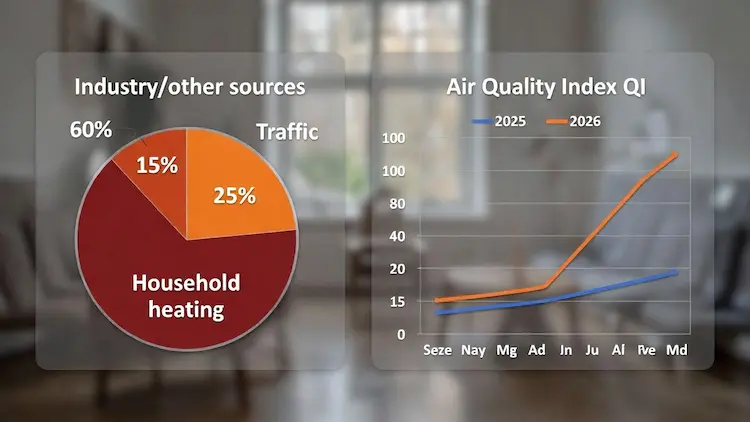
According to analyses, the transport sector is responsible for approximately 40% of air pollution in Skopje. A large number of vehicles circulating daily are highly outdated and do not meet modern environmental standards, significantly contributing to emissions of nitrogen oxides and fine particles directly into the breathing zone.
This problem becomes even more complicated due to the inefficient transport system. Even though there are buses in the city, their carrying capacity is insufficient to provide transportation for all people. Moreover, there is a deficiency of railway transport and trams that could help avoid the need for individual cars. The outcome of all this is inevitable motorization and heavy traffic.
Heating of households
During winter, one is able to see the level of pollution that exists in Skopje. This has largely been brought about by the use of wood (which has not been dried enough) as well as coal, biomass, and waste products, all leading to the emission of toxic particles. This has been attributed to a lack of purchasing capacity, poor levels of knowledge, and the absence of other means.
There is also the central heating system, but it needs an overhaul. This is because the pipes and other installations have been used for more than 30 years now.
Industry and construction activities
Industrial pollution is less visible than transport or heating, but remains a significant contributor. Although regulated, facilities in and around the city continue to emit harmful substances with insufficient monitoring. Additionally, rapid construction activity generates dust and particulate matter that remain suspended in the air.
The geography of the city as an unwitting accomplice
In a valley setting, Skopje becomes highly vulnerable to the phenomenon of temperature inversion during winter. The warm layer of air sits atop the cooler layer of air and hinders vertical movements, thus trapping the pollution in place. Furthermore, poor planning practices make the problem even worse. Improper constructions hinder natural wind pathways and complicate the process of dispersing pollution.
Health effects
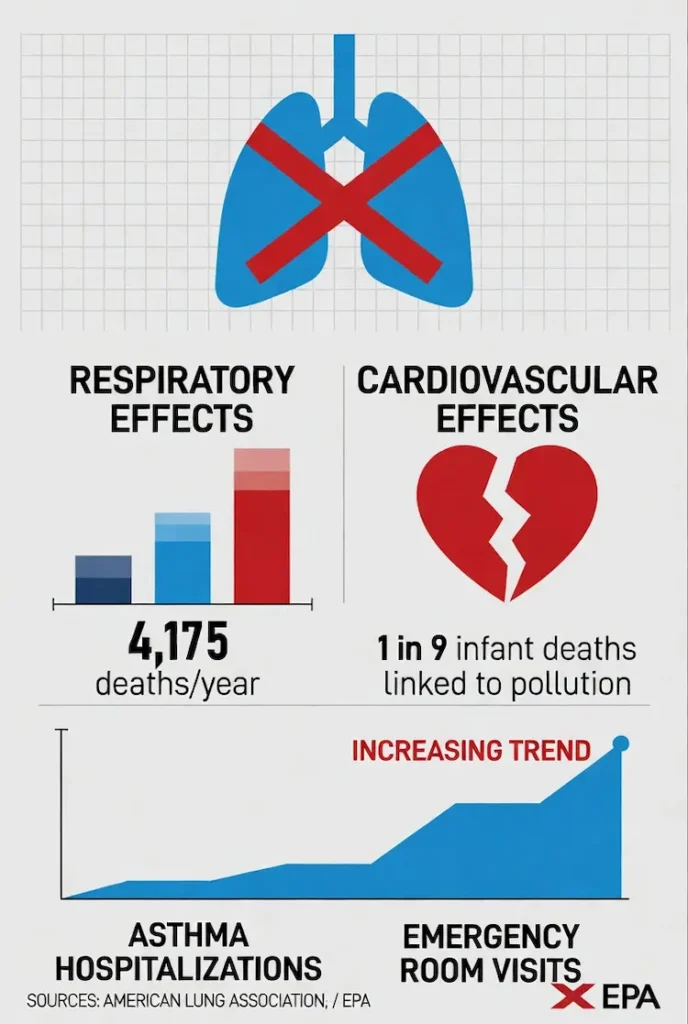
Being exposed to highly polluted air is extremely hazardous to people’s health and is considered one of the major risk factors contributing to death. People exposed to such conditions have an increased chance of developing various respiratory illnesses such as asthma and bronchitis, especially kids and seniors.
Long-term exposure to polluted air results in the development of heart diseases, lung cancer, and mental disorders in humans. The most susceptible populations include children who suffer from problems with developing their lungs, seniors, sick people, and expectant mothers. Air is supposed to maintain people’s lives, but it becomes a real threat to their health.
The national strategy
At the country’s level, the Republic of North Macedonia has enacted an Air Quality Plan in compliance with the directive from Europe. Furthermore, there is a requirement in the legislative act regarding the emissions of vehicles and industries. Yet, the problem arises due to the enforcement of the legislation. Funding for addressing the issue is very inadequate. For instance, the national budget allocation for air quality and energy efficiency for 2024/2025 is less than five million euros, while the country’s GDP amounts to more than 15 billion euros.
To address the pollution problem in Skopje, it is not enough to provide solutions like the provision of free transportation in case of an alert. Structural measures are required.
Key recommendations for a long-term strategy
1. Gasification and heating revolution:
- Gasification and completion of the pipeline infrastructure – completion of the construction of the gas network and installation of gas connections in all settlements in Skopje.
- District Heating Revolution – connection to the district heating network all institutions, schools, hospitals, kindergartens, and newly built housing estates with compulsory financial assistance for that connection.
- Banning non-ecological fuels – after implementation of the gasification project, implement the law forbidding the burning of coal and waste wood in urban settlements.
2. Revolution in public transport
- Public transport revolution (electrification of public transport): Replacement of all diesel buses with electric/hydrogen buses until 2030.
- “Low Emission Zones”: Prohibition of the entrance of vehicles with standards less than EURO 4 into the city center during the winter season.
- Transition from private to public transport.
3. Building energy efficiency revolution
- National Energy Facade Fund for financing over 50% of the thermal insulation of individual houses and building complexes constructed before 1990.
- Implementation of HEPA filters in hospitals and schools.
- Solar energy for every roof: introduction of a simple procedure for the implementation of solar panels as a producer-consumer model.
4. Industrial real-time monitoring
- 24/7 Online Monitoring: Sensors to be placed on all chimneys in industrial plants with A and B permits, where data would be continuously shared online on a public platform accessible to all citizens.
- Huge increase in fines: Fines for pollution should be more expensive than the income of the plant when not installing filters.
5. Urban planning
- Air corridor protection: Prohibition on the construction of high-rise buildings that will impede the flow of air (north-south) through the Vardar river valley.
- Green belt of Skopje: Planting forests on the slopes of Skopska Crna Gora and planting forests on Vodno mountain.
6. Urban forests: All vacant plots in the capital city that are owned by the state should be converted into micro-parks rather than building plots.
Cleaning the air pollution problem involves continuous and coordinated approaches. This includes enforcing existing regulations on an ongoing basis, enhancing inspection authorities, and promoting sustainable transportation systems. Individuals may help reduce air pollution by adopting better heating techniques, limiting their car usage, and protecting themselves from pollutants.
Air Pollution in Skopje is one of the environmental concerns in the city that calls for coordinated efforts to address it. Civil societies have been instrumental in mobilizing the public and exerting pressure on policymakers, evidenced by heightened activism and protests witnessed in the last few years.
Efforts to ensure air pollution control are neither political nor technical. The world has enough global practices that are being promoted by such institutions as the European Environment Agency and the UN Environment Programme. Air is the primary necessity for living beings, which implies that clean air is everyone’s basic right.
FAQ
What are the main causes of Air Pollution in Skopje?
The main reasons for the occurrence of Air Pollution in Skopje are inefficient heating of households (mainly by using wood and coal), pollution caused by the old cars used in the city, and pollution from industries and constructions. All these sources of pollution are further exacerbated by the geographic location of Skopje as a valley city.
Why does air pollution in Skopje get even worse during winter?
With an increase in heating requirements during winter, there is heavy use of solid fuel, which increases pollution. Moreover, winters cause inversion phenomena that do not allow the air to circulate. Hence, pollutants remain trapped in lower altitudes and cause prolonged periods of toxic air quality.
What are some effective methods to combat air pollution in Skopje?
Some effective measures are the adoption of greener forms of heating through gasification and district heating, electrifying transportation systems, energy-efficient building structures, regulating industry emissions, and good urban planning.