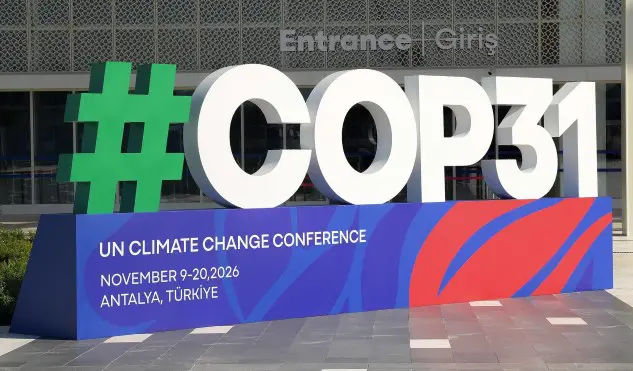
The UN Climate Change Conference in Antalya ended on 22 November, almost 50 hours later than scheduled, without the political agreement sought by the Turkish Presidency. The COP31 outcomes reflect deep disagreements over fossil fuels, climate science and financial support for developing countries, which ultimately prevented the adoption of the proposed Antalya Pact.
The conference nevertheless produced separate decisions on adaptation and just transition, alongside voluntary initiatives on electrification, buildings and urban resilience. As the IISD Earth Negotiations Bulletin reports, the outcome was more complicated than a complete diplomatic failure. For cities, however, a central problem remains: securing the funding and authority needed to turn national climate commitments into local projects.
Fossil fuels: why the Antalya pact failed
At COP28 in Dubai, governments agreed to transition away from fossil fuels in energy systems. The issue remained contentious at COP30 in Belém, where countries struggled to agree on a clearer path towards implementing that commitment. COP31 was expected to give that commitment greater practical substance, but the revised draft of 19 November removed proposals for stronger language on the transition.
The European Union rejected the final proposal, arguing that it failed to address fossil fuels adequately. The United Kingdom, Norway and several climate-vulnerable countries also opposed weakening earlier commitments. Panama criticised references to carbon capture technologies that could justify continued fossil-fuel use.
Other governments resisted sector-specific targets they considered inconsistent with national circumstances. Members of the Arab Group and the Like-Minded Developing Countries group raised such concerns, while Switzerland promoted national transition roadmaps and Brazil emphasised implementation of existing agreements.
These documented positions illustrate the competing economic and political priorities. The Turkish Presidency maintained that its text represented the best available compromise, but consensus proved impossible. The Antalya Pact was not adopted, nor were separate draft decisions on the Mitigation Work Programme, response measures and the Global Environment Facility.
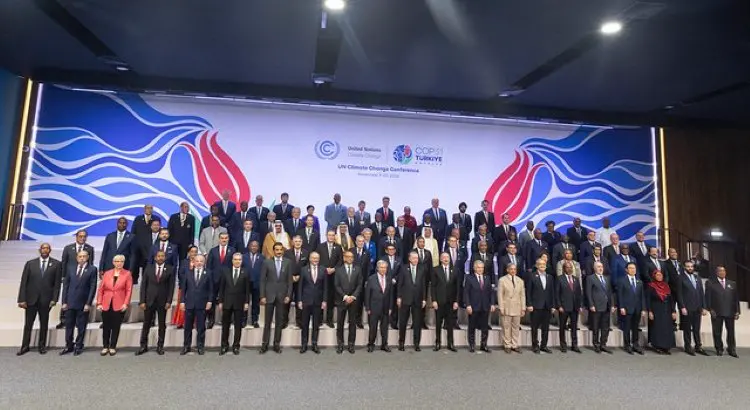
Source: UN Climate Change photos
Climate finance: The dispute behind the numbers
An earlier draft proposed $120 billion annually in adaptation finance by 2035, but the figure disappeared from subsequent versions. The proposed Antalya–Addis Ababa financing roadmap also failed to become an agreed outcome.
The African Group questioned proposals to triple adaptation finance without a clear baseline or guarantees of delivery. The Arab Group criticised the lack of concrete commitments, although both groups were prepared to accept the pact as a compromise. The Least Developed Countries group opposed the final text, while small island states pressed for stronger support in response to escalating climate risks. These positions are recorded in the final IISD report.
The disagreement concerned more than financial targets. Developing countries have challenged the reliance on loans, complicated funding procedures and unpredictable contributions. Adaptation projects, including flood protection, drainage and climate-resilient housing, often generate limited commercial returns despite their substantial public benefits.
COP31 nevertheless adopted separate decisions on the Global Goal on Adaptation and the Adaptation Fund. The latter advances the fund’s transition towards serving the Paris Agreement exclusively, subject to financial and administrative conditions linked partly to Article 6.4. The details appear in the UNFCCC document FCCC/KP/CMP/2026/L.4. These institutional steps preserve international adaptation cooperation, but they do not settle the broader financing dispute or guarantee additional resources for municipalities.
Just transition: an institutional step forward
Governments adopted a decision under the United Arab Emirates Just Transition Work Programme, extending it for three years and establishing a process for developing a just transition mechanism. According to the UNFCCC document FCCC/PA/CMA/2026/L.24, further work on its functions and governance is scheduled for 2027, with additional decisions expected at COP32. A fully operational mechanism with guaranteed financing has not yet been established.
The decision recognises the role of subnational and local authorities in managing the social and economic consequences of decarbonisation. This matters particularly for industrial cities and regions dependent on fossil-fuel industries, where retraining, employment support and economic diversification are essential. However, the decision does not automatically provide municipalities with additional powers or dedicated funding.
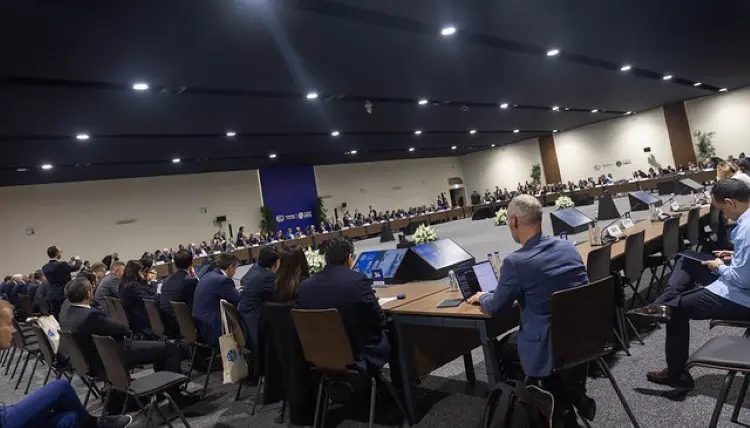
Source: UN Climate Change photos
Electrification and buildings: progress beyond the negotiations
Several voluntary initiatives continued despite the failure of the Antalya Pact. The Turkish Presidency’s 35-by-35 initiative aims to increase electricity’s share of global final energy consumption from approximately 23% to 35% by 2035.
The proposal attracted support from the European Union, the United Kingdom and other economies. India and members of the Like-Minded Developing Countries group, however, opposed turning a voluntary objective into a universal negotiated target without sufficient recognition of national circumstances and financial needs.
Electrification can reduce emissions in transport, heating and industry, provided electricity generation becomes cleaner. Its expansion also requires substantial investment in grids, storage and equipment, creating additional challenges for countries with limited financial resources.
Buildings offer a more specific implementation opportunity. The Antalya Compact for Energy Efficient Buildings, promoted by the Turkish Presidency with support from the Global Alliance for Buildings and Construction, sets a voluntary target of reducing the operational energy intensity of the global building stock by 25% by 2035 compared with 2020.
The Compact covers renovation, efficient heating and cooling, electrification and financing. For municipalities, these measures are relevant to schools, hospitals, social housing and public buildings, where renovation can reduce operating costs while improving comfort and resilience. Limited budgets, fragmented ownership and national regulatory constraints, however, often delay investment.
The Compact is not a binding agreement among all UNFCCC parties. Its effectiveness will depend on the policies and resources provided by participating governments and institutions.
Cities and adaptation: recognition without enough resources
Cities received considerable attention at COP31. On 12 November, the Turkish Presidency and UN-Habitat convened a high-level dialogue on urban resilience and climate action, focusing on housing, infrastructure, informal settlements and essential services.
Urban priorities are becoming more visible in national climate planning. According to UN-Habitat’s analysis of 142 national climate plans, 80% of the latest submissions contain well-developed urban components, compared with 49% in the previous cycle.
Financing remains a major obstacle. UN-Habitat estimates that cities need approximately $4.5 trillion annually in climate investment through 2030, while current urban climate finance flows amount to around $831 billion per year. These estimates cover broad urban investment needs rather than municipal budgets alone.
Local authorities also face institutional constraints. Many lack the technical capacity to prepare investment-ready projects or meet international lenders’ requirements, while borrowing restrictions and limited fiscal autonomy constrain infrastructure spending.
COP31 highlighted possible responses, including Türkiye’s Sustainable Urban Resilience Financing Facility, developed with UN-Habitat and the World Bank. The initiative aims to combine project preparation, technical support and access to finance, although its effectiveness remains to be demonstrated through actual investments.
Local governments also demanded a stronger role in climate governance. Speaking on behalf of the Local Governments and Municipal Authorities Constituency on 18 November, Piia Elo, Mayor of Turku, Finland, called for closer cooperation between national and local authorities and improved access to climate finance. “Ministers, we implement climate action where your people live,” she told delegates in her published statement.
Her intervention highlighted a persistent imbalance. National governments negotiate climate commitments, but municipalities implement many of the measures affecting residents directly, often with limited influence over funding and regulatory decisions. Among the COP31 outcomes, the recognition of local authorities’ role represents progress, although the urban dialogue created no binding commitments to transfer additional resources or powers.
COP31 outcomes: what comes next?
COP31 failed to secure an overarching political agreement, but separate decisions on adaptation and just transition, alongside voluntary initiatives on electrification and buildings, provide a basis for further work. In his closing remarks, UN Climate Change Executive Secretary Simon Stiell acknowledged the disappointment while pointing to progress through the conference’s action agenda.
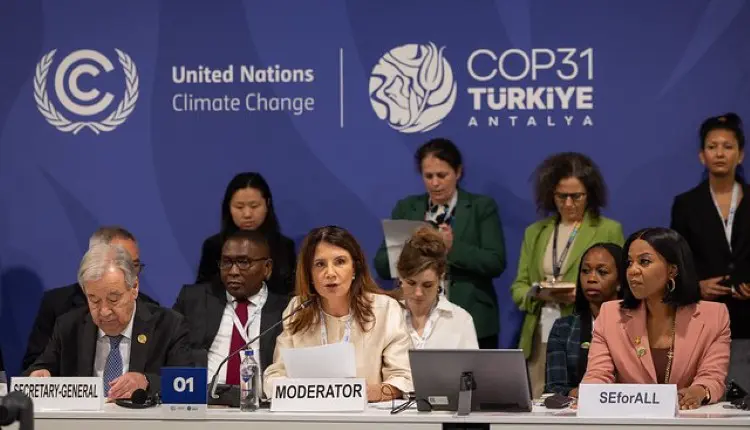
Source: UN Climate Change photos
For cities, the central question is whether this progress will translate into greater access to finance, stronger institutional capacity and practical support for adaptation and infrastructure investment. The value of the Antalya outcomes will ultimately depend on what governments and local authorities can deliver beyond the negotiating rooms.