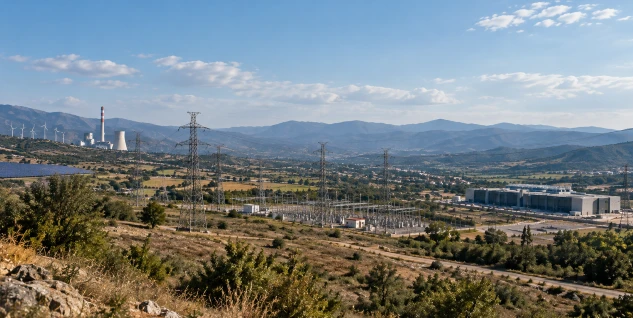

How can the Western Balkans accelerate the energy transition while simultaneously strengthening energy security, improving competitiveness and preparing for a changing climate? This question was at the centre of discussions at the ninth edition of the Macedonian Energy Forum (MEF), held on 1–2 June in Skopje, North Macedonia. Positioned as an official partner event on the Road to COP31, the forum brought together government representatives, international organisations, financial institutions, businesses and civil society to discuss the region’s energy and climate future.
Over the years, MEF has evolved into one of the leading regional platforms for dialogue on energy and climate issues in Southeast Europe. The 2026 edition continued this role by linking broader climate objectives with practical questions of implementation, investment and regional cooperation. Organised in partnership with the EU Delegation to North Macedonia, the Ministry of Environment and Spatial Planning of North Macedonia and the COP31 Presidency, the event reflected growing efforts to connect regional priorities with global climate discussions.
Energy transition, competitiveness and regional integration
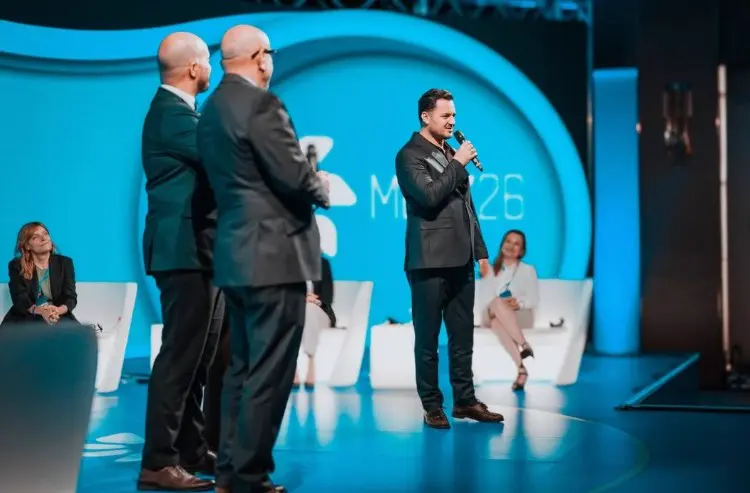
The programme opened with a high-level leadership exchange titled From Reform to Delivery: Building a Competitive and Resilient Energy Future. Bringing together representatives of the Government of North Macedonia, the Energy Community Secretariat, transmission system operator AD MEPSO and the diplomatic community, the panel focused on the practical challenges of implementing energy reforms and accelerating renewable energy deployment.
Several speakers highlighted the increasingly close relationship between energy policy, economic competitiveness and European integration. Orhan Murtezani, Special Advisor to the Prime Minister of North Macedonia on the EU Reform Agenda, described energy transition as one of the clearest examples of how reform commitments are translated into practical readiness for EU accession. According to participants, climate policy, energy security, public health and economic development can no longer be treated as separate policy areas, but increasingly form part of a common agenda.
The discussion also underscored the importance of infrastructure development and regional connectivity. Burim Latifi, General Manager of AD MEPSO, pointed to the strategic role of the planned East–West transmission corridor in enhancing regional security of supply, renewable integration and price stability, while positioning North Macedonia as an important connection point between eastern and western electricity markets. Aleksandra Bujaroska of the Energy Community Secretariat highlighted efforts to identify suitable locations for renewable energy deployment through improved planning and GIS-based approaches that could facilitate faster project development and financing.
Several remarks also reflected the broader security dimension of the energy transition. As Swedish Ambassador Ola Sohlström noted during the discussion, energy security increasingly requires both diversification and stronger partnerships, while investments in energy efficiency contribute not only to environmental objectives but also to economic resilience and public health.
From climate diplomacy to energy infrastructure
The forum’s broader programme reflected the growing interconnection between climate policy and energy system transformation. A ministerial dialogue dedicated to the Road to COP31 brought together representatives from North Macedonia, Türkiye, Montenegro and Bulgaria to discuss regional climate cooperation and priorities ahead of the next UN climate conference.
Other sessions focused on sustainable supply chains and critical raw materials, climate resilience and adaptation, just transition policies and social inclusion, as well as financing renewable energy and battery storage projects. Discussions involved representatives from the European Investment Bank, EBRD, SolarPower Europe, the OSCE, the World Meteorological Organization and other international organisations and institutions.
The prominence of topics such as critical raw materials, battery storage, climate resilience and energy poverty illustrated how the regional energy transition is becoming increasingly multidimensional. The focus is no longer limited to renewable energy deployment alone. It now includes questions of financing, infrastructure, supply chains, social impacts and long-term resilience.
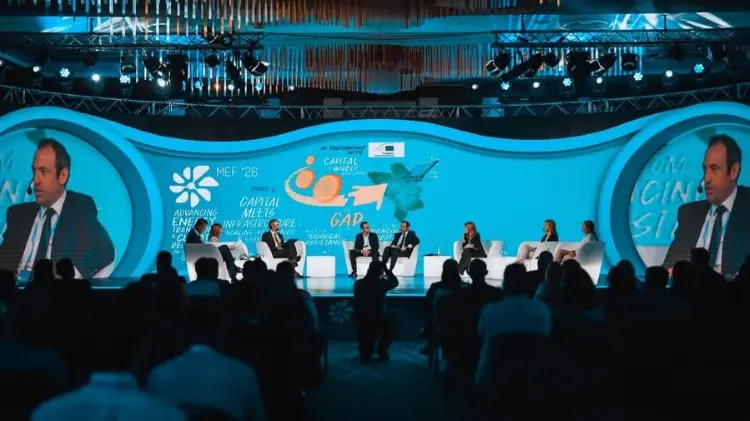
Particular attention was given to the relationship between investment and implementation. The closing panel, Capital Meets Infrastructure: Scaling Renewables and Storage, brought together representatives of financial institutions, investors and energy experts to discuss the conditions needed to accelerate renewable energy and battery storage deployment across the region.

From reform to delivery
A recurring message throughout Macedonian Energy Forum 2026 was the need to move from strategic commitments toward implementation. While the Western Balkans have made significant progress in aligning with European energy and climate objectives, discussions repeatedly returned to practical issues such as grid investments, permitting, financing mechanisms and regional coordination.
The programme suggested that the next phase of the energy transition will depend not only on national policies, but also on the ability of countries to work together on shared infrastructure and regional energy projects. As renewable deployment accelerates and climate risks become more visible, cooperation across borders may increasingly determine how successfully the region balances competitiveness, energy security and decarbonisation.
In that sense, the title of the opening panel, From Reform to Delivery, captured not only one discussion, but perhaps the broader challenge facing Southeast Europe’s energy transition in the years ahead.
Read more about othe conferences and exhibitions here