
Belgrade Energy Forum 2026, held on May 11–12 in Belgrade, focused on energy security, decarbonisation, infrastructure development and the growing impact of changing European regulations on regional markets. Discussions took place against the backdrop of continuing instability linked to the war in Ukraine, tensions in the Middle East and volatility in global energy markets. At the same time, the gradual implementation of new European regulatory mechanisms, particularly the Carbon Border Adjustment Mechanism (CBAM), is creating additional pressure on electricity markets and energy-intensive industries across Southeast Europe.
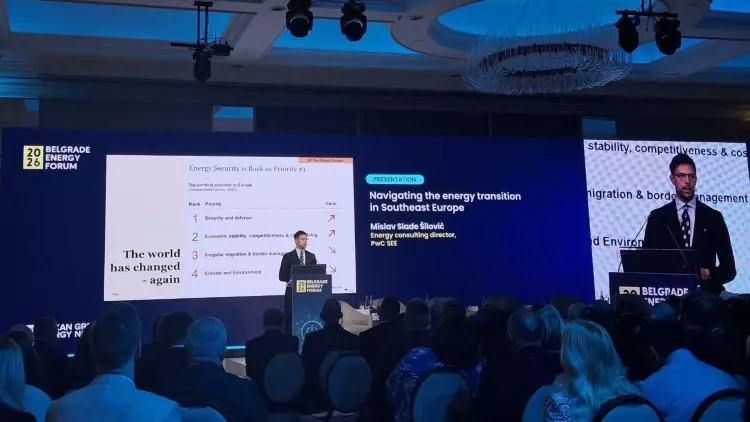
These broader concerns were reflected particularly clearly in the opening presentation by Mislav Slade Šilović, Energy Consulting Director at PwC SEE, whose keynote became one of the analytical reference points of the Forum. He argued that energy security can no longer be viewed only through the prism of electricity prices or climate targets, but increasingly as a question of political stability, economic resilience and national security. Referring to the war in Ukraine, tensions in the Middle East and growing volatility in global energy markets, Slade Šilović warned that Southeast Europe faces a narrowing window for modernisation. He also pointed to the growing geopolitical role of LNG markets, the vulnerability of global supply chains and the pressure CBAM may place on regional industries and coal-based electricity production.
Security, flexibility and infrastructure
The opening panel on securing the energy transition in Southeast Europe gathered ministers and senior officials from Serbia, North Macedonia, Montenegro, the Federation of Bosnia and Herzegovina, Republika Srpska and Azerbaijan. Discussions focused on energy transition, security and the regional challenges facing the sector.
Questions related to flexibility and system stability appeared repeatedly throughout the programme. Several panels focused on battery energy storage systems (BESS), smart networks, digitalisation and AI-supported energy management. Speakers discussed transmission infrastructure, balancing capacity and the technical challenges linked to integrating larger shares of renewable energy into regional power systems.
The panel dedicated to transmission grids highlighted the role of regional transmission system operators in the green transition. Representatives of EMS, CGES and MEPSO, together with infrastructure and energy experts, discussed grid development and system reliability under changing market conditions.
The programme also included presentations of specific technologies and projects, including market optimisation systems, smart networks and the FEC Novaci hybrid BESS project presented by YESS Power.
Several discussions also pointed to the scale of future investment needs. According to estimates presented during the Forum, Southeast Europe may require between €50 and €80 billion in investments during this decade to modernise regional energy systems and infrastructure.
CBAM and pressure on industry
One of the central discussions of the Forum focused on the impact of CBAM on the regional electricity market. Representatives of energy exchanges, utilities, trading companies and the Energy Community Secretariat discussed the possible consequences for electricity pricing, cross-border trade and industrial competitiveness.
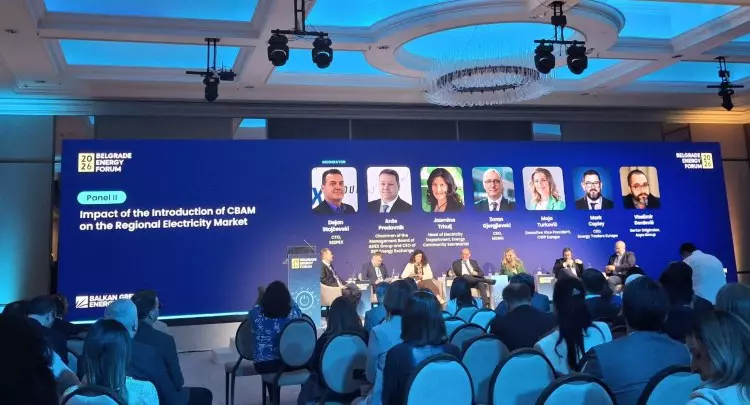
The issue was further explored during discussions on decarbonisation strategies for energy-intensive industries, involving representatives of the EBRD, Siemens Energy and regional industrial companies. Speakers addressed financing models, technological modernisation and the challenges industries may face under new regulatory conditions.
Several participants noted that energy transition in Southeast Europe is becoming increasingly tied not only to climate goals, but also to industrial competitiveness and access to European markets. Discussions around CBAM repeatedly returned to the question of how regional industries can adapt quickly enough to avoid rising costs and declining competitiveness.
Regional projects in a more uncertain environment
Compared to many earlier regional energy conferences, Belgrade Energy Forum 2026 felt more focused on implementation and operational challenges. Alongside policy discussions, much attention was given to concrete infrastructure projects, financing structures and technological solutions already being developed across Southeast Europe.
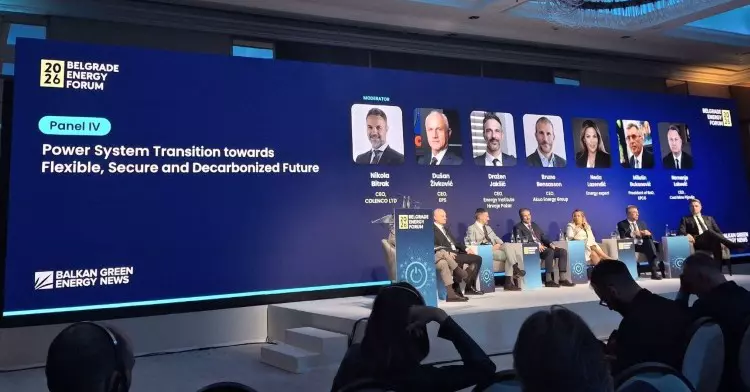
At the same time, many discussions reflected a broader reality: the region’s energy transition is becoming increasingly shaped by geopolitical instability, infrastructure constraints and changing European market rules.
In that context, the importance of regional projects and cross-border infrastructure becomes more visible. As energy systems become more interconnected and exposed to external shocks, stronger regional cooperation may help reduce transaction costs, improve system stability and limit the impact of price fluctuations.
The discussions in Belgrade suggested that Southeast Europe is entering a more demanding phase of the energy transition. The challenge now lies not only in decarbonisation itself, but also in financing, grid modernisation and the ability to adapt regional energy systems to a far more unstable geopolitical and regulatory environment.
Read about other conferences and exhibitions here