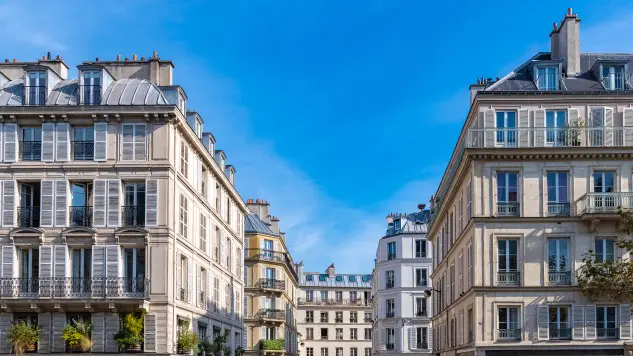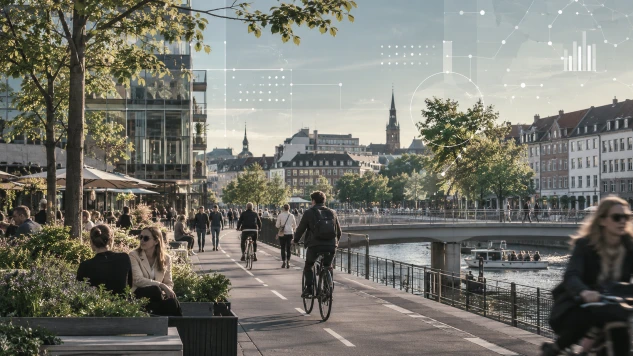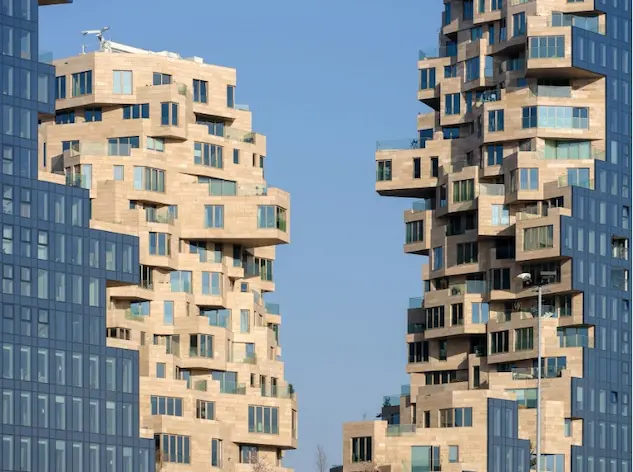

Cities are responsible for the majority of global energy use. According to the International Energy Agency, urban areas account for around 70–75% of global energy consumption, and that share is expected to grow as urbanization continues. This makes energy infrastructure not only unavoidable, but increasingly visible within the urban fabric.
Power plants, waste-to-energy facilities and grid systems are no longer located at the edges of cities. They are becoming part of everyday urban experience. In this context, industrial infrastructure designis emerging as a critical question for cities. It is no longer just about how these systems function, but how they are perceived.
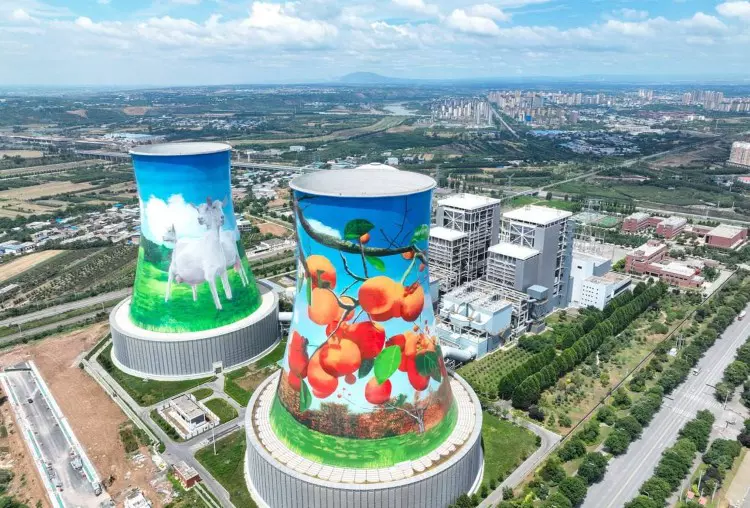
Across the energy sector, cooling towers and industrial structures are increasingly treated as design surfaces. Landscapes, sky illusions and abstract compositions are applied to infrastructure that was once purely functional. For cities, this is not only about aesthetics. It is a way to manage perception and integrate energy systems into local identity.
A recent example comes from Meizhou in China, where cooling towers at a thermal power plant were transformed through large-scale artistic design to improve the visual image of industrial areas. The project reflects a broader shift: infrastructure is no longer treated as something to hide, but as something to integrate.
From visual integration to power plant design
Industrial facilities are difficult to conceal, especially in dense urban environments. As a result, cities are moving from strategies of concealment to strategies of visual integration. Painting cooling towers or redesigning façades allows these structures to blend into the skyline and reduces the sense of industrial dominance.
For energy companies, such interventions also serve as a visible signal of environmental awareness and attention to quality of life. Even when the technology itself remains unchanged, its perception can shift significantly. This is where power plant design begins to intersect with urban experience.
But this is also where the ambiguity begins. If infrastructure looks cleaner, calmer, or even “natural,” does it change what it actually is, or only how it is experienced?
Why perception matters
A growing body of research shows that perception is not a secondary factor, but a core element of how urban environments function. Architectural studies demonstrate that spaces incorporating natural visual patterns, such as organic forms, textures and fractal geometries, are consistently perceived as more attractive and less stressful.
This is closely linked to the concept of biophilic design. The framework developed by Terrapin Bright Green identifies 14 patterns that reconnect people with nature through the built environment. These principles are increasingly influencing industrial architecture design, especially in projects that aim to soften the visual impact of large-scale infrastructure.
Such interventions are associated with reduced stress, improved cognitive performance and a stronger sense of well-being. In this context, applying landscape imagery or organic patterns to industrial infrastructure can be understood as a simplified form of biophilic industrial design.
It does not change emissions or energy output. But it does change how infrastructure is perceived, and how it is accepted within the city.
When infrastructure becomes public space
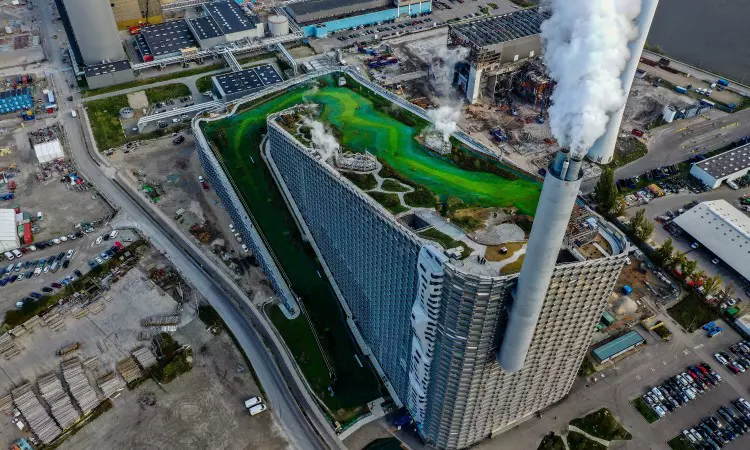
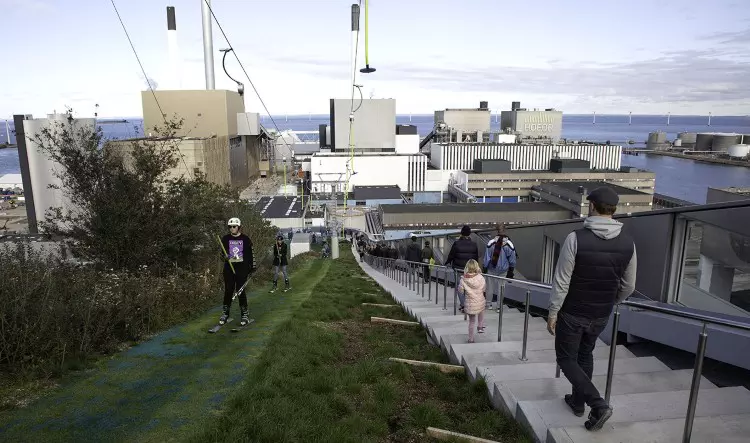
In some cases, the shift goes beyond visual treatment and extends to the physical redefinition of infrastructure. The most prominent example is CopenHill in Copenhagen, a waste-to-energy plant that combines energy production with public space. Designed by BIG (Bjarke Ingels Group), the facility integrates a ski slope, hiking trails and recreational areas on top of an active industrial system.
Source: CopenHill
CopenHill converts waste into energy while simultaneously functioning as a public destination. It produces electricity and district heating for thousands of households, while its roof is used by residents as a leisure space.
This project is often cited as a leading example of urban industrial infrastructure that goes beyond technical performance. It reflects a broader ambition: to make infrastructure not only efficient, but socially and spatially integrated.
Source: CopenHill
Aesthetic layer or structural change?
This raises a more complex question. Are these design interventions a meaningful step toward better urban environments, or simply a visual layer applied to unchanged systems? In practice, they do both.
On one hand, they reduce the visual and psychological impact of industrial structures and improve everyday experience. On the other, they risk becoming a form of visual compensation, making infrastructure more acceptable without fundamentally transforming its environmental performance.
This tension is particularly relevant in the context of the energy transition. As cities invest in new energy systems, the visibility of infrastructure is likely to increase, not decrease.
The economic dimension of perception
Perception also has direct economic implications. Urban environments are evaluated not only in terms of functionality, but also in terms of visual quality, environmental comfort and perceived risk.
Industrial infrastructure often carries negative associations, including pollution, noise and health concerns. These perceptions are reflected in real estate markets, where proximity to visible industrial facilities is typically associated with lower property values and rental rates compared to areas perceived as more natural or livable.
In this context, industrial infrastructure design becomes more than an aesthetic intervention. It becomes a tool for shaping both perception and value.
Beyond decoration
What emerges is a broader shift in how energy infrastructure is understood. It is no longer treated as a purely technical system operating in isolation, but as part of the urban environment. Design does not replace technological transformation. A painted cooling tower does not reduce emissions. But it changes how infrastructure is experienced, interpreted and negotiated within the city.
In the long term, the most effective approach is likely to combine both dimensions: improving environmental performance while also rethinking how infrastructure is integrated into urban space. Because in contemporary cities, the challenge is no longer only how energy systems function. It is how they are seen, and whether perception is beginning to shape reality as much as technology itself.