
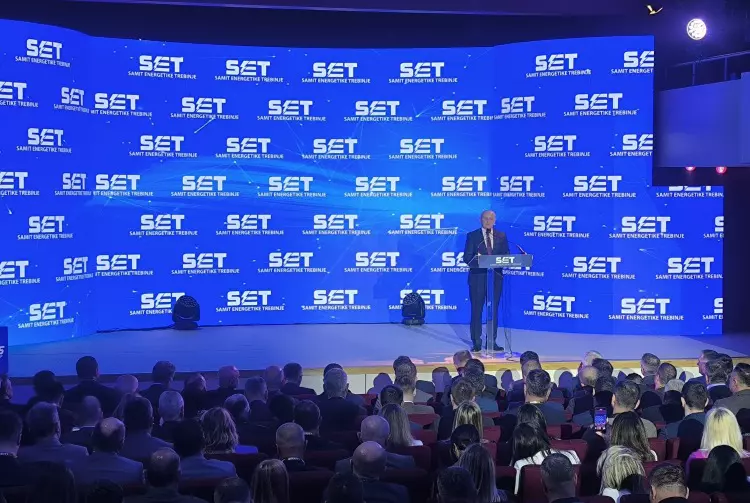
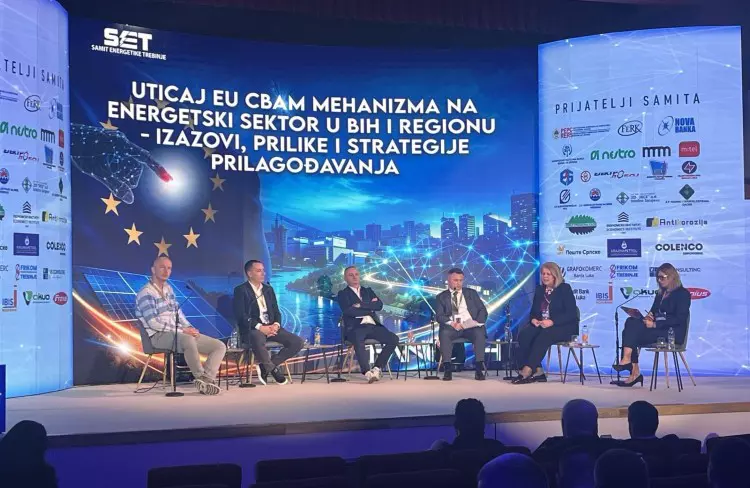
The seventh Energy Summit in Trebinje (SET 2026), held from March 25 to 27, brought together more than 700 participants from the region and beyond, including representatives of governments, energy companies, investors and international financial institutions.
Although renewable energy, digitalisation and artificial intelligence dominated the agenda, discussions across multiple panels pointed to a deeper shift: in the region, the energy transition is no longer about strategy, but about implementation. After years of defining targets and policy commitments, the focus is increasingly moving toward the ability of systems to turn these plans into concrete, sustainable and financially viable projects.
The Energy Summit in Trebinje 2026: From strategy to delivery
Both keynote speakers and panel participants shared a similar view: the main challenge is no longer to define the direction of the transition, but to make it work in practice. The region is entering a phase where success will depend on the operational capacity of institutions, companies and markets to handle complexity and deliver projects under real-world conditions.
This was particularly evident in discussions on financing and investment. Capital is available, participants noted, but it is becoming more selective, requiring predictability, stable regulatory frameworks and a clear allocation of risks between public and private actors. At the same time, the energy sector is under multiple pressures. It must ensure security of supply, accelerate decarbonisation and meet the expectations of financial institutions that are increasingly shaping market conditions through their requirements.
Across multiple interventions during the summit, a consistent message emerged: while capital is present, projects without clear revenue structures, strong contractual frameworks and balanced risk-sharing are increasingly difficult to finance.
The grid as a symptom, not the cause
One of the most frequently cited challenges, grid connection, was addressed in several panels, but also interpreted more broadly. While infrastructure constraints remain significant, discussions made it clear that the issue is not purely technical.
Participants of the Energy Summit in Trebinje 2026 pointed to institutional and operational bottlenecks, including a shortage of skilled professionals, complex procedures and limited experience in managing projects across their full lifecycle. In this context, the grid is increasingly seen as a reflection of a wider system that is still struggling to keep pace with the speed and complexity of the transition.
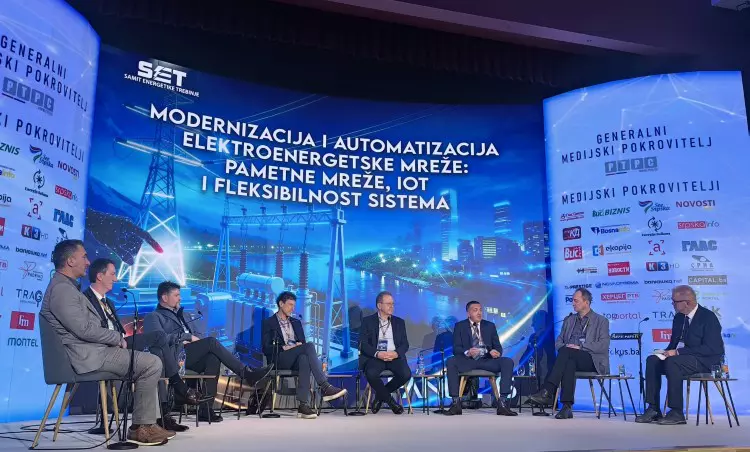
During a panel on the modernisation and automation of distribution networks, the role of digitalisation and data management was highlighted. Branimir Kalanj, representing the E3 International and ESCO Control Project consortium, described the shift in operational terms: “The time has come for data to become the second most important component of power systems, after electricity itself. A smart grid is not a technology, but a way of managing the system in which data is a key resource.”
Public statements throughout the summit further emphasised that grid constraints are becoming a critical bottleneck for project delivery, requiring not only infrastructure investments, but also changes in planning, system operation and regulatory approaches.
In this context, digitalisation, including the use of artificial intelligence for predictive analytics, load management and grid optimisation, is increasingly recognised as a key enabler of a more efficient and resilient power system.
No transition without people
The issue of human capacity ran through several sessions, particularly those focused on digitalisation and new technologies. While technological solutions are advancing, their deployment remains limited without the necessary expertise and institutional readiness.
Participants of the Energy Summit in Trebinje 2026 emphasised that the energy transition will depend not only on the availability of solutions, but on the ability of institutions, companies and professionals to implement and maintain them. A lack of qualified personnel and experience in managing complex projects is increasingly recognised as a critical constraint.
A market entering a more mature phase
Discussions on renewable energy and investment trends pointed to a shift in market behaviour. After an initial wave of investments, the market is showing signs of consolidation and greater discipline.
Investors are paying closer attention to regulatory risks, project timelines and management complexity. As a result, some are already adjusting their strategies, shifting focus from solar projects toward battery storage systems, which are becoming essential for ensuring system stability and flexibility.
This trend was echoed across multiple discussions during the summit, highlighting that further growth of renewable energy is no longer possible without parallel development of system flexibility.
As highlighted by Miloš Kostić, owner and director of MT KOMEX, following the rapid expansion of renewable energy capacity, the next phase of the energy transition is clearly moving toward battery storage systems, which are becoming essential for system stability and efficient energy management. In increasingly dynamic market conditions, including the emergence of negative pricing, innovative financing models — such as green bonds and investments in energy storage — will be critical for the sustainable growth of the renewable energy sector.
This shift confirms that the market is entering a phase where flexibility is becoming as important as generation itself.
The region has projects, but lacks systems
One of the key messages running through the summit was that the region does not lack ideas or individual projects. On the contrary, there is a significant number of initiatives and plans. The challenge lies in their implementation.
As highlighted in multiple panels, the problem is the absence of systems that enable continuous project development and financing. This includes grid modernisation, the creation of investment pipelines, stronger institutional coordination and improvements in regulatory frameworks.
Without these elements, there is a risk that the region remains stuck in a cycle of pilot projects without achieving systemic impact.
At the same time, regional cooperation is no longer a policy preference, but an operational necessity. While energy systems across the Western Balkans are inherently interconnected, planning and investment decisions remain largely national. As the share of renewable energy grows, system stability, balancing, storage integration and grid optimisation will increasingly depend on cross-border coordination. This includes the development of regional balancing markets, shared infrastructure planning, aligned regulatory frameworks and coordinated investment pipelines. Without this level of alignment, the region risks fragmentation, inefficiencies and a reduced ability to attract large-scale investment.
A phase that requires discipline
The Energy Summit in Trebinje 2026 made it clear that the main challenges of the energy transition are now well understood. What comes next requires a different approach, less focused on new ideas and more on discipline in implementation.
In this process, digital solutions and artificial intelligence will not play a marginal role, but a systemic one, enabling better management of the growing complexity of the transition.
In the Western Balkans, the energy transition will not be defined by individual projects, but by the ability of systems to develop, connect and sustain them over time.
This is where the difference lies between potential and real progress.
Read about other conferences and exhibitions here