
Across Europe today, cities and towns are facing a new reality. Energy systems once designed around centralization, large-scale imports, and fossil fuels are proving increasingly vulnerable to price shocks, geopolitical instability, climate risks, and social pressure. In response, local energy independence is no longer a niche ambition but a central pillar of Europe’s transition agenda. Community-led energy systems, decentralized infrastructure, and resilient urban networks are increasingly seen as tools not only for decarbonization, but also for economic stability and citizen trust.
From energy-positive districts to climate-neutral neighborhoods, municipalities are being repositioned as key actors in securing energy, social cohesion, and long-term development. It is within this broader context that the story of Güssing becomes particularly relevant.
From peripheral town to pioneer of community energy transition
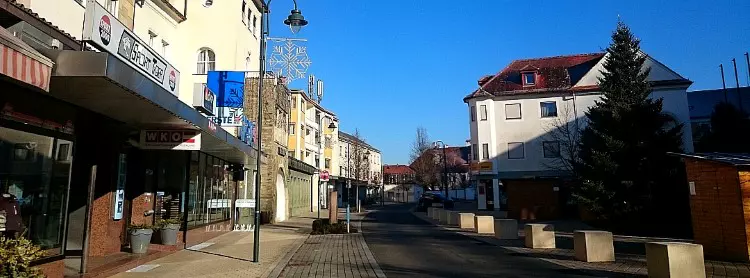
For most of its history, Güssing, a small town in Austria’s southeastern Burgenland, lived on the periphery. Far from major economic hubs and with few industrial opportunities, it faced chronic unemployment, an aging and declining population, and prolonged economic stagnation. Nearly all of its energy was imported, meaning that every heated home and lit street helped fuel growth elsewhere. With each delivery of fossil fuels, financial resources flowed out of the community along with prospects for local renewal.
Then, in the early 2000s, everything changed.
Today, Güssing stands as a European pioneer of local energy independence, where clean energy decisions triggered economic recovery, community confidence, and international recognition. Its transformation illustrates a powerful and timely lesson: municipal energy transition, when strategically designed, can redefine a town’s economic role and future trajectory.
Building energy self-sufficiency through local resources
The turning point came when local leaders recognized that dependence on imported fossil fuels was not only an environmental challenge, but a structural economic weakness. A new strategy was built around a simple principle: energy-related value should remain within the community.
The municipality began by reducing demand, renovating public buildings, and upgrading street lighting to improve efficiency. Soon after, it introduced a district heating system fueled by locally sourced wood biomass, tapping into regional forestry resources.
These early steps laid the groundwork for a more ambitious move: the development of a biomass gasification plant capable of producing heat, electricity, and synthetic fuels. Within roughly 15 years, Güssing transitioned from an energy-dependent town into a net energy producer. The city generated around twice the electricity required by its private households, public buildings, and local industries, while approximately 85% of its heating demand was covered by renewable sources. On an annual balance, Güssing has reached 100% energy self-sufficiency, producing more energy across heat, fuel, and electricity than it consumes locally.
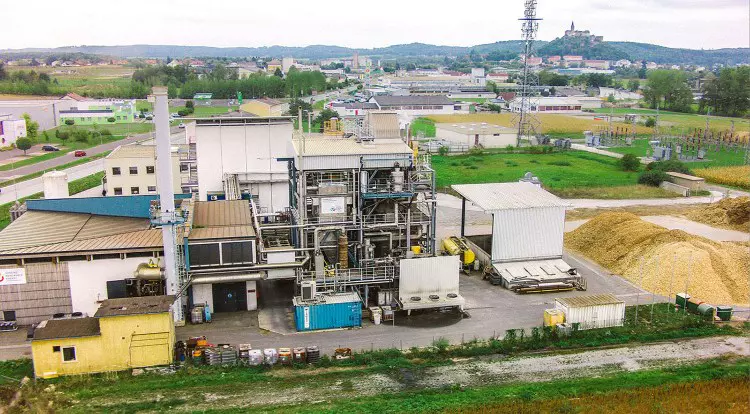
Economic and climate impacts of the Güssing energy model
The benefits extended far beyond energy security. The shift toward renewable energy communities delivered measurable economic and environmental outcomes. Carbon dioxide emissions declined significantly, particularly in the early years of implementation, as fossil fuels were replaced by locally generated renewables.
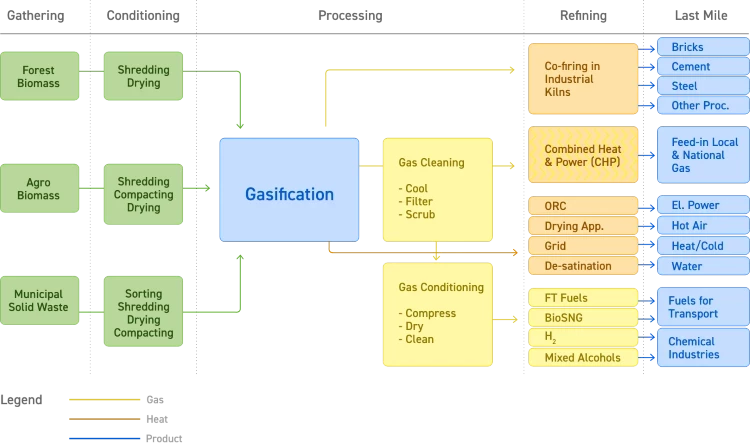
Source: Güssing Renewable Energy | Technology
At the same time, the town experienced a remarkable economic revival. More than 50 new companies were attracted to the region, particularly along the biomass, clean energy, and energy-technology value chains. Over 1,000 new jobs were created, providing stable employment and reversing long-standing trends of outmigration. Güssing also became a living laboratory for applied research, hosting thousands of researchers, policymakers, and international delegations interested not only in technology, but in governance and financing models.
Alignment with european urban and energy policy trends
Importantly, Güssing’s experience closely aligns with current European priorities in sustainable urban energy systems. Initiatives such as RESPONSE, which promotes positive-energy and resilient cities; ATELIER, focused on replicating Positive Energy Districts across European capitals and mid-sized cities; ARV, supporting climate-positive circular communities through building renovation; and oPEN Lab, which advances participatory “living lab” approaches, all reflect the same underlying logic: decentralized energy, local value creation, and citizen engagement.
Complementing these efforts, programs such as the EU Cities Gateway and the International Urban and Regional Cooperation (IURC) initiative demonstrate how cities across Europe and beyond are translating community energy transition principles into practical pilot projects and long-term partnerships. Seen through this lens, Güssing is not an exception, but an early and influential example of a broader European shift.
Why the Güssing model matters for the Western Balkans
This makes Güssing’s lessons especially relevant for the Western Balkans. Many municipalities across the region face challenges strikingly similar to those Güssing once confronted: reliance on coal and imported fuels, aging infrastructure, limited fiscal capacity, and continuous outflows of financial resources through energy imports. Industrial and post-industrial towns, in particular, struggle to redefine their economic identity.
Yet the region also holds significant potential. Abundant forestry resources open the door to sustainable biomass heating when paired with modern efficiency standards and responsible management. Decentralized energy systems can reduce exposure to volatile prices, improve air quality, and keep investment and jobs local. Energy transition, economic revitalization, and social stability do not need to be separate agendas; they can reinforce one another.
Governance as the real innovation
What ultimately distinguishes Güssing is that its success was not driven by technology alone. The real innovation lay in governance. The municipality adopted a long-term vision, created dedicated local institutions to manage energy projects, and structured partnerships with private companies and research organizations. Financing combined municipal leadership, private investment, and external support, while operational control and strategic direction remained local.
Most importantly, citizens were treated as active participants in the transformation, not passive consumers — a defining characteristic of successful community-led energy systems.
Key lessons for municipalities
For municipalities in the Western Balkans and beyond, several practical lessons emerge:
• develop clear local energy and climate strategies aligned with economic development goals
• design mechanisms that retain energy-related revenues within the community
• explore energy cooperatives or municipally owned energy companies
• invest in local renewable resources such as biomass or geothermal energy
• prioritize energy-efficiency upgrades as first-mover projects
• create structured frameworks for citizen participation and communication
• plan decentralized systems that strengthen local energy resilience
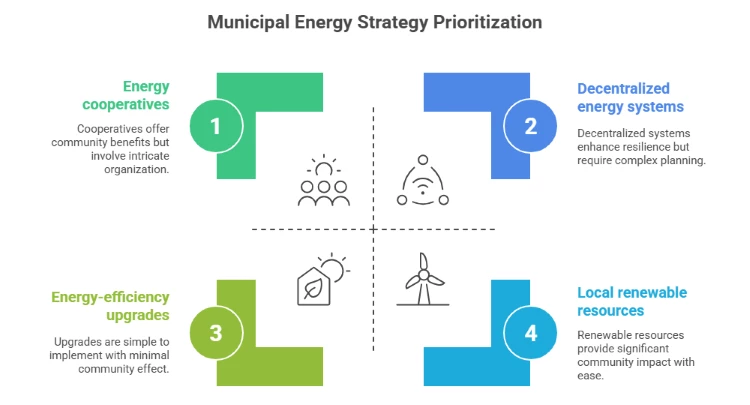
From dependency to local energy independence
Güssing shows that towns do not need to wait for national blueprints to act. Local governments can lead, shape their own energy systems, and redefine their economic identity. The real question is not whether transformation is possible, but whether municipalities are ready to move from dependency toward local energy independence.
If a once-struggling border town in Austria could become a reference point for clean energy and resilience, there is little reason why cities and towns across the Western Balkans could not do the same.
For communities now facing difficult choices about economic strategy, climate responsibility, and local identity, this is more than an inspiring story. It is a practical pathway that strengthens local economies, empowers citizens, and ensures that energy security is built by communities themselves, rather than imported at their expense.
Read about profiting from renewable energy in cities here