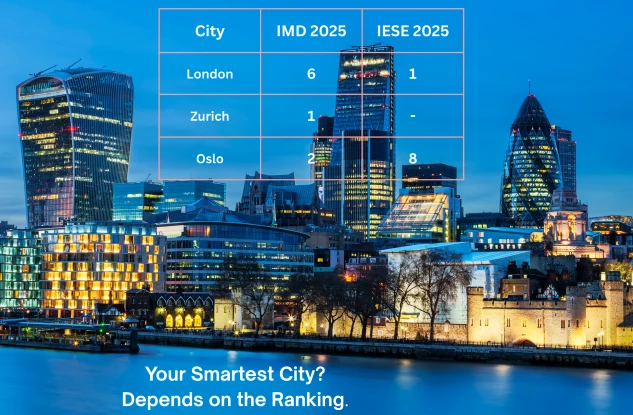
Who is the smartest city in the world? It depends on the ranking. This article examines how leading smart city indexes define and measure “smartness” and why their results diverge
Read MoreSmart City Rankings Methodology: Beyond the Top 10 Cities of 2025 (I)
The 2025 ITS landscape was dominated by AI large models, embodied robots, and drones in China, alongside global advances in LiDAR and V2X. Key themes included the push for vehicle-road-cloud integration, a booming low-altitude economy, and an industry-wide focus on practical digital transformation.
Read MoreIntelligent Transportation Systems in 2025: China’s Year of Acceleration and Global Signals for Smart Mobility
Winter urban heat islands are often seen as a seasonal advantage, making cities slightly warmer during cold months. However, growing evidence shows they can worsen air pollution, accelerate infrastructure damage, and create hidden public health risks. This article explores real-world case studies and explains why winter UHIs are becoming a critical issue for sustainable and smart cities.
Read MoreWhen Warmth Becomes a Trap: The Hidden Costs of Winter Urban Heat Islands
The Smart Engineering for Urban Development conference in Belgrade brought together experts from Serbia and Nordic countries to discuss how Western Balkan cities can move beyond isolated smart city projects toward systemic urban transformation. The discussions highlighted that sustainable and smart urban development depends not only on technology, but on governance, planning, financing and cross-sector cooperation.
Read MoreSmart Cities Need Systems, Not Just Technology: Lessons from “Smart Engineering for Urban Development”
Mexico City will face a rare stress test during the 2026 World Cup as matchday travel overlaps with daily commuter peaks. The article explores how megacity mobility coordination, not infrastructure expansion, will determine transport system resilience. Lessons from global events show why governance and demand management are becoming core urban mobility tools.
Read MoreMexico City 2026: Can Megacity Mobility Coordination Keep a World Cup City Moving?
In this interview, Svetlana Tešić shares her expert perspective on AI in urban governance and the growing role of cities in shaping digital transformation. She discusses citizen trust, collaboration between municipalities, and the importance of human-centric approaches to technology. The conversation explores how European cities can use AI responsibly while strengthening democratic governance and public participation.
Read MoreAI in Urban Governance and the Future of Human-Centric Cities: Interview with Svetlana Tešić
The extraordinary snowfalls of early 2026 once again exposed structural weaknesses in urban winter maintenance systems. Gender-sensitive snow clearance, first implemented in Swedish cities, demonstrates how rethinking snow removal priorities can improve safety, equity, and cost efficiency in climate-stressed cities.
Read MoreGender-Sensitive Snow Clearance: Why Winter Maintenance Is a Question of Urban Accessibility
New York is moving toward an all-electric buildings law that could end gas-powered systems in new construction. The proposal has sparked legal challenges and concerns over costs and grid readiness. The outcome may influence building electrification policies far beyond the state.
Read MoreNew York Moves Toward an All-Electric Buildings Law Amid Court Battles and Grid Concerns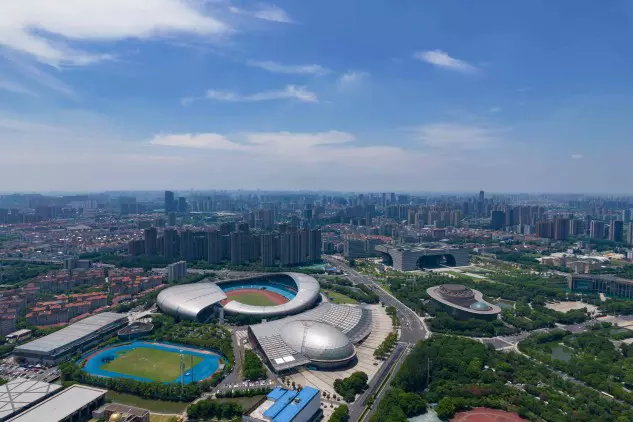
Changzhou, Jiangsu province, China leverages AI to advance its intelligent transportation system. Key initiatives include the AI-driven "Cloud Bus," which optimizes routes and reduces wait times, and smart toll stations that enable seamless, efficient vehicle passage. These efforts enhance public transport, cut costs, and improve urban mobility, supporting the city's sustainable development goals.
Read MoreAI-Powered Intelligent Transportation: How Changzhou Is Building a “Smooth City” System
In this interview, NVIDIA’s Charbel Aoun explains why the future of urban AI depends not on adopting more tools, but on building local capability, data sovereignty, and long-term talent. He shares how cities can move from fragmented pilots to responsible, human-centric AI systems that deliver measurable public value.
Read MoreThe Era of Now: NVIDA’s Charbel Aoun on Enabling Cities to Build Their Own AI Capability