
The future of urban mobility: Innovations reshaping our cities
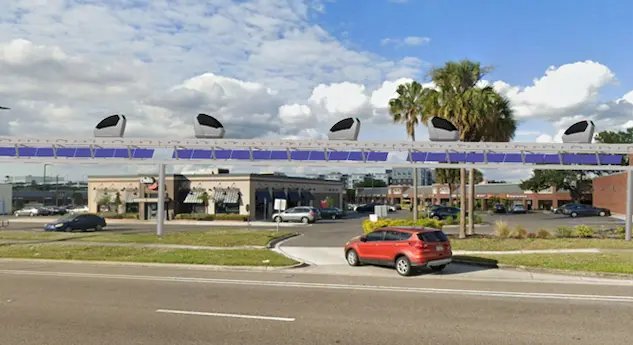
future of urban mobility
Urban transport is at a turning point. From autonomous pods and vertical mobility to integrated smart city solutions, the future of urban mobility promises cleaner, faster, and more flexible travel. Discover how global innovators are reshaping cities to make transportation sustainable and human-centred
Read MoreThe future of urban mobility: Innovations reshaping our cities


GIS in Serbia: A Policy Tool for Smart Cities and Sustainable Development

Belgrade
GIS in Serbia is becoming a crucial tool for sustainable urban planning and evidence-based governance. By integrating spatial data, policymakers can monitor environmental quality, improve resource allocation, and enhance transparency. Case studies from Pančevo, Belgrade, and Novi Sad show how GIS supports pollution management, citizen participation, and energy transition. With proper investment in data infrastructure and skills, Serbian cities can align with European sustainability goals while ensuring healthier communities.
Read MoreGIS in Serbia: A Policy Tool for Smart Cities and Sustainable Development

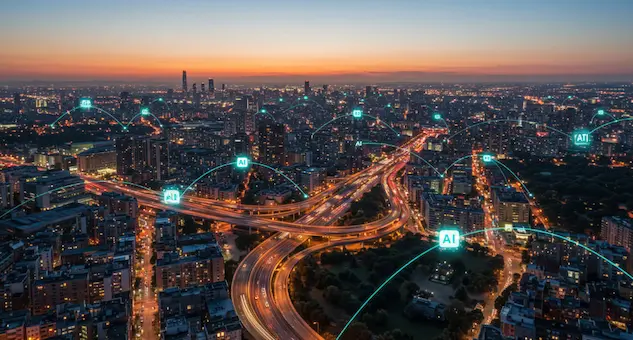
AI in Smart Cities: How Artificial Intelligence Transforms Urban Life

Ai in smart cities
Artificial intelligence is transforming smart cities by optimizing mobility, energy, safety, and citizen services. From digital twins to predictive analytics, AI in smart cities enables more adaptive and sustainable urban systems. Yet its success depends on addressing challenges and ethical considerations to build trust and accountability.
Read MoreAI in Smart Cities: How Artificial Intelligence Transforms Urban Life

Cross-Border Smart City Ecosystem: How Helsinki and Tallinn Built a Shared Future

smartphone with buildings
Helsinki and Tallinn joined forces to build a cross-border smart city ecosystem that bridges innovation and sustainability. Through the EU-funded FinEst Twins project, the cities piloted real-world solutions for clean energy, data, mobility, and healthcare. This model shows how collaboration across borders can scale urban resilience and improve quality of life worldwide.
Read MoreCross-Border Smart City Ecosystem: How Helsinki and Tallinn Built a Shared Future

Balkan Green Cities: Greening the Urban Fabric and Why It Matters

Athens
Across eight Balkan green cities, we compare total green infrastructure and accessible urban green using EEA metrics and municipal datasets. The piece traces how geography and planning traditions shape outcomes, then spotlights flagship projects—from Athens’ Ellinikon to Belgrade’s Linear Park and Tirana’s Orbital Forest. We conclude with tiered, finance-aware recommendations that help city leaders turn green on paper into green on foot.
Read MoreBalkan Green Cities: Greening the Urban Fabric and Why It Matters

Edible City: How Urban Gardens Transform Cities Beyond Food

Edible cities integrate urban gardens into public spaces, delivering multiple social, ecological, and economic benefits beyond food production. From Andernach to Belgrade, European cities are piloting edible landscapes as infrastructure for climate adaptation, community building, and environmental education. Research shows that inclusive, co-designed programs yield stronger social outcomes than purely technological approaches. Practical guidance for planners emphasizes mapping, governance, skills pipelines, and a mosaic of micro-sites to maximize impact.
Read MoreEdible City: How Urban Gardens Transform Cities Beyond Food

Sustainable AI for Cities: Strategic Priorities, Challenges, and Long-Term Impact

a man holding a tablet
As cities strive to become carbon neutral and resilient to climate effects carbon neutral, AI can play a pivotal role in driving this transformation. This article explores the dual nature of sustainable AI for cities — both as a tool for solving sustainability challenges and as a system that must itself be ethical and sustainable by design.
Read MoreSustainable AI for Cities: Strategic Priorities, Challenges, and Long-Term Impact

Steering Autonomous Vehicles and Sustainable Cities Toward a Liveable Future

autonomous vehicle
Autonomous vehicles (AVs) could either deepen car dependency or support sustainable, liveable cities. This article contrasts two scenarios: private AVs driving congestion versus shared AVs integrated with transit. Drawing on examples from Singapore, Phoenix, and Stockholm, it highlights key tools — transport hierarchy and road pricing — to guide cities toward greener, fairer futures.
Read MoreSteering Autonomous Vehicles and Sustainable Cities Toward a Liveable Future

Air Quality in the Balkan Capitals: Confronting the Urban Sustainability Challenge

Air Quality in Balkan Capitals
Air quality in the Balkan capitals remains a defining challenge for the region’s urban sustainability goals. This article explores how pollution, carbon emissions, and weak governance are constraining progress in Western Balkan cities. Despite lower per capita emissions, cities struggle to decarbonize due to fossil fuel dependence and outdated heating and transport systems. Public health impacts are severe, yet policy responses remain fragmented. The piece concludes by calling for a strategic shift from declarations to action to secure a sustainable urban future.
Read MoreAir Quality in the Balkan Capitals: Confronting the Urban Sustainability Challenge
×