
Publications
Smart City Asia 2026: Interview with Nina Nguyen on Vietnam’s Smart City Vision

As Vietnam strengthens its position in Southeast Asia’s urban transformation, Smart City Asia 2026 continues to grow as a leading regional platform connecting governments, enterprises, and technology providers. We spoke with Ms. Nina Nguyen, Project Manager of Smart City Asia,…
Smart City Rankings Methodology: Beyond the Top 10 Cities of 2025 (I)
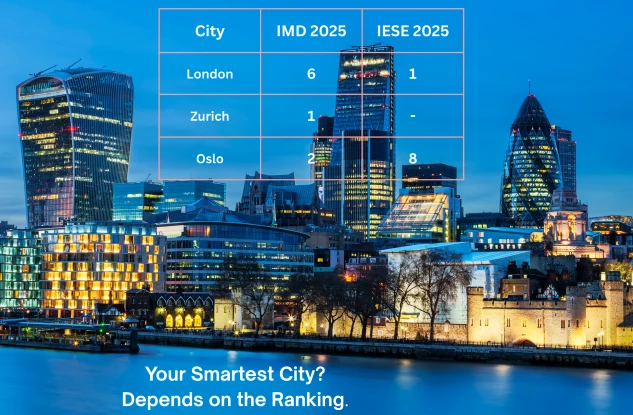
Who is the smartest city in the world? It depends on the ranking. This article examines how leading smart city indexes define and measure “smartness” and why their results diverge
Read MoreSmart City Rankings Methodology: Beyond the Top 10 Cities of 2025 (I)Intelligent Transportation Systems in 2025: China’s Year of Acceleration and Global Signals for Smart Mobility

The 2025 ITS landscape was dominated by AI large models, embodied robots, and drones in China, alongside global advances in LiDAR and V2X. Key themes included the push for vehicle-road-cloud integration, a booming low-altitude economy, and an industry-wide focus on practical digital transformation.
Read MoreIntelligent Transportation Systems in 2025: China’s Year of Acceleration and Global Signals for Smart MobilityWhen Warmth Becomes a Trap: The Hidden Costs of Winter Urban Heat Islands

Winter urban heat islands are often seen as a seasonal advantage, making cities slightly warmer during cold months. However, growing evidence shows they can worsen air pollution, accelerate infrastructure damage, and create hidden public health risks. This article explores real-world case studies and explains why winter UHIs are becoming a critical issue for sustainable and smart cities.
Read MoreWhen Warmth Becomes a Trap: The Hidden Costs of Winter Urban Heat IslandsSmart Cities Need Systems, Not Just Technology: Lessons from “Smart Engineering for Urban Development”
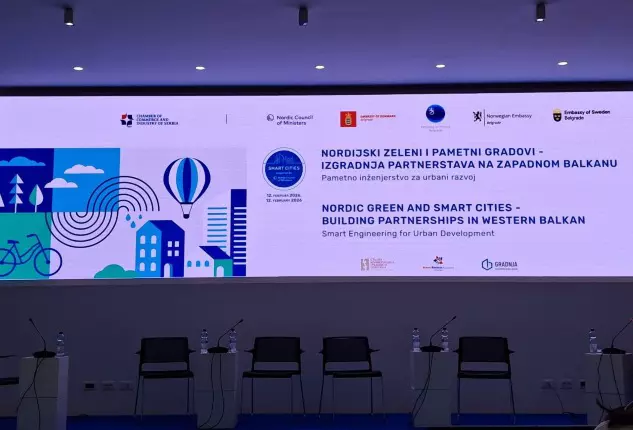
The Smart Engineering for Urban Development conference in Belgrade brought together experts from Serbia and Nordic countries to discuss how Western Balkan cities can move beyond isolated smart city projects toward systemic urban transformation. The discussions highlighted that sustainable and smart urban development depends not only on technology, but on governance, planning, financing and cross-sector cooperation.
Read MoreSmart Cities Need Systems, Not Just Technology: Lessons from “Smart Engineering for Urban Development”Europe’s Wildfire Crisis: Why Firefighting Alone No Longer Works

Europe is entering a new era of wildfire risk, where fires are no longer rare disasters but a structural feature of a changing climate. Based on the latest European Forest Institute analysis, the article explains why relying on firefighting alone is no longer enough and why integrated fаire management is becoming central to EU policy and resilience.
Read MoreEurope’s Wildfire Crisis: Why Firefighting Alone No Longer WorksSmart Expressways in 2025: Scaling Up Implementation

In 2025, China’s smart expressway construction has moved beyond the early stage of prioritizing “showy technology” and technological stacking, moving into a phase centered on pragmatic implementation, system integration, and operational value. Many industry observers see this as a major…
Mexico City 2026: Can Megacity Mobility Coordination Keep a World Cup City Moving?

Mexico City will face a rare stress test during the 2026 World Cup as matchday travel overlaps with daily commuter peaks. The article explores how megacity mobility coordination, not infrastructure expansion, will determine transport system resilience. Lessons from global events show why governance and demand management are becoming core urban mobility tools.
Read MoreMexico City 2026: Can Megacity Mobility Coordination Keep a World Cup City Moving?AI in Urban Governance and the Future of Human-Centric Cities: Interview with Svetlana Tešić

In this interview, Svetlana Tešić shares her expert perspective on AI in urban governance and the growing role of cities in shaping digital transformation. She discusses citizen trust, collaboration between municipalities, and the importance of human-centric approaches to technology. The conversation explores how European cities can use AI responsibly while strengthening democratic governance and public participation.
Read MoreAI in Urban Governance and the Future of Human-Centric Cities: Interview with Svetlana TešićSarajevo Energy Forum 2026: Practical Conversations on the Region’s Energy Transition

Sarajevo Energy Forum 2026 brought together energy sector leaders, policymakers, and companies to discuss renewable energy investment, market reform, and energy transition in the Western Balkans. The forum addressed grid modernization, digitalization, energy security, and EU climate alignment challenges shaping the region’s energy future
Read MoreSarajevo Energy Forum 2026: Practical Conversations on the Region’s Energy Transition