
The article about intelligent transportation systems is provided by our media partner 7ITSNEWS.
In 2025, intelligent transportation systems moved from isolated innovation toward broader system integration. In China especially, urban transport technology evolved at remarkable speed, while internationally similar conversations unfolded under different regulatory and market conditions. The year was not defined by one breakthrough, but by the scale and intensity of experimentation.
What do these developments reveal about the direction of smart mobility and digital transportation infrastructure?
China’s intelligent transportation systems: from hype to implementation
Large models and AI in urban transport technology
If one theme dominated China’s intelligent transportation systems landscape in 2025, it was large AI models. After DeepSeek ignited discussion early in the year, the topic quickly spread across the sector. At the Road Traffic Safety Products Expo in the first half of the year, large models appeared in nearly every domain: video analytics, command platforms, highway monitoring, and even multimodal coordination across road, rail, water, and air.
Yet real-world stress tests continued. Heavy rain or snow still caused congestion and road closures. This contrast between technological ambition and daily operational complexity became a defining feature of the year. Intelligent transportation systems can enhance perception and control, but traffic resilience depends on institutional coordination and infrastructure design as much as algorithms.
Embodied AI and robotics in traffic scenarios
Public imagination was also captured by embodied AI robots. From robot performances at the Spring Festival Gala to experimental robots directing traffic by the end of the year, the transition from symbolic demonstration to real-world deployment felt rapid.
Whether these systems can deliver sustained operational value remains uncertain. In intelligent transportation systems, new tools often attract attention before long-term integration pathways are fully defined. Still, experimentation continues to push the boundaries of urban transport technology.
Drones and the low-altitude economy
Drones were not new to intelligent transportation systems, but 2025 saw accelerated application under the banner of the “low-altitude economy.” Universities, research institutions, state-owned enterprises, and private firms moved quickly into the space.
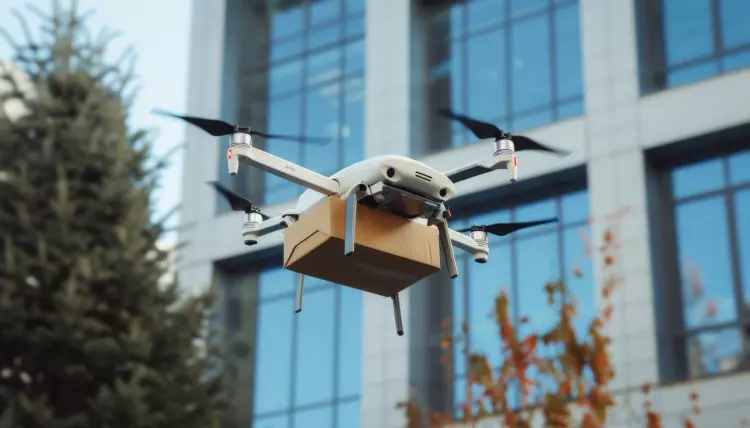
Applications ranged from patrol monitoring to emergency response. Shenzhen’s aerial delivery programs provided high-visibility examples. At the same time, incidents such as the close encounter between two eVTOLs at the Changchun Airshow served as reminders that scaling digital transportation infrastructure in airspace raises complex safety and governance questions.
Vehicle–road–cloud integration and digital transportation infrastructure
Following the mid-2024 selection of 20 pilot cities for vehicle–road–cloud integration, 2025 became a year of accelerated rollout. Some cities progressed into second or third implementation phases, supported by investments reaching billions of yuan.
These projects injected momentum into the intelligent transportation systems field, which had faced slower growth in traditional urban ITS. However, debate around measurable traffic improvements grew louder. As projects expand, attention is shifting from grand system narratives toward clearly defined operational scenarios. For digital transportation infrastructure to deliver lasting value, implementation must remain grounded in concrete mobility needs.
Public transport under pressure
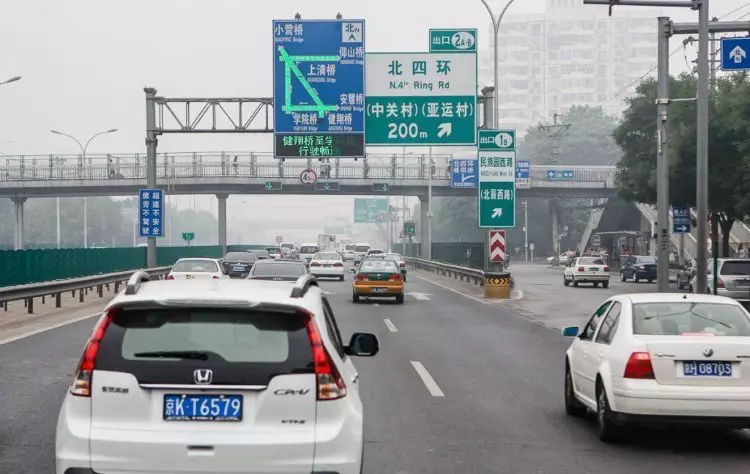
Beyond technology headlines, broader transport realities shaped the year. In several major cities, metro networks expanded while ridership growth slowed or declined. Casual year-end observations in Beijing noted nearly 200 kilometers of additional track length, yet daily passenger numbers did not rise accordingly.
This tension raises important questions for smart mobility policy. Advanced urban transport technology alone cannot guarantee modal shift or financial sustainability. Land-use patterns, transfer convenience, travel speed, and competition from private vehicles and e-bikes all influence outcomes.
International intelligent transportation systems trends
While China’s pace was striking, similar themes appeared globally.
V2X and connected infrastructure
At the ITS World Congress, V2X emerged as a central focus. Advances in communication, sensing, and computing have reduced technical barriers. Around the world, intelligent transportation systems are increasingly framed around integrated connectivity between vehicles, roads, and data platforms.
Yet governance models differ. Regulatory frameworks, market incentives, and public expectations shape how smart mobility evolves in each region.
Congestion charging and demand management
One of the most visible international developments was the renewed attention to congestion charging. Events in New York and policy adjustments in London illustrated how economic instruments remain powerful tools for balancing supply and demand in urban transport systems.
In discussions about intelligent transportation systems, technology often takes center stage. Congestion pricing reminds us that managing demand can be as important as optimizing traffic flow through digital means.
Artificial intelligence across systems
Artificial intelligence has long been part of urban transport technology, but in 2025 it became nearly ubiquitous in industry conversations. From predictive maintenance to network control, AI is increasingly embedded in digital transportation infrastructure. Its effectiveness, however, depends on integration with institutional capacity and operational workflows.
Looking ahead
Speculation about the future is inevitable. Spatial computing, agentic AI, multifunctional robots, smart wearable devices, and eventually 6G connectivity all feature prominently in forward-looking discussions.
Still, the experience of 2025 suggests a consistent pattern. Intelligent transportation systems will continue to expand in capability. The larger challenge lies in ensuring that smart mobility tools translate into measurable improvements in safety, efficiency, and sustainability.
For China and for the wider international community, the next phase of intelligent transportation systems development will likely be less about vocabulary and more about results.
Author: Li Ruimin
Source: https://7itsnews.com/index.php?m=home&c=View&a=index&aid=22702