
From 4 to 7 November 2025, the 28th edition of Ecomondo 2025 will take place at the Rimini Expo Center, bringing together industry leaders, institutions, and researchers to explore the future of the green, blue, and circular economy. This year’s edition will strengthen its international focus, with delegations from across Europe, the Mediterranean, and the Middle East — including Germany, Spain, Poland, Serbia, Turkey, the Netherlands, and several North African countries.
Held alongside SAL.VE, the biennial Exhibition of Ecological Vehicles, and the States General of the Green Economy, Ecomondo 2025 will once again serve as a global platform for dialogue, innovation, and sustainable growth.
We spoke with Alessandra Astolfi, Global Exhibition Director of the Green & Technology Division at Italian Exhibition Group, about this year’s highlights and the growing role of Ecomondo in advancing the green transition.
Ecomondo 2025’s mission and key priorities for 2025
Can you tell us about Ecomondo’s mission and how the event has evolved since its inception to become Europe’s leading green technology expo?
Ecomondo was created with the aim of providing a meeting point for industry, research and institutions operating in the environment and ecological transition field. Over the years, the event has steadily expanded its thematic and geographical scope to become the leading European platform for the green, blue and circular economy. The 2025 edition, the 28th, scheduled to take place in Rimini, Italy, from 4th to 7th November, will occupy 30 halls covering 166,000 square metres of exhibition space, welcoming official delegations from all over the world in collaboration with 80 international industry associations: these numbers reflect Ecomondo’s position as a leading event on regenerative industrial models.
What are the key themes and priorities for this year’s Ecomondo event across all sustainability sectors?
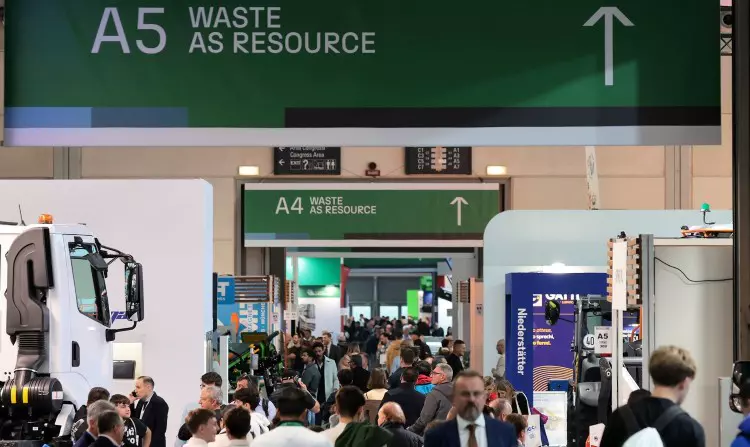
Ecomondo 2025 will be divided into seven macro-exhibition areas: Waste as Resource, Sites & Soil Restoration, Circular & Regenerative Bio-Economy, Bio-Energy & Agroecology, Water Cycle & Blue Economy, Environmental Monitoring & Control, Textile & Circular Economy. The priority areas range from the recovery of urban and industrial waste to water management and the reclamation of contaminated sites, including production cycle decarbonisation, biotechnology, bio-based materials, and environmental process digitalisation. The thematic districts and an interdisciplinary Technical Scientific Committee ensure that the event is in line with European regulatory and industrial priorities. The show foresees a full programme of conferences, workshops and meetings that address the circular economy from every possible aspect.
Bridging Europe, the Mediterranean, and beyond
Partnerships between Europe and the Middle East are growing, how is Ecomondo positioning itself as the catalyst platform?
Ecomondo was designed to act as a bridge to connect markets around the world. The 2025 edition will see a strengthening of ongoing collaborations with Mediterranean countries and a structured dialogue on common projects with institutions and industrial associations. The show offers spaces and moments for business matching, where European and MENA companies can explore synergies and joint developments. It is a unique opportunity to accelerate investments and partnerships that have a real impact on the territory. Furthermore, collaboration with the Italian Trade Agency and the Ministry of Foreign Affairs and International Cooperation (MAECI), and exchanges with foreign associations and institutions, fuel the event’s internationality. In fact, Ecomondo 2025 will also include the fifth edition of the Africa Green Growth Forum, a key event for dialogue between companies, institutions and investors on the development of the circular economy on the African continent. The event will focus on cooperation prospects and the progress of the Mattei Plan, with particular attention to adaptation to climate change and the sustainable and regenerative development of the African continent. Delegations and start-ups (the latter in the district dedicated to innovation) are also expected to attend from countries in the Mediterranean area and the Middle East, such as Egypt, Morocco, Algeria and Tunisia. The conference programme will guarantee visibility to projects and best practices that extend beyond European borders, with round tables and workshops that bring MENA and Europe together on common challenges: water management, urban regeneration, circular economy.
Technology and innovation in the circular transition
How is Ecomondo supporting the transition to a circular economy across different industries?
Ecomondo promotes the circular transition as a systemic process supported by technological innovation, regenerative business models and regulatory updates. The event hosts technical panels, international forums, and collaborations with research institutions to accelerate the transition from a linear to a regenerative logic in key sectors such as fashion, chemistry, energy and urban management.
AI and its role in driving circular economy is a big ongoing debate, how is Ecomondo going to relay the role of the latest technology?
Digitalisation and the use of artificial intelligence will be central to Ecomondo 2025. The Earth Observation and Environmental Monitoring section – one of the event’s seven macro areas – will present AI applications for environmental monitoring, but using this technology is also relevant in waste treatment, in water network management and in industrial decarbonisation, as demonstrated by the innovations on display in the relevant districts and in the programmed conferences. Of particular interest among those scheduled is the “From sky to ground: Earth observation for sustainable critical raw materials management” talk, organized by Ecomondo’s Technical Scientific Committee together with Turin Polytechnic, CINECA and the Space Agency, which will address the use of satellite data and observation technologies in managing critical environmental resources. The objective is to show how these technologies are not just efficiency tools, but can become accelerating factors for the circular economy, thanks to more precise resource management and predictive process control.
Read and watch more interviews here