
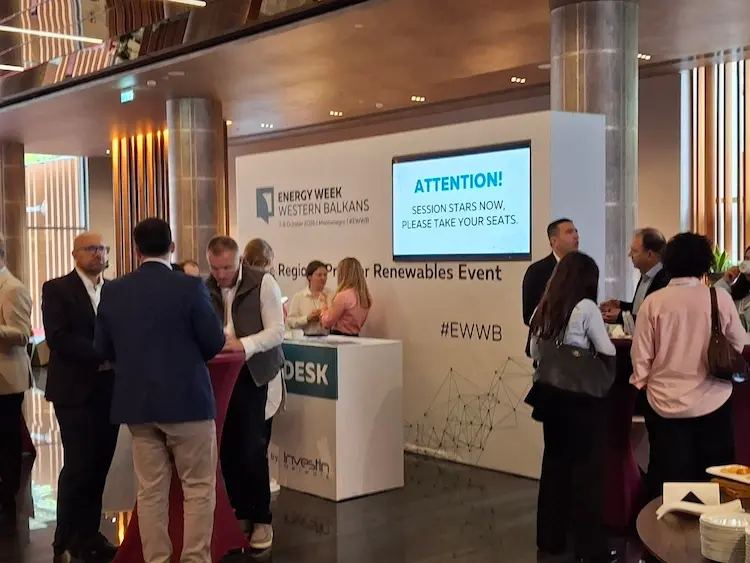
Energy Week Western Balkans 2026 brought policymakers, investors, utilities and energy companies to Montenegro on 7–8 October. The fifth edition focused on a challenge familiar across the region: turning renewable energy ambitions into bankable projects, modern electricity infrastructure and more integrated power markets.
Organised by Invest In Network at the Maestral Resort in Budva, the conference brought together representatives of the six Western Balkan economies and Croatia, alongside international financial institutions, developers and technology providers. New Polis attended as an official media partner. This report focuses on several developments and discussions that stood out over the two days, rather than attempting to cover every session.
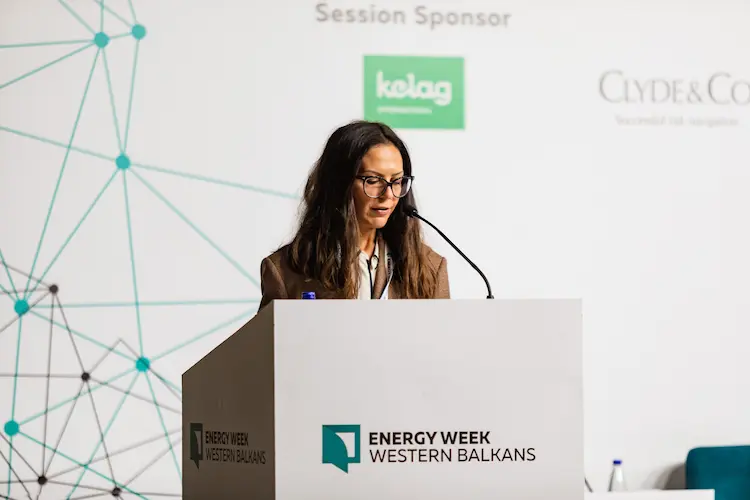
The conference programme reflected a shift in priorities. Solar and wind development remain important, but grid capacity, financing and the practical challenges of delivering projects are taking up more of the conversation.
Energy Week Western Balkans 2026: from targets to projects
Montenegro’s Minister of Energy and Mining, Admir Šahmanović, highlighted progress on the 54.6 MW first phase of the Gvozd wind farm and a €25 million AFD loan to upgrade the Perućica and Pljevlja 2 substations. He also stressed the need for predictable regulations and a stable investment framework.
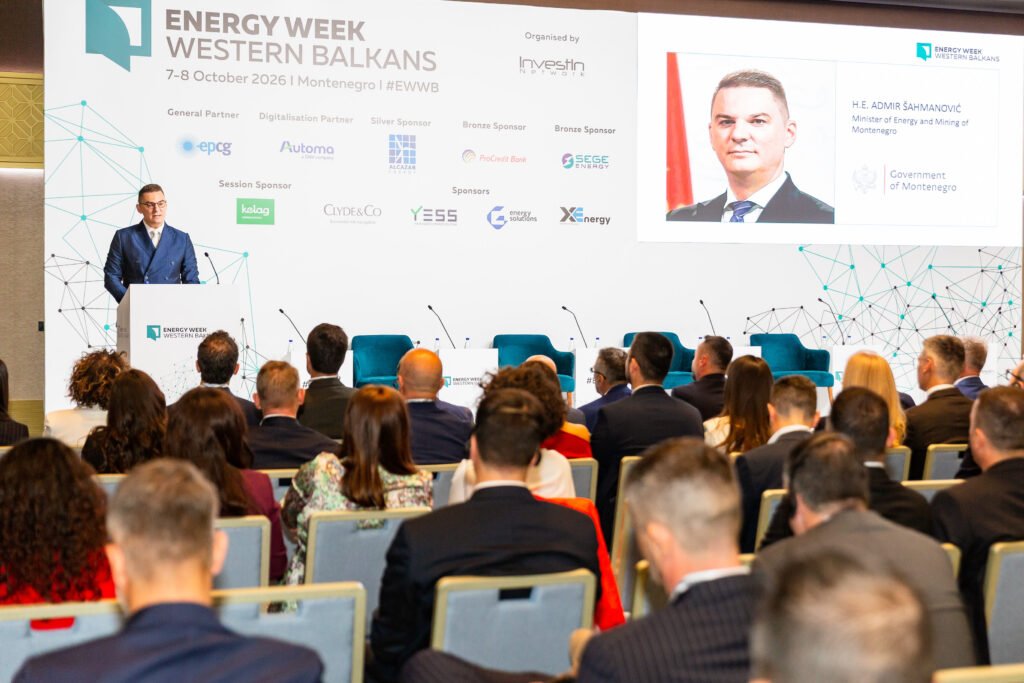
Private developers offered further examples of projects moving forward. According to Maja Mačić of Alcazar Energy Partners, the first phase of the Štip wind farm in North Macedonia has secured financing and is under construction, while the Bijela wind farm in Montenegro is in the final stages of preparation for construction.
As Alcazar’s Co-Founder and Managing Partner Daniel Calderon noted during the ministerial panel, good wind conditions and a project announcement are not enough. Financing and building a wind farm takes years of work.
Ivan Bulatović of Montenegro’s state utility EPCG also highlighted the company’s partnership with Masdar, the Gvozd project and the integration of more than 11,000 prosumers into Montenegro’s electricity system.
Grids and storage: the infrastructure challenge
Grid capacity was a major focus on the second day. The panel Grid Crisis or Grid Opportunity? Unlocking Capacity for Renewables brought together transmission system operators from Montenegro, Albania and Kosovo, alongside representatives of the European Investment Bank and the French Development Agency.
Aleksandar Mijušković, Chairman of the Supervisory Board of Montenegro’s transmission operator CGES, discussed network capacity, investment needs and the challenge of connecting new renewable generation.
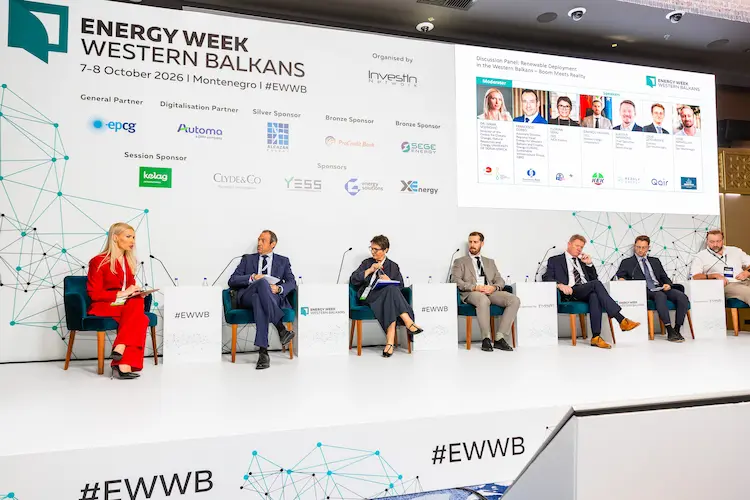
Energy storage was another focus of the regional transition. The programme featured a presentation by YESS Power on a 30 MW/60 MWh battery energy storage system (BESS) project in North Macedonia.
According to MCA Kosovo, its CEO Florina Sefaj highlighted the MCC–Kosovo Compact’s role in advancing energy storage, integrating new generation capacity and developing a skilled energy workforce.
Renewable Energy Investment in the Western Balkans: financing and risk
Financing conditions and corporate power purchase agreements (PPAs) were recurring themes.
Neda Lazendić, Country Manager Serbia at WV International, noted that corporate PPAs offer greater flexibility and new opportunities for renewable developers, particularly in the context of the EU’s Carbon Border Adjustment Mechanism (CBAM). She also noted that state-backed auctions remain attractive to project financiers, pointing to Serbia’s two completed renewable energy auction rounds.
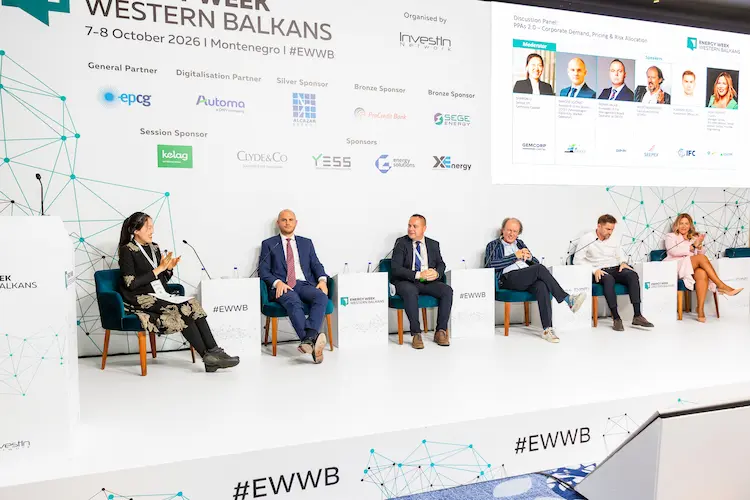
Maksim Vučinić, President of the Board of Montenegro’s electricity market operator COTEE, emphasised the importance of allocating risk clearly. Production volumes, price volatility, balancing costs, curtailment and regulatory uncertainty all need to be addressed in contractual arrangements.
For investors and lenders, predictable rules and a clear allocation of risk can matter as much as a project’s technical merits.
Western Balkans power markets and regional integration
Regional market integration was another focus of discussion. During the panel Power Markets, Trading and Regional Coupling, participants discussed ALPEX, which launched electricity trading in Albania in 2023 and Kosovo in 2024, as well as further steps towards market coupling and intraday trading.
Dejan Drašković, CEO of the Montenegro Power Exchange (MEPX), outlined plans to introduce intraday trading and stressed the importance of aligning national legislation with European energy rules. Representatives of Nord Pool, Aurora Energy Research and other market participants also examined market fragmentation, cross-border trading and changes in electricity market arrangements.
Digitalisation and the next phase of transition
Industrial decarbonisation and digital technologies also featured on the agenda. A panel moderated by Nikola Bitrak, CEO of COLENCO, explored potential uses of artificial intelligence in renewable generation forecasting, electricity trading, battery optimisation and project development. Cybersecurity, data reliability and human oversight were also discussed. Pre-arranged B2B meetings complemented the conference programme, giving investors, developers, institutions and technology companies opportunities to discuss potential cooperation.
The discussions at Energy Week Western Balkans 2026 pointed to a shared challenge: developing new renewable capacity will require modern grids, energy storage, workable financing and better-connected electricity markets. As an official media partner, New Polis thanks Invest In Network for organising the event and creating space for professional dialogue and regional cooperation.
Read about other conferences and exhibitions here