
Central and Eastern Europe (CEE), a region with more than 20% of the EU population, is once again at an energy crossroads. After the upheavals of the 1990s, when many countries emerged from decades of Soviet rule or influence with power systems shaped by Moscow rather than modernization, the region now faces another moment of reckoning. Today, the challenge of energy resilience in Central and Eastern Europe is shaped by the legacy of outdated grids, limited interconnections, and chronic underinvestment, all of which continue to have a lasting impact across the region.
Momentum the region can build on
In spite of legacy-induced hurdles, CEE countries are making progress in their energy transition. Croatia, Latvia, and Lithuania now produce more than 70% of their electricity from renewables, among the highest shares in Europe. The Baltic States completed one of the most significant resilience milestones of the decade: full synchronization with Continental Europe, a critical step toward strengthening regional energy security and independence. Estonia adds regional strength through cyber resilience leadership.
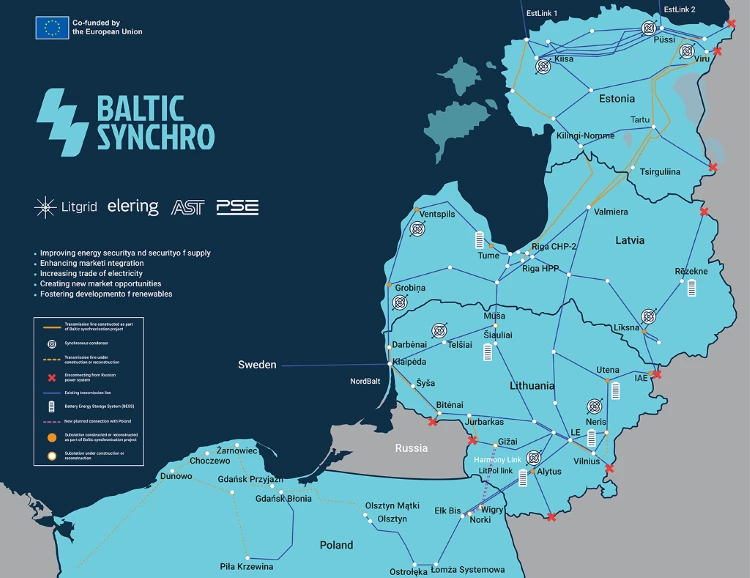
Czechia is emerging as a regional electricity hub, thanks to interconnections with Germany, Austria, and Poland. Nuclear power anchors grid stability in Czechia and Slovakia. Bulgaria’s transition plan includes a new Western-technology reactor and nuclear fuel diversification. Poland is accelerating work on small modular reactors (SMRs) and modernizing its grid to integrate Baltic offshore wind, all contributing to energy system resilience.
Regional partnerships reinforce this momentum. The CESEC program (Central and South Eastern Europe Energy Connectivity) strengthens cooperation on electricity, gas and renewable integration, helping members navigate geopolitical pressures while improving market stability. The 3SI (Three Seas Initiative) is modernizing north–south cross-border energy infrastructure and prioritizing cross-border energy projects to enhance resilience and regional connectivity.
Energy resilience in Ukraine remains a daily struggle. In a high-level government meeting, Energy Minister Svitlana Grynchuk highlighted efforts to deliver critical equipment through international support funds, speed up repairs after attacks, and build energy-independent infrastructure to reduce blackout risks.
To boost CEE innovation capacity, the region’s startup ecosystem has increasingly carved out a distinct European identity, according to a Vestbee report. While the region attracts less capital than Western Europe and produces fewer scaleups, the ecosystem benefits from deep technical talent, comparatively low operating costs, and public and private investment. Overall, CEE is among Europe’s fastest-growing startup regions, though challenges persist around scaling and access to late-stage capital.
Policy gaps and the limits of energy resilience in Central and Eastern Europe
Despite progress in energy diversification, energy resilience in Central and Eastern Europe is constrained by policy fragmentation. The region’s response to risk is framed predominantly through national energy strategies rather than coordinated regional plans. While governments have pressed ahead with renewables and nuclear projects, cross-border vulnerabilities persist.
The EU’s Action Plan for Affordable Energy is designed to reduce energy costs and improve resilience against energy crises. The policy depends on market integration and coherent cross-border regulations. However, regulatory incoherence in CEE is a barrier to integration. Grid connection rules for renewables differ widely, causing lengthy delays for projects that cut across borders, and permitting rules vary for cross-border interconnections. The CEE region accounts for only 13% of the EU’s internal interconnection capacity.
Divergent regulatory regimes, including national energy policies, licensing frameworks, and permitting rules, make regional scaling difficult. Investment patterns confirm this issue. Capital flows mostly to national projects, limiting regional opportunities to pool resources and build shared resilience solutions. Without stronger coordination and private-sector engagement, obstacles to renewable integration and regional energy security are likely to persist.
According to Warsaw Enterprise Institute, Poland’s energy market is largely nationalized, with state-owned companies producing about 70% of the country’s energy, marginalizing private investments. In Hungary, extensive government controls and unpredictable legislation yield a volatile environment for investors. In Bulgaria, only “certified” companies selected by the network operator are allowed to build infrastructure, constraining competition and innovation.
A further challenge is the heavy emphasis on gas security following Russia’s aggression. LNG terminals and new pipelines have reduced dependence on Russian supply. But Europe is now using more natural gas than before Russia’s war against Ukraine, and overreliance on gas risks locking in fossil infrastructure. As analyst Johannes Spaeth of the Austrian Institute for International Affairs cautions: “How serious that risk becomes depends on the details, what’s actually bought, for how long, and under which contracts.” In the long term, he notes, Europe’s growing partnerships and green hydrogen production should reduce LNG reliance.
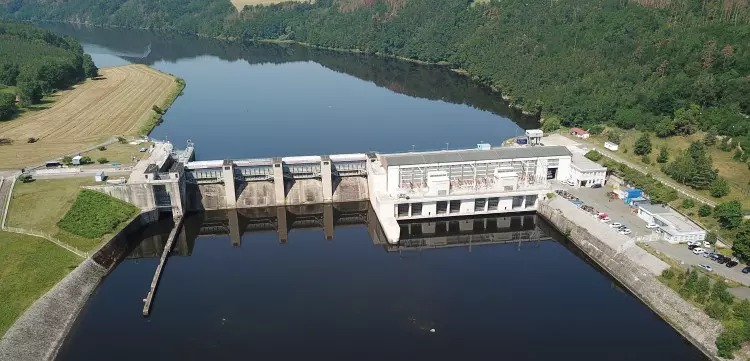
A hydroelectric power plant in the Czech Republic
Blackout resilience is increasingly urgent, and a Bruegel report warns that modernized electricity grids must be designed for geopolitical and climate shocks. In 2024, Storm Boris brought torrential rain and strong winds to the CEE region, causing widespread power outages and infrastructure failures. An estimated 250,000 households lost power in Czechia, and Austria and Poland experienced extensive blackouts.
At EU level, the 2025 blackout in Spain strengthened the political case for more interconnection and grid modernization. For real impact in CEE countries and cities, this requires regulatory reforms and funding, not merely top-down EU declarations.
Innovation gaps — with emerging signs of progress?
Renewables, energy storage and grid innovation are critical for long-term energy system resilience but receive less investment and policy attention than short-term gas security measures. Innovation ecosystems across the region lack unity, with insufficient links among startups, universities, utilities, and regulators.
According to the Austrian Institute of Technology (AIT), early-stage research in Europe is often well funded, but projects with commercialization potential struggle in the so-called “valley of death.” AIT surveys reveal the main barriers to adoption: Interoperability challenges (31%), regulatory obstacles (31%), weak market demand (15%), and funding constraints (11%). Long, complex approval processes further slow deployment. Many cleantech companies across Europe, including some in CEE, rely heavily on debt financing, which constrains their ability to invest in long-term innovation.
On the technical side, research into system interoperability shows that data applications in CEE energy systems often operate in silos, creating “isolated data spaces” that hinder smart grid development. Without shared data frameworks, regional innovation efforts struggle to scale across borders.
However, the picture is not entirely grim. Slovenia offers an example of how an energy innovation ecosystem works. The NEDO smart-grid partnership, linking a Japanese research consortium, the national utility ELES, and several Slovenian startups, became a showcase for grid digitalization. The jointly developed project shows how coordinated system integration with local partners enables adaptation of an advanced grid model.
Cross-border cooperation is improving. A Slovak–Hungarian interconnector with new cross-border electricity lines increased regional energy flexibility and security. The project received co-financing from a Connecting Europe Facility (CEF) instrument, marking a significant step in the development of an integrated electricity market.
Looking ahead, the shift toward decentralized and variable energy systems demands regulatory structures that encourage experimentation. Regulatory sandboxes offer one promising solution, enabling controlled testing of technologies such as virtual power plants, community storage, and AI-based microgrids.
Without such measures, promising innovations in CEE countries risk stalling before reaching market scale. Ann Mettler, distinguished visiting fellow at Columbia University’s Center on Global Energy Policy, said fragmentation hinders startup scaling in Europe. “No amount of risk-tolerant capital or subsidies will suffice if nothing can scale… Regulation must transform into an engine for agility and renewal.”
The second part of the article focusing on the implication for cities and practical solutions will be released on January 14.
Read more about energy transition here