

In November 2025, Belgrade hosted the conference “Noise and Air Pollution – Challenges in the Urban Environment”, bringing together experts from public institutions, finance, academia, and industry to address two often overlooked but deeply interconnected urban challenges.
In this interview, Milica Raičković, deputy general manager at Dirigent Acoustics, reflects on the key takeaways from the conference and shares her expert perspective on why systematic noise monitoring, interdisciplinary planning, and data-driven decision-making are essential for healthier cities across Serbia and the Western Balkans.

About the conference
The region hosts many environmental events, but few address noise and air pollution together — especially from a practical, implementation-oriented perspective. What gap was the conference Noise and Air Pollution 2025 – Challenges in the Urban Environment designed to address?
For many years, Dirigent Acoustics has been actively involved in noise protection projects across Serbia. Recognizing noise and air pollution as two of the most pressing environmental challenges in today’s urban environment, we recently expanded our work by establishing a dedicated expert team focused on monitoring and improving air quality.
Through extensive work on infrastructure projects in Serbia and the region, we clearly see the difficulties local authorities face: a lack of specialized staff, limited institutional capacity, unclear application of regulations, and—very often—insufficient funding to implement concrete measures.
The conference “Noise and Air Pollution – Challenges in the Urban Environment” was created precisely to bridge the gap between regulations, planning documents, and their practical implementation. Its focus is on practical solutions—how to translate regulatory requirements into feasible projects, supported by financial mechanisms, expert knowledge, and European best practices where these issues have been addressed systematically for years.
This was not the first event organized by Dirigent Acoustics. As an innovative company operating within the Belgrade Science and Technology Park, we have long worked together with the Park to facilitate important professional discussions and connect the expert community. Each year, we select topics that are timely, relevant, aligned with international trends, and grounded in the real needs of cities and citizens.
Our goal, both as professionals and as residents of Serbia, is clear: improving the quality of life. By sharing knowledge, experience, and concrete examples, we aim to help cities move from ideas to implementation and collectively build a more sustainable, healthier, and quieter future.
This year’s program covered financing, regulation, public health, and technical solutions. Which themes or panels proved most critical for helping cities turn environmental goals into real, implementable projects?
The main motivation behind organizing this conference was the realization that noise and air pollution cannot be effectively addressed from a single-sector perspective. In practice, projects often fail not because technical solutions are lacking, but because of misalignment between regulation, financing, institutional capacity, and expertise.
That is why we brought together representatives from regulatory bodies, environmental protection authorities and entities, the financial sector, academia and professionals’ community, public health institutions, and industry—to create a space for agenda that leads to tangible implementation. The goal was to connect policymakers, public finance managers, local government officials responsible for noise and air quality, and technical experts, enabling a shared understanding of challenges and opportunities.
A particularly valuable contribution came from the State Audit Institution, whose role is to assess compliance with legal obligations. Their participation highlighted the concrete responsibilities of local governments and the importance of a systematic and accountable approach to implementation.
This interdisciplinary perspective allows problems to be viewed holistically—from regulatory and financial aspects to health impacts and technical solutions—and represents a crucial step toward sustainable, implementable urban projects. The system works on the principle of the weakest link: if any participant fails, the entire process comes to a standstill.
One of the aims of the conference was to support municipalities throughout the full project lifecycle. Based on the discussions, what do you see as the main obstacles local governments face today and what practical insights did participants take away?
All perspectives are important, but financing and regulatory implementation currently represent the biggest obstacles for local governments. Although awareness of noise and air pollution issues exists, environmental protection often ranks low among budget priorities.
As a result, panels focused on financing and regulation attracted the most interest. Many municipalities lack clear information on how to fund projects or how to consistently apply regulations in practice.
The financing panel was particularly important, as it presented real-world models—from bank credit lines and municipal bonds to innovation and environmental funds—along with opportunities for direct dialogue with financial institutions. For many participants, this represented the first concrete step toward future project implementation.
At the same time, a clearer understanding of the regulatory framework, combined with insights from public health experts, helps decision-makers grasp not only their legal obligations but also the real health consequences of pollution, strengthening institutional and political will to act.
Expert perspective on noise and urban environments
Environmental noise is often overshadowed by other urban challenges. Why is noise monitoring and management so essential for creating healthier cities?
Urbanization, the expansion of transport infrastructure, and industrial development have led to a significant increase in noise problems in urban environments, which citizens face on a daily basis. Today, noise is no longer merely a matter of comfort — it is a serious public health issue that directly affects the quality of life in cities.
Long-term exposure to elevated noise levels is linked to sleep disturbances, increased stress levels, reduced concentration, and more serious health consequences such as high blood pressure and cardiovascular diseases. For this reason, noise management must be viewed as an integral part of broader public health protection policies.
To truly understand the challenges citizens face, the first and most crucial step is to establish continuous, 24-hour noise monitoring at all levels. In Serbia, every local authority is required to carry out annual short-term noise measurements at predefined locations and during specific periods of the year. However, conducting measurements solely to comply with administrative rules is insufficient to tackle the issue.
The real value lies in systematic analysis of the collected data, tracking changes over time, and using these insights to plan concrete measures. Noise monitoring is the first step in tackling noise pollution, but its true potential lies in data interpretation, understanding trends, and making informed decisions that protect public health and improve the quality of life in urban environments over the long term.
Looking at the Western Balkans, how developed is the market for noise measurement and acoustic planning? What progress have you observed, and where do you see the biggest gaps?
In the Western Balkans, this field is still in early developmental phase. At present, the region is roughly where European cities were about twenty years ago in terms of a systematic approach to noise protection. Nevertheless, some progress has been made in recent years, primarily through the strengthening of legal frameworks and alignment with European directives — particularly in areas such as acoustic zoning, strategic noise mapping, action plans, and urban noise monitoring.
Serbia currently stands out among Western Balkan countries in terms of strategic noise mapping and action planning. In previous cycles, Serbia completed its first round of strategic noise maps for large agglomerations such as Niš, Belgrade, Novi Sad, and Kragujevac, as well as for major rails and roads according to European Noise Directive (END) 2002/49/EC.
For some of these documents, a new cycle of preparation is required, as more than five years have passed since their adoption, and they must be aligned with updated regulations on strategic noise mapping and action plans. Nevertheless, the fact that these processes have been implemented represents a significant step forward and provides a solid foundation for further development.
A positive trend is also seen in the growing awareness among institutions and local authorities of noise as both an environmental and health issue, as well as in the increasing demand for expert analyses, long-term monitoring, and a more strategic approach to urban acoustic development.
However, the biggest gaps remain in practical implementation. Noise measurements are often carried out as a formal obligation, without continuity, in-depth analysis, or a clear link to concrete noise reduction measures. Systematic acoustic planning integrated into urban, transport, and infrastructure planning from the very beginning is still largely missing.
Additional challenges include a lack of specialized professionals, limited institutional and educational capacity, and very often insufficient financial resources for long-term and sustainable solutions. Although the Law on Noise Protection clearly defines institutional responsibilities and timelines for strategic noise maps and action plans, some local authorities and public enterprises have not fully met these obligations—most often due to budget constraints.
Institutions sometimes engage foreign experts, despite the presence of highly qualified local professionals with internationally recognized expertise. This often stems from limited visibility of domestic expertise and greater trust in foreign — usually European — consultants.
Finally, noise protection is a complex field requiring specialized knowledge, particularly in acoustics, physics, and sound propagation, which goes beyond general environmental protection educational frameworks. Additional education within institutions and collaboration with experts is essential to enable proper problem recognition, data interpretation, and informed decision-making.
The next crucial step for the region is moving away from a “box-ticking” approach toward a strategic and interdisciplinary model that connects measurement, planning, public health protection, and real investments in noise reduction.
Technology is evolving quickly — from advanced monitoring systems to new materials. Which innovations do you believe have the greatest potential to improve noise management in the coming years?
Technology is advancing rapidly across several key areas with strong potential to significantly improve noise management. One of the most important developments is advanced continuous noise monitoring systems.
These systems enable real-time noise measurement and can identify the direction of incoming sound, assess the contribution of individual noise sources, exclude irrelevant sources, and through artificial intelligence, classify sounds and determine their origin (traffic, industry, hospitality venues, speech, etc.). This allows for more efficient monitoring and data-driven decision-making.
Such systems are not limited to data collection. With advanced software tools, they enable trend analysis, long-term data comparison, assessment of new noise sources, and evaluation of mitigation measures.
Another major area of innovation is advanced acoustic modeling and simulation software. These tools allow for highly complex acoustic calculations accounting for multiple parameters—different noise sources, terrain configuration, building geometry, population distribution, and noise indicators calculated on building façades, down to individual windows. Thanks to such software, we were able to develop strategic noise maps for the entire Belgrade agglomeration.
Further innovation is expected, and our company is actively involved. We are currently part of several international consortia and are engaged as acoustic consultants in four innovation projects, with evaluation results expected soon.
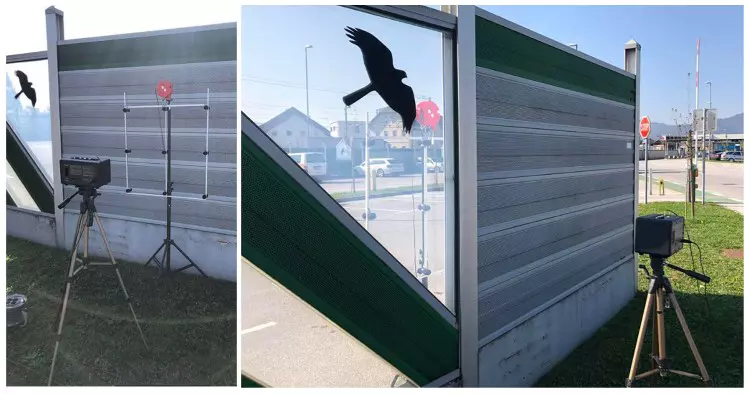
Our company developed a software solution for Knauf, an International, German-based company, for calculation of sound insulation in buildings (KSI – Knauf Sound Insulation). The tool is based on the standards and regulations of each country where it is used. In addition to this software, we have contributed to the development of several technical solutions for acoustic sensing. Among these are a device for testing noise barriers and a EU-funded border monitoring system, created in collaboration with academic partners and border police in several European countries. As part of this project, we developed a sophisticated acoustic sensor integrated into a multi-sensor system that enables detection, localization, and classification of acoustic events over long distances (from two to twenty kilometers). Artificial intelligence is applied in this system for event classification and reliable identification of sound sources. This approach makes it possible to clearly distinguish various acoustic events: speech, airplanes, drones, trucks, cars, and natural or animal sounds, an essential element of modern security and monitoring systems.
The combination of advanced technologies, real-time data, and powerful analytical tools forms the foundation for shifting from reactive to proactive noise management and for creating healthier urban environments where a high-quality, comfortable lifestyle is a priority.
Strategic noise mapping as a tool for cities
Dirigent Acoustics works across research, measurement, and applied solutions. Without going into commercial details, could you share one example of a project or collaboration that illustrates how better acoustic management can genuinely improve quality of life?
A strong example of how targeted and effective noise management can directly improve quality of life is our work on strategic noise maps and action plans. The process begins with acoustic zoning, followed by strategic noise mapping, which leads to conflict maps identifying the most affected areas (hot spots), zones with the highest exposed population, and locations where mitigation measures should be prioritized.
While it is still too early to assess the full impact of the strategic noise maps and action plans for the cities of Novi Sad, Belgrade, and Kragujevac, which we have delivered over the past three years, a strong example of our leadership is the development of the first strategic noise maps in the Republic of Serbia for the main national road and railway corridors. Our company pioneered this effort by preparing strategic noise maps for “Putevi Srbije” as early as 2016, followed by comprehensive action plans in 2018. Thanks to these documents, when citizens submit noise-related complaints today, the relevant authorities can rely on existing conflict maps to verify whether the issue has already been identified and to what extent. Furthermore, the action plans provide clear guidance on the measures proposed for each specific location, and it was already used in dozens of cases around Serbia for executing the noise protection.
Through strategic noise mapping and action planning, cities and institutions gain a clear understanding of which urban areas are most affected by noise, at what times of day, from which sources, and the scale of population exposure. This data becomes the basis for targeted interventions—from traffic regime adjustments to structural measures and urban planning modifications.
In practice, decisions are data-driven and interventions focus where they have the greatest impact on everyday life, improving sleep quality, reducing stress, and creating healthier environments.
Given the continuous development of cities and infrastructure, these documents must be regularly updated—at least every five years—and the effects monitored through continuous noise monitoring. Equally important is coordinated cooperation among all stakeholders with aligned goals and actions.
Personal perspective
You’ve spent many years working at the intersection of engineering, cities, and public health. What personally motivates you to work in this field — and what keeps you optimistic about the future of urban environments?
As an electrical engineer specializing in acoustics, I work exclusively with sound—it is both my professional focus and personal passion, shared by the entire Dirigent Acoustics team. Sound is an exceptionally complex phenomenon: technically challenging, essential for communication, present in its most desired and beautiful form (music), but also in its undesired form, which we call noise.
I am motivated by the opportunity to create sound environments that inspire, calm, and support well-being. I find real fulfillment contributing to spaces where people can enjoy high-quality sound, acoustic comfort, normal communication, and proper rest.
Few engineering disciplines offer such a clear and tangible link between technical solutions and daily human experience as acoustics and noise management.
I am optimistic about the future of cities because of growing awareness of sound environments, rapid technological development, and increasing willingness among cities to approach these challenges systematically. I am also inspired by working with a team combining deep expertise with vision and innovation.
I am confident this combination of knowledge, creativity, and interdisciplinary thinking will allow us to contribute to the development of smart cities and create healthier, more humane, higher-quality urban environments for current and future generations.
Read about air quality in the Balkan capitals here
Read and watch more interviews here