
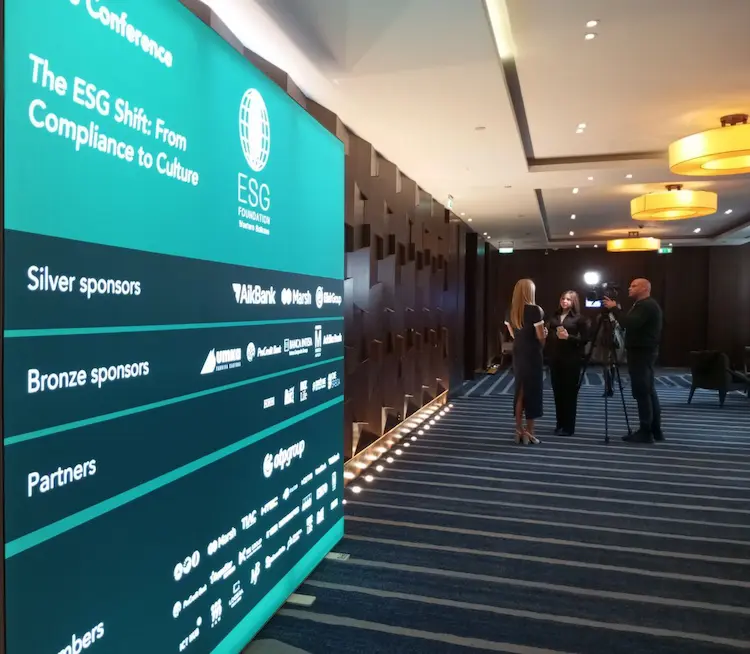
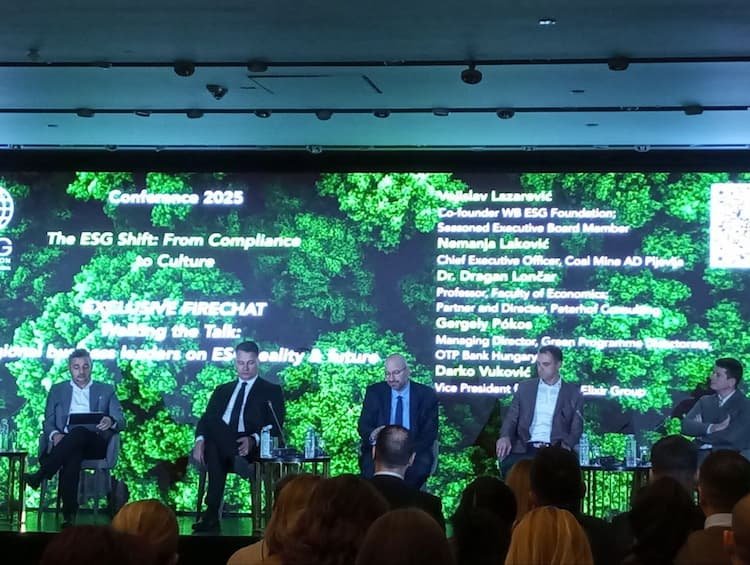
The Western Balkans ESG Foundation convened an annual conference,titled “The ESG Shift: From Compliance to Culture”, at a moment when climate vulnerability, economic transition, and demographic change are converging across the region. Bringing together banks, technology firms, policy-makers, sustainability experts, and civil society leaders, the event set out to assess how far the ESG agenda has progressed in Southeastern Europe and what remains structurally unresolved. Across three panels and multiple keynote interventions, participants emphasized that sustainable transformation in the Western Balkans is no longer a normative aspiration but an operational necessity driven by climate realities, regulatory shifts, and generational expectations.
The climate imperative: water security, agriculture, and regional exposure
Climate data formed a recurring backdrop throughout the conference. Building on recent UN reports and EU risk assessments, speakers underscored that Europe is warming faster than most regions worldwide, with the Balkans among the most exposed. Agricultural economies, from Serbia to North Macedonia and parts of Bulgaria, are already experiencing the first-order consequences of extreme heat, water scarcity, and ecosystem stress. Unlike the financial sector, which often feels climate risk indirectly and with a time lag, agriculture in Southeastern Europe is the frontline sector, with immediate impacts on yields, livelihoods, and rural stability.
Multiple speakers stressed that Serbia, as a significant producer and exporter of agricultural goods, faces structural vulnerability. Investment in water infrastructure, from reservoirs and irrigation systems to modernized distribution networks, was described as the most urgent task, yet one requiring multi-year commitments. “The transition will be long, but delaying it is no longer an option,” one sustainability expert warned.
Profitability, transition fatigue, and the ESG value proposition
One of the recurring themes, surfacing across panels, was the persistent myth that sustainable development does not generate economic returns. Several speakers challenged this narrative, noting that misperceptions still shape managerial decision-making. Whether discussing clean energy projects, the scaling of regional wind and solar assets, or the rise of resource-efficient manufacturing, panelists repeatedly emphasized that ESG-aligned investments are not charity; they are risk-managed growth strategies.
Yet, fatigue is real. Institutions, companies, and even consultancies spoke candidly about the difficulty of navigating multiple regulatory packages, unclear methodologies, and rising compliance costs. Some panelists framed this as “ESG exhaustion,” particularly for small and medium-sized enterprises with limited internal capacity. However, rather than rejecting ESG, participants called for reframing it: from a compliance burden to a cultural and strategic transformation.
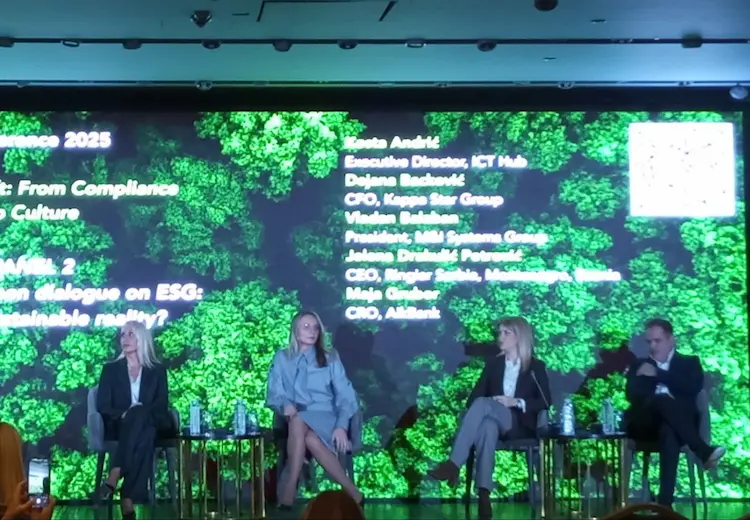
ESG and the SDGs matter for Balkans in 2025
Senior banking, consulting, and corporate executives engaged in a challenging discussion on how the region can strengthen its alignment with the Sustainable Development Goals in 2025 and beyond.
Vlastimir Vuković, for example, presented a compelling argument: the Balkans’ ability to remain competitive depends on its capacity to attract and retain Generation Z, a cohort deeply attuned to climate risks, social impact, and corporate authenticity. If companies want young professionals to remain in the region, they must integrate ESG not as a slogan but as a core management principle. Education, talent development, and project preparation, including the development of ESG-ready project pipelines, were highlighted as essential steps for this shift.
Nikola Vuletić emphasized the importance of data governance and methodological maturity. For him, the challenge is not only collecting data but merging, interpreting, and contextualizing it effectively. He also pointed to AI-enabled analytics, which can significantly improve predictive modeling, scenario planning, and project due-diligence processes. At the same time, Igor Anić warned that integration is impossible without education: banks, he insisted, must understand the ESG landscape well enough to advise their clients credibly. Greenwashing remains a structural problem in the region, but improving ESG literacy across the financial sector would help alleviate it.
Management readiness and digitalization were the central focus for Predrag Mihajlović. Without digital tools, he noted, ESG data becomes cumbersome and unreliable. He also emphasized that young people in Serbia are not ignorant of the SDGs; on the contrary, they expect institutions to act on them.
Read more about sustainable Balkans here.
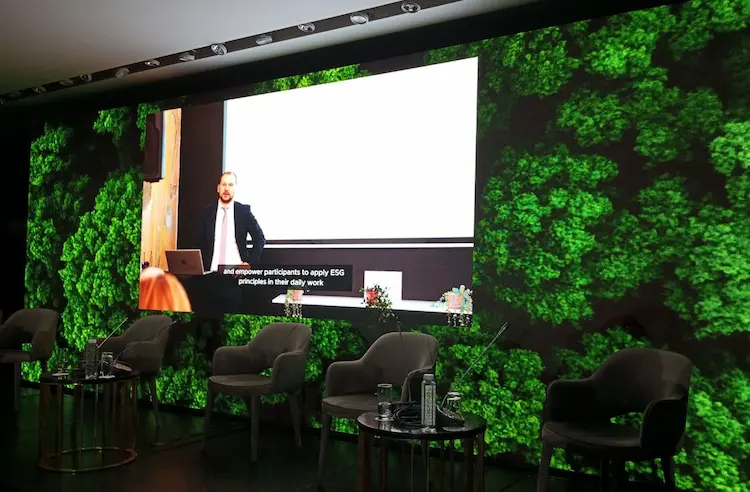
ESG hype or sustainable reality
A central theme across the discussions was whether ESG is simply a temporary trend or a lasting driver of regional transformation.
Maja Grubor noted that although media hype is real, tangible progress is underway, especially in renewable energy adoption across the Western Balkans. She highlighted that sustainability challenges extend beyond industry into rural and agricultural communities, where climate stress and social disparities are becoming increasingly acute. Jelena Drakulić-Petrović added a generational dimension, emphasizing that nearly a third of Generation Z evaluates employers and brands through environmental and social performance, making ESG a cultural expectation rather than a regulatory formality. Vladan Balaban underlined the growing convergence of AI, digitalisation, and sustainability, noting that IT companies are already providing tools to automate data flows, track emissions, and integrate sustainability metrics into enterprise systems.
ESG becomes real only when it becomes cultural. Mindset change precedes technological or regulatory compliance. As one panelist noted, this mirrors the adoption of earlier waves of digital innovation; transformation begins when organizations stop treating change as an obligation and begin treating it as a strategic asset.
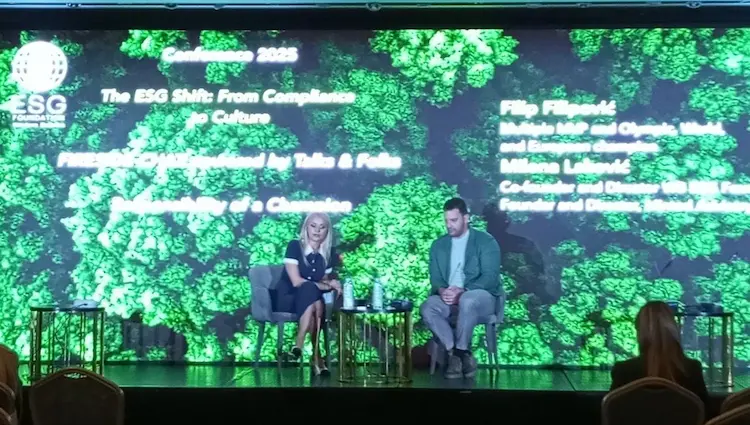
Regulation, taxonomy, and financing the transition
Another major topic was the widening gap between EU sustainability regulations and local implementation capacity. Dr. Anđelka Mihajlov pointed to persistent deficits in ESG reporting expertise, taxonomy understanding, and geo-economic readiness, particularly in water-dependent sectors. Although guidance from the Ministry of Finance is publicly available, adoption remains low. Vladimir Jovanović presented a stark figure: only a small percentage of Serbian small businesses are prepared for the incoming requirements.
Financing challenges further complicate the transition. Representatives from Elixir, including Darko Vuković, described high capital costs, eligibility constraints, and the “green premium” that often weakens competitiveness compared to the United States or China. Yet participants also stressed that progress is possible through incremental steps.
This conference examined how ESG principles are reshaping corporate practices across the region, from resource efficiency and supply chain management to workforce policies and governance, all while navigating infrastructure constraints and fragmented regulations. It also emphasized the central role of people in driving genuine transformation and building long-term trust, and concluded with the ESG Academy’s awarding of certificates.
Across all debates, the message was consistent: ESG is becoming a fundamental cultural and economic shift that will shape the Western Balkans’ competitiveness in the decades ahead.
Read more about conferences here.