
The energy frontline in Central and Eastern Europe (CEE) is shifting to the municipal level, where Local Energy Security and resilience depend on decisions made at city hall and in households adopting new energy solutions.
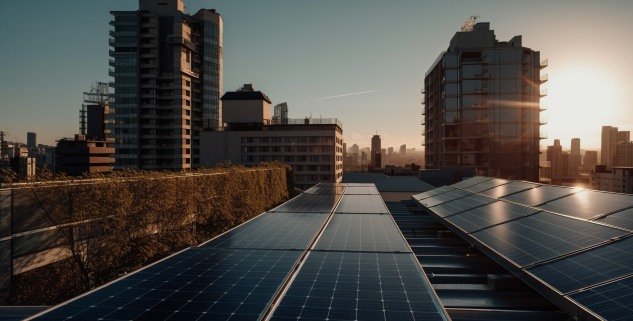
CEE cities are riding an energy transition wave and a solar energy boom that reaches the household level. Rooftop solar is expanding rapidly across the region and reshaping its energy identity. In Poland, there are already 1.5 million “prosumers,” or solar-equipped homes producing and consuming their own electricity. This is a small fraction of a total regional “prosumer” count of more than 2 million. In Czechia, rooftop solar systems with batteries and smart meters mean “flexumers”, or homes with the ability to store and shift electricity.
Climate disruptions, the ongoing military conflict in East Europe, and power outages elsewhere in Europe forced a reframing of energy policy to place more emphasis on urban energy resilience: the capacity to prepare for and absorb shocks, adapt, and recover quickly.
Global conflicts reinforce this local energy calculus. Disruptions linked to crises such as the US-Iran conflict can ripple quickly through global energy markets, pushing up prices. For CEE cities already balancing security, affordability, and decarbonization, these shocks highlight the urgency of strengthening energy systems at the local level.
How CEE Cities Are Becoming Key Actors in Local Energy Security
CEE cities rarely rank among Europe’s most resilient, but they are improving and often outperform expectations. Ljubljana and Warsaw already perform well in European resilience and sustainability assessments. Cities in the region are developing various solutions to address climate change, including upgrading district heating infrastructure, developing solar energy capacity, and using digital solutions to manage buildings and energy infrastructure. Old boilers are replaced with biomass and heat pumps. Baltic capitals are synchronizing their grids with Continental Europe to reduce external vulnerability.
Since 2019, “solar generation in Central Europe climbed from 5 TWh to 29 TWh – a nearly six-fold increase,” according to Ember. Tatiana Mindeková, policy advisor at Ember, said: “Central Europe has defied expectations: despite an unfavourable policy setting, it has become one of Europe’s solar success stories.”
Citizen-led energy communities are emerging as decentralized complements to national systems. As researcher Birgitte Bak-Jensen observes, local systems can operate as “energy islands”, interconnected and locally optimized. These initiatives do not place cities fully in charge of local energy systems, but they push decision-making on energy security closer to the local level. Warsaw, Prague, and Ljubljana offer examples of how CEE cities are navigating the energy transition, balancing local ambition with the constraints of national systems and inherited infrastructure.
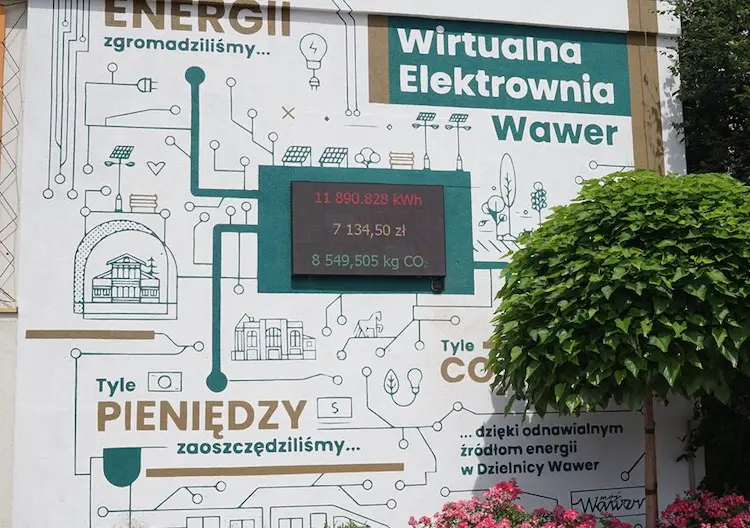
Warsaw Energy Transition: Scale, Coal Legacy and Local Energy Security Challenges
Warsaw’s energy trajectory reflects Poland’s broader transition dilemma. Although the national energy system is still shaped by coal, Warsaw shows how cities are becoming decisive actors by improving energy efficiency and deploying renewable infrastructure even when the wider system changes slowly.
Heat in Warsaw still flows through a district network built decades ago. The city’s network is one of Europe’s largest and supplies nearly 80% of the heat demand. Historically, coal-fired assets underpinned both urban development and the national economy until the country’s EU accession accelerated energy modernization. Following the 2022 energy crisis, decarbonization cannot be separated from security.
The city of Warsaw is working towards a climate-neutral target by 2050 and plans to cut greenhouse gas emissions by 40% by 2030 under its Green Vision strategy. The cornerstone of renewable energy development in Warsaw is solar PV. The city of Warsaw is recognized as a leader in solar energy development in CEE and was selected to host the Essential 2025 solar event. “The location of this event in Warsaw also underscores the growing importance of this city as a hub for renewable energy and innovation in the CEE region.”
The newly renovated Zachodnia station in Warsaw is one of the largest BIPV systems in Europe and is part of a major multimodal transportation hub in the city, showcasing how the energy transition in CEE cities is increasingly visible in everyday urban infrastructure. In 2025, Warsaw announced its intention to establish a municipal energy agency for coordinating “multifaceted municipal activities in the energy sector.” Among wide-ranging responsibilities, the agency should motivate residents and business entities to implement renewable energy solutions and increase the share of solar energy supplied to public facilities.
However, the city must confront long-term security vulnerabilities. The energy mix is still fossil-heavy, infrastructure requires major upgrades, and grid expansion must accelerate to absorb the growth in renewables.
Prague Energy System: Governance Complexity and Energy Security Constraints
Prague sits at the crossroads of CEE’s energy system. As the capital of Czechia, a country balancing coal phase-out with expanded nuclear generation, Prague illustrates the tension between decarbonization targets, security concerns, and the limited control cities have over energy systems.
On winter mornings in Prague, most apartments are warmed by heat generated outside the city. Nearly 700 kilometers of network serve much of the city, but roughly 85% of the heat originates from a high-carbon coal facility outside direct municipal control. Electricity supply also depends on national generation and cross-border markets.
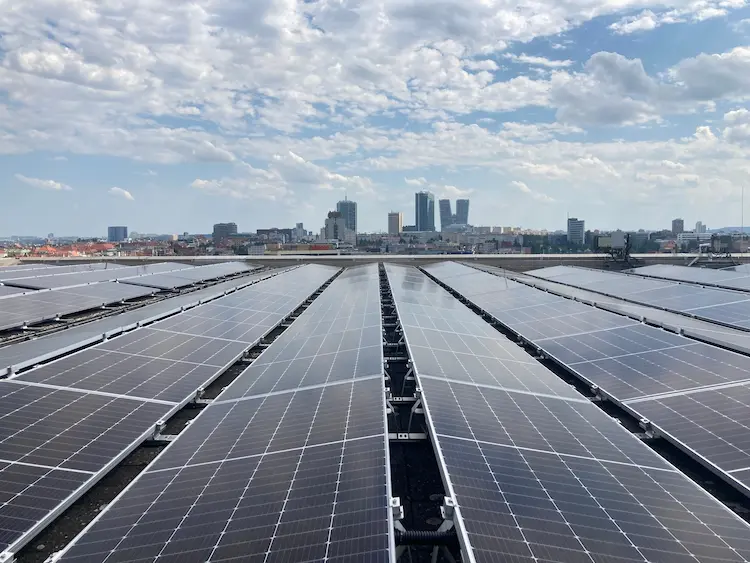
Since the energy crisis, Prague has been accelerating local modernization. Legislative reforms enable energy sharing. Pilot districts such as Dolí Počernice combine high-performance buildings with hybrid heat and power systems. The Prague Congress Center hosts the city’s largest photovoltaic installation.
Prague is also pursuing innovative ways to link new infrastructure with low-carbon heat supply. Plans associated with a new metro line include capturing geothermal energy from underground structures and feeding it into the district heating network. It’s a solution that depends on coordination with Veolia, the private operator that controls most of Prague’s district heating system, highlighting the institutional issues shaping the city’s energy transition.
Energy security and resilience goals drive Prague’s energy modernization, but governance complexity is still a constraint. Key infrastructure assets are not municipally owned. Financing hurdles, regulatory procedures, and legacy coal and gas dependencies limit the speed of diversification. Prague’s experience underscores a CEE pattern: cities are innovating within systems they do not fully control.
Ljubljana Energy Strategy: Community Solar and Local Energy Security Alignment
Ljubljana’s historic center, with its iconic bridges and green corridors, reflects decades of inspired urban planning. Beneath the streets, however, lies the challenge of modernizing heating networks and reducing fossil-fuel dependence.
Ljubljana is one of the region’s most institutionally aligned CEE cities. To secure more control of its energy future, the city links transition planning with territorial governance. Ljubljana’s Vision 2025 strategy, adopted in 2007 and aligned with wider European goals, still shapes the city’s planning culture.
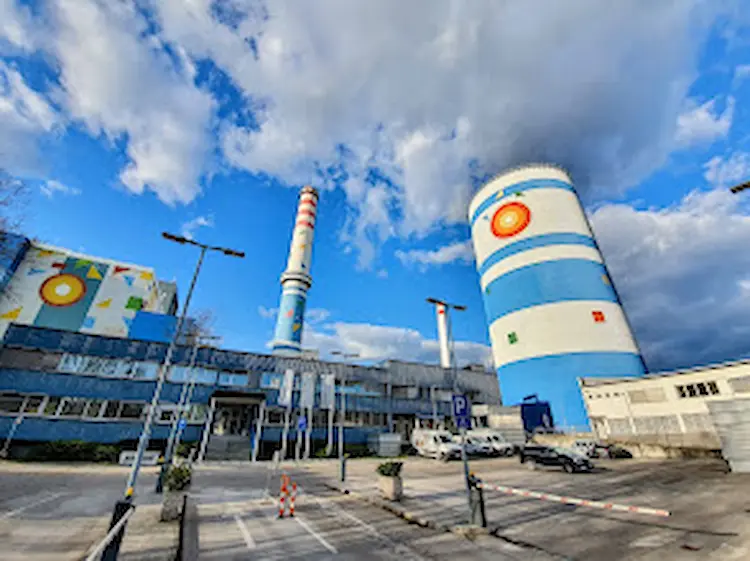
Selected for the EU Mission for climate-neutral and smart cities, Ljubljana is committed to decarbonizing its energy system through the deployment of renewables. The city is modernizing district heating and integrating electricity, heating, and renewable systems through projects coordinated by Energetika Ljubljana.
In a partnership with Petrol and energy services company Resalta, Ljubljana launched an award-winning public-private solar initiative, installing photovoltaic capacity across public buildings. As the most ambitious community solar project in Slovenia, it powers public infrastructure. Ljubljana won Europe’s award for Best Energy Service Project for this initiative, reflecting the city’s long-standing engagement with EU sustainability frameworks.
Compared to Warsaw or Prague, Ljubljana operates within a more favorable renewable context. But further progress ultimately depends on governance, regulatory frameworks, and energy system decisions that lie beyond municipal authority.
Local Energy Security Gaps in CEE: Modernization Challenges and Barriers
In CEE cities, the energy transition is not happening in laboratories or conference rooms. It is happening in households, boiler rooms, tram depots, and on rooftops.
Across the CEE region, cities are advancing energy innovation and modernization. Municipal energy projects are mobilizing significant capital. Investment pipelines indicate that European municipalities plan to invest more than €30 billion in sustainable energy projects, with an estimated several billion euros linked to CEE cities and municipalities.
However, modernization in Central and Eastern Europe is uneven, and structural gaps persist in the way cities address security and resilience:
- Inflexibility and a lack of digitalization tools, such as smart metering, smart line rating, and demand response, are falling behind the growth of renewables, despite the potential for AI.
- Ongoing fossil fuel dependence for space heating and industry is a structural gap in legacy infrastructure, hindering the urban energy transition.
- Despite the presence of EU programs for urban investment, access to investment for cities is limited due to complex processes and capacity gaps.
Governance gaps and regulatory complexities persist as obstacles. A good example is the issue of microgrids. Microgrids facilitate urban generation and resilience in a centralized national grid, beyond the city’s direct control.“There is no fully harmonized definition of microgrids across the EU,” says Esther Fuldauer of CityLens Consulting. Energy communities and microgrids are recognized under EU legislation, but market structures were designed for centralized utilities, not distributed systems. Grid connections are slow, standards are fragmented, and scaling requires new governance models. “Microgrids are not just technical systems; they are governance systems,” she adds.
Cities in Central and Eastern Europe are not just energy consumers anymore. They are becoming decisive actors in the development of local energy infrastructure and systems in the region.But the weight of the role that policymakers place on the role of CEE cities as decisive actors is substantial. The Council of European Municipalities and Regions argues that the European Union is focusing more on the funding of emergency responses, short-term adaptation, and national-level infrastructure development, whereas it is underinvesting in the modernization of cities and the development of city-level infrastructure. There is a need to invest more in the region to overcome long-term vulnerabilities.
For cities, the challenge is to expand distributed energy resources, build microgrids, and use digital technologies for optimization. But the ambition of cities is not enough to ensure the resilience of the region. Grid regulation, market rules, and large-scale infrastructure investment remain largely national responsibilities. The result is a paradox: cities are expected to deliver energy security and resilience without fully controlling the systems that shape those outcomes.
The energy frontline in Central and Eastern Europe is now municipal, and Local Energy Security has become a defining priority for cities navigating resilience, affordability, and decarbonization. Can the frontline hold?
FAQ
What is Local Energy Security, and why does it matter in CEE?
Local Energy Security is the capability of cities or municipalities to maintain energy security. In Central and Eastern Europe, energy security is becoming an issue due to external influences, fossil fuels, and the need for flexible energy infrastructures.
Why are cities becoming key actors in energy security?
Cities are where energy is consumed, managed, or produced. Cities can now play an active role in securing energy security through investments in renewable energy, digitalization, or advanced district heating infrastructures.
What are the main challenges to Local Energy Security in Central and Eastern Europe?
The biggest challenges to achieving energy security are still fossil fuels, outdated infrastructures, limited flexibility, or regulations. These are structural barriers hindering the energy transition process. They limit the level of control cities can exercise over their energy infrastructures.