
From 10 to 21 November 2025, Belém hosted the 30th UN Climate Change Conference (COP30), a summit that will likely be remembered as one of the most contentious in recent years. What was meant to be a decisive moment for global climate ambition instead exposed familiar fractures in international climate politics, set against a backdrop of protests, geopolitical tensions, and unprecedented industry lobbying.
A summit overshadowed by absences, pressure, and protests
Even before negotiations began, COP30 was marked by unusual political dynamics. For the first time in history, the United States did not send high-level representatives, a decision widely seen as aligned with the Trump administration’s climate retreat. This absence raised fresh uncertainty over global climate finance, an area where the U.S. has long been both a critical player and an inconsistent contributor. Environmental groups noted that Washington’s non-participation, far from neutral, cast a long shadow by limiting momentum on funding and loss-and-damage mechanisms. Legal momentum also surrounded the summit: in July 2025, the International Court of Justice issued a landmark advisory opinion declaring climate change a legally binding “urgent and existential” threat, strengthening the legal argument for ambitious mitigation and reparations.
Adding to the unease, COP30 registered a record 1,602 fossil-fuel lobbyists. It was the highest share ever (3.8% of all attendees). Campaigners noted that these lobbyists outnumbered every national delegation except Brazil itself, and significantly outweighed delegates from highly climate-vulnerable countries. Critics warned this level of corporate presence risked diluting any meaningful outcomes and undermining trust in the negotiating process.
Meanwhile, the People’s Summit and protest marches brought thousands of demonstrators, including Indigenous groups, youth activists, and civil society, into the streets of Belém. Under 30°C midday heat, participants demanded stronger commitments, blocked entrances, and called on governments to protect vulnerable communities and ecosystems. Indigenous representation reached an all-time high of about 3,000 delegates, yet leaders emphasized that visibility has not translated into adequate decision-making power. Without land rights and recognition of traditional governance systems, they warned, climate justice remains out of reach.
As if symbolic of the summit’s turbulence, negotiations were briefly halted when a fire at the venue forced an evacuation. No casualties were reported, but the incident added to the sense of a summit under strain.
As if symbolic of the summit’s turbulence, negotiations were briefly halted when a fire broke out at the venue, forcing an evacuation. No casualties were reported, but the incident added to the sense of a summit under strain, especially when many viewed the final deal as weak: the version of the draft text released later removed explicit reference to a fossil-fuel phase-out roadmap, despite strong calls from more than 80 countries.
Negotiations stalled: the draft agreement drops fossil-fuel phase-out
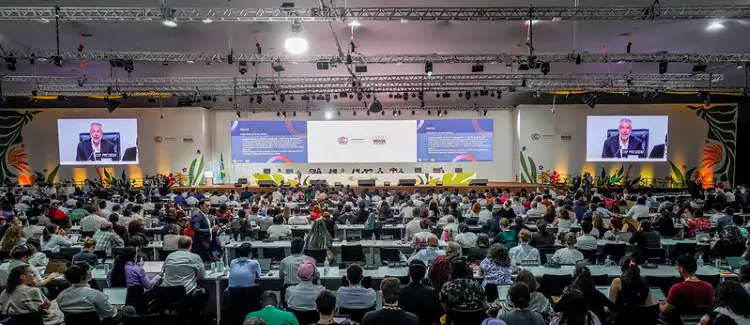
Midway through the conference, tensions rose sharply when the COP30 Presidency released a revised draft outcome text that removed the proposal to develop a global plan for phasing out fossil fuels, a demand backed by more than 29 countries, including Germany, Kenya, and a broad coalition of small island states. This push was not accidental: many of these countries are among the more ambitious performers in global climate rankings, with Germany, the UK, Chile, and Morocco all appearing in the upper tiers of the 2026 Climate Change Performance Index (CCPI). Their call for a clear phase-out roadmap echoed their own domestic transitions, which CCPI experts describe as structurally advancing, albeit unevenly.
In response to the diluted text, these countries issued a joint letter threatening to block any agreement lacking a commitment to phase out fossil fuels, raising the stakes in negotiations already strained by geopolitical divides. At the same time, Brazil, the host country and one of the better-ranked G20 economies in climate policy, faced mounting diplomatic pressure from oil-producing states to soften the language on transition pathways. This tension grew sharper as several major fossil-fuel producers, including Saudi Arabia, Russia, and the United States, arrived in Belém with some of the lowest CCPI scores globally, consistently ranking at the bottom of the index in climate policy, renewable energy deployment, and overall mitigation performance. Their resistance to binding phase-out language stood in direct contrast to the expectations of high-performing countries and civil society groups.
The controversy quickly became one of the defining conflicts of the summit, crystallising the divide between ambition and pragmatism or, as some negotiators put it, between those accelerating the transition and those still structurally tied to fossil-fuel-dependent economies. By the time the draft was circulated, it was evident that the political weight of low-performing but influential fossil states was shaping the boundaries of what COP30 could deliver, deepening the rift that has long slowed global climate action.
Key decisions of COP30: five takeaways
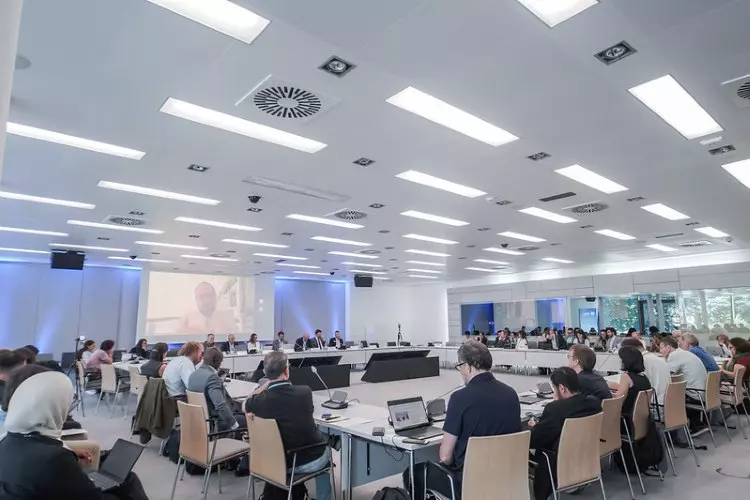
Despite the discord, COP30 did produce a set of notable (if modest) decisions. Together they paint a picture of slow movement forward, not the breakthrough many hoped for, but not full stagnation either.
1. Fossil fuels left out of the final text
Despite frequent references by the UN Secretary-General to the “end of the fossil-fuel era,” the final decision text does not mention coal, oil, or gas at all. It acknowledges an “irreversible shift toward low-emission energy systems,” but avoids naming the central drivers of global warming.
For comparison: COP28 in Dubai made history by including an explicit call to “transition away” from fossil fuels. Two years later, even that formulation disappeared.
2. Calls to boost climate finance, but without binding obligations
Countries agreed to triple adaptation finance by 2035, but only as an aspirational goal, not a legal commitment. UNEP estimates the adaptation finance gap at 12–14 times current levels, a chasm COP30 did not bridge.
The text also repeats the earlier target of mobilizing $1.3 trillion annually in public and private climate finance by 2035, alongside a firmer benchmark of $300 billion per year for adaptation, a figure unchanged since COP29.
3. Warning against “discriminatory” climate trade measures
The final document states that unilateral climate actions must not become “arbitrary or unjustifiable discrimination or disguised trade restrictions.”
This wording echoes concerns voiced by BRICS countries and raises questions about how mechanisms like CBAM will be interpreted. Where is the line between climate policy and trade barriers? COP30 does not say.
4. First international declaration against climate misinformation
Twelve countries signed a pioneering declaration committing to improve information integrity on climate change, a topic previously absent from COP agendas. The initiative includes financing new research, especially in the Global South.
Notably, the declaration was issued without U.S. involvement, even as misinformation remains a major obstacle to climate action.
5. Spotlight on forests and nature-based solutions, but no deforestation roadmap
A new international forest protection fund was announced ahead of COP30, promising up to $4 billion annually for tropical and subtropical forest conservation. Yet even this headline-grabbing initiative has unresolved questions: Will wealthy countries actually contribute?
Meanwhile, a proposed deforestation roadmap was removed from the final text, signalling ongoing disagreements over land use governance and funding.
Additional signals: methane, media, and market accountability
Several side initiatives also shaped the atmosphere in Belém:
- A new Global Methane Status Report shows real progress since 2021 but warns that current efforts remain insufficient to meet the goal of 30% emissions reduction by 2030.
- A report from ACT Climate Labs urged the advertising and media sector to phase out partnerships with fossil-fuel companies, citing reputational risks and misleading narratives.
- Indigenous groups reiterated that climate governance must integrate the principle of Free, Prior and Informed Consent (FPIC) to protect land rights and ecosystems.
The bottom line: progress, but deep fractures remain
COP30 will be remembered less for decisive breakthroughs and more for exposing the widening gaps in global climate politics. Between record numbers of industry lobbyists, the absence of the world’s largest historical emitter, and a draft agreement that avoids confronting fossil fuels directly, Belém showed just how difficult meaningful consensus has become.
Yet the summit also highlighted an undeniable truth: pressure is rising, from citizens, from Indigenous nations, from vulnerable countries, and from science itself. Whether governments can match that urgency remains the defining question for the years ahead.