
Organic waste accounts for a significant portion of municipal solid waste in the Western Balkans, much of which ends up in landfills, generating methane and squandering valuable nutrients. School composting projects offer a practical way to transform this challenge into an opportunity for sustainability, education, and soil health. This was the central question addressed by the EU-funded Impetus Accelerator citizen science project “From Waste to Wealth: How Compost Shapes Soil and Health”, implemented by the Faculty of Sciences, University of Novi Sad in 2025.
Led by Dr. Dragana Tamindžija, the project brought together university scientists, primary school students, and local stakeholders to co-create a new model of school-based composting, aiming to promote responsible waste management, sustainable soil amendment practices, and environmental education.
How Do School Composting Projects Improve Soil Health?
The project’s core idea is simple but powerful: by involving children and their teachers in composting kitchen and garden waste, schools become living laboratories for understanding ecological cycles and sustainability. The compost produced is not only a pedagogical tool, but also a valuable soil amendment.
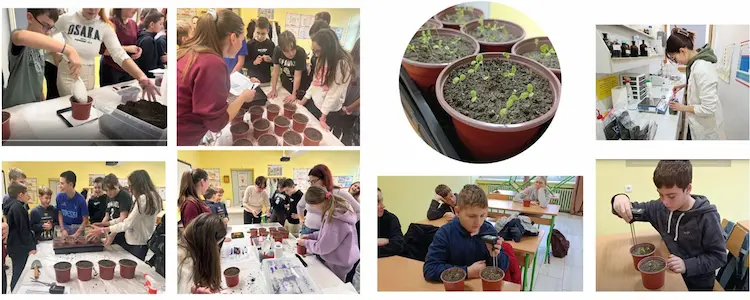
In the pilot phase, students managed the composters, monitored the composting process using sensors (pH, EC, moisture, temperature), and tested the effects of compost on soil and plant growth through plant pot experiments. These experiments were supported by university student mentors and conducted in line with basic scientific methodology, offering young participants firsthand experience with hypothesis formulation, data collection, and interpretation.
Read more about the school project here.
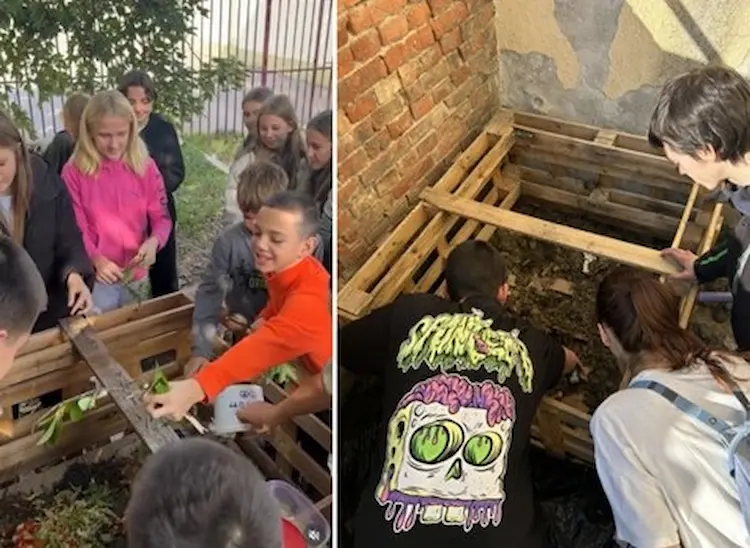
How Does Citizen Science Work in School Composting Programs?
One of the project’s key strengths was its experiential, inclusive, and community-driven approach. The team organized workshops, developed printable materials (e.g., posters, data tables, experiment schematics), and engaged schoolchildren in guided experiments. Students actively monitored soil conditions before and after compost application, learning about nutrient cycles, microbial life, and sustainable farming practices in the process. This citizen science model allowed for direct engagement across age groups, strengthening students’ environmental awareness and scientific literacy.
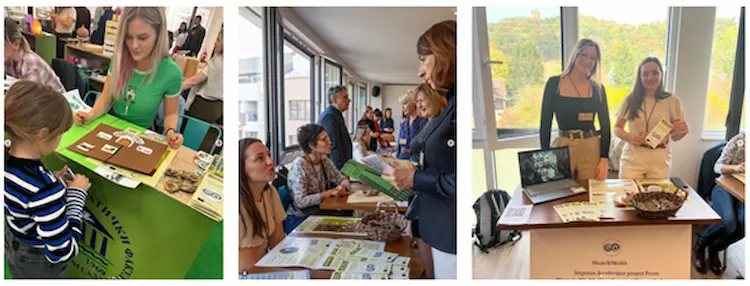
The project was disseminated beyond the school environment through science outreach events, such as the Ecology Fair, and at the scientific conference “Soil Re-Union” held in Vrdnik, Serbia.
How Did the IMPETUS Accelerator Support the Project?
Support from the IMPETUS Accelerator program funded by the European Union was instrumental. The program provided funding for all the activities. Just as importantly, it offered training and networking opportunities that helped the project team shape their vision, strengthen their citizen science methodology, and enhance their communication skills.
What Is the Future of School Composting Initiatives in Serbia?
The final event, held on December 22, 2025, at the Faculty of Sciences in Novi Sad, showcased project outcomes and brought together stakeholders from education, civil society, and government. Participants agreed that the initiative has strong potential to expand beyond the university walls and into the local community, partnering with schools, local environmental NGOs, and the City ‘s public companies in Novi Sad.
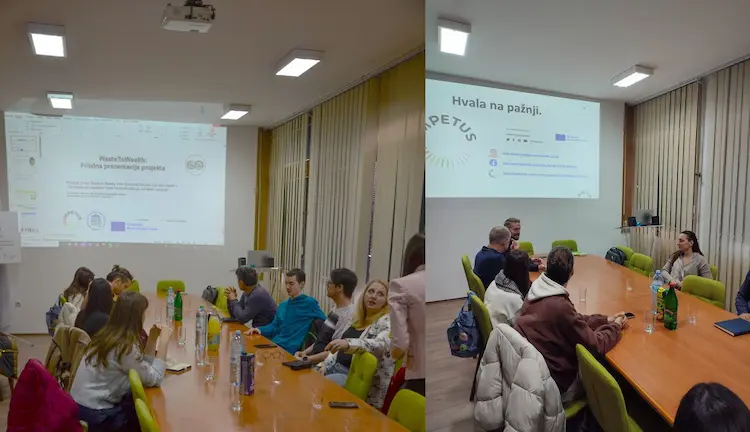
The project also lays the groundwork for more in-depth microbiological and ecological monitoring, exploring how compost influences microbial communities and soil quality in urban settings.
“From Waste to Wealth” shows how a simple, tangible practice like composting can become a driver of systemic change. School composting projects can turn students into citizen scientists, schools into sustainability hubs, and waste into a resource for soil and society.
Read more about the ecological monitoring here.