
Publications
New Rules Reshape Serbia Pellet Market and Quality Standards

The article explores how new rules are reshaping the Serbia pellet market, setting unified standards for quality, safety, and transparency. Only top-quality A1 and A2 wood pellets are now allowed on the market, while B-class products are banned. The regulation is expected to strengthen local producers, improve competitiveness, and support the transition to sustainable heating solutions.
Read MoreNew Rules Reshape Serbia Pellet Market and Quality StandardsCross-Border Smart City Ecosystem: How Helsinki and Tallinn Built a Shared Future

Helsinki and Tallinn joined forces to build a cross-border smart city ecosystem that bridges innovation and sustainability. Through the EU-funded FinEst Twins project, the cities piloted real-world solutions for clean energy, data, mobility, and healthcare. This model shows how collaboration across borders can scale urban resilience and improve quality of life worldwide.
Read MoreCross-Border Smart City Ecosystem: How Helsinki and Tallinn Built a Shared FutureGuangzhou’s Innovative Practice: The Mixed Traffic Lane Mode
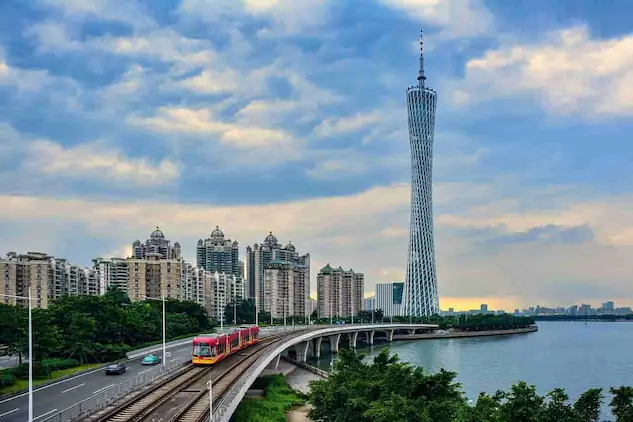
Guangzhou has pioneered the Mixed Traffic Lane Mode as an innovative response to rising electric bicycle use and limited road space. By merging motorized and non-motorized traffic within designated lanes, the model improves traffic order, enhances safety, and optimizes urban mobility. Early results from pilot projects show reduced congestion, safer conditions, and more efficient use of road resources, positioning this approach as a scalable solution for dense urban environments.
Read MoreGuangzhou’s Innovative Practice: The Mixed Traffic Lane ModeBuilding a Balkan Regional Platform for the SDGs : Interview with Kosta Živanović
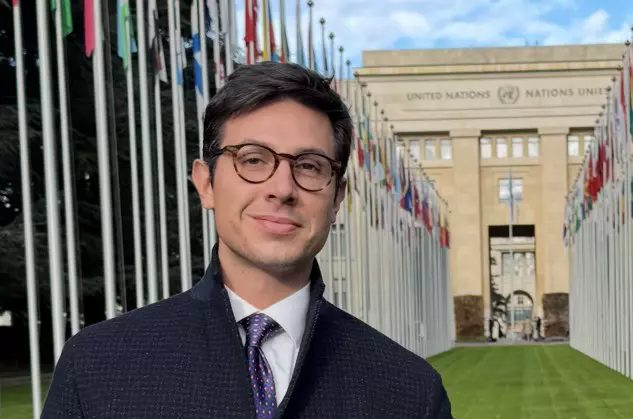
How can the Western Balkans deliver the SDGs amid war, heat, and rapid technological change? In this interview, SDF President Kosta Živanović details th e Forum’s 2025 agenda—competitiveness in turbulent times, the energy paradox, near-shoring and resilient supply chains, and scaling AI and clean tech. He explains why Belgrade can act as a regional hub and how SDF connects local actors to global standards to turn goals into practical action on energy, food systems, and governance.
Read MoreBuilding a Balkan Regional Platform for the SDGs : Interview with Kosta ŽivanovićBalkan Green Cities: Greening the Urban Fabric and Why It Matters
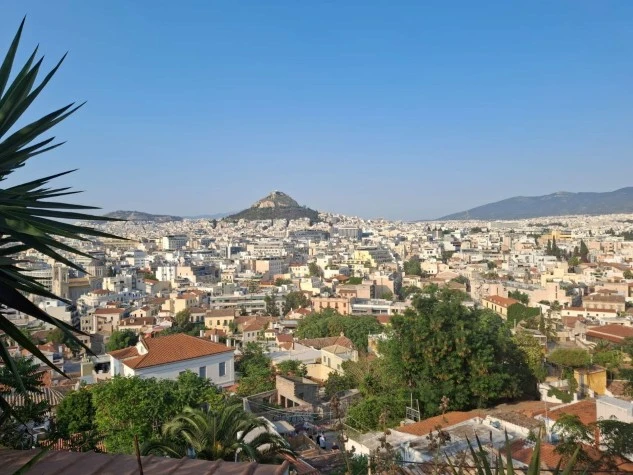
Across eight Balkan green cities, we compare total green infrastructure and accessible urban green using EEA metrics and municipal datasets. The piece traces how geography and planning traditions shape outcomes, then spotlights flagship projects—from Athens’ Ellinikon to Belgrade’s Linear Park and Tirana’s Orbital Forest. We conclude with tiered, finance-aware recommendations that help city leaders turn green on paper into green on foot.
Read MoreBalkan Green Cities: Greening the Urban Fabric and Why It MattersThe 31st ITS World Congress: The V2X Frenzy Is Beyond Words
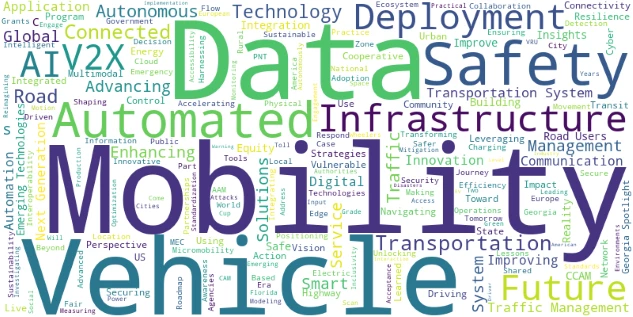
V2X technology dominated ITSWC 2025, highlighted by the U.S. DOT’s large-scale showcase and Utah’s real-world deployment across 800 intersections. While widely demonstrated in OBU/RSU development and smart infrastructure, truly innovative breakthroughs remained limited.
Read MoreThe 31st ITS World Congress: The V2X Frenzy Is Beyond WordsKorea–Serbia Strategic Energy Development Forum: A New Chapter in Bilateral Energy Cooperation
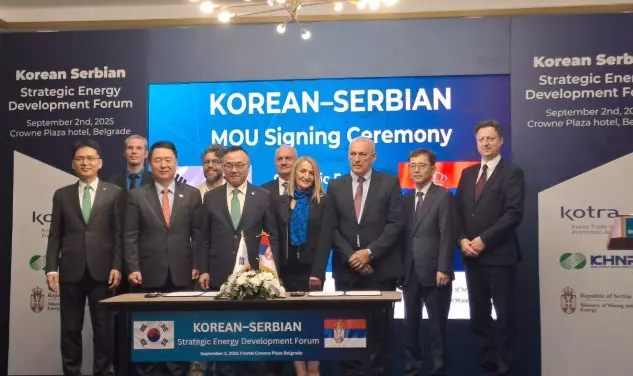
The Korea–Serbia Strategic Energy Development Forum, held in Belgrade on September 2, 2025, brought together officials, experts, and industry leaders. The event focused on nuclear power, hydrogen technologies, and renewable projects, underlining Serbia’s energy security as a national priority. For Korea, the forum opened new opportunities to expand cooperation and share expertise in Europe.
Read MoreKorea–Serbia Strategic Energy Development Forum: A New Chapter in Bilateral Energy CooperationEdible City: How Urban Gardens Transform Cities Beyond Food
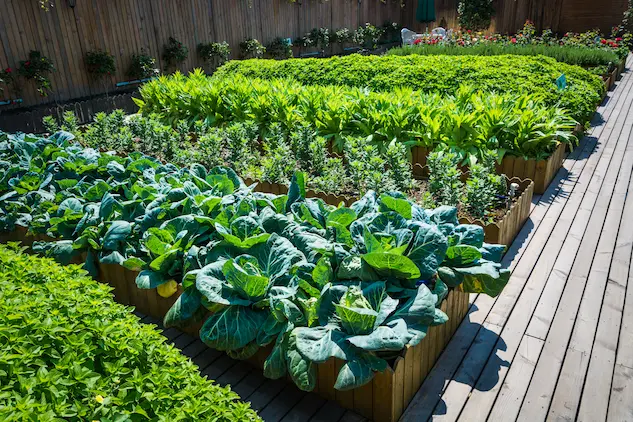
Edible cities integrate urban gardens into public spaces, delivering multiple social, ecological, and economic benefits beyond food production. From Andernach to Belgrade, European cities are piloting edible landscapes as infrastructure for climate adaptation, community building, and environmental education. Research shows that inclusive, co-designed programs yield stronger social outcomes than purely technological approaches. Practical guidance for planners emphasizes mapping, governance, skills pipelines, and a mosaic of micro-sites to maximize impact.
Read MoreEdible City: How Urban Gardens Transform Cities Beyond FoodEnergy Week 2025 and Beyond: An Interview with Inessa Shahnazarova on Opportunities in the Western Balkans

The Western Balkans is stepping onto the energy stage with new auctions, ambitious targets, and a push to integrate into Europe’s power market. In this interview, Inessa Shahnazarova, Founder and Executive Director of Invest In Network, shares why 2025 feels like a turning point for the region. From grid modernization to fresh opportunities for investors, she explains what makes this year’s Energy Week is so important.
Read MoreEnergy Week 2025 and Beyond: An Interview with Inessa Shahnazarova on Opportunities in the Western BalkansSustainable AI for Cities: Strategic Priorities, Challenges, and Long-Term Impact

As cities strive to become carbon neutral and resilient to climate effects carbon neutral, AI can play a pivotal role in driving this transformation. This article explores the dual nature of sustainable AI for cities — both as a tool for solving sustainability challenges and as a system that must itself be ethical and sustainable by design.
Read MoreSustainable AI for Cities: Strategic Priorities, Challenges, and Long-Term Impact